Difference between rcs and sms becomes obvious when you send a simple text and your friend replies with typing indicators, images, and read receipts. You wonder why does their chat look modern while yours feels basic?
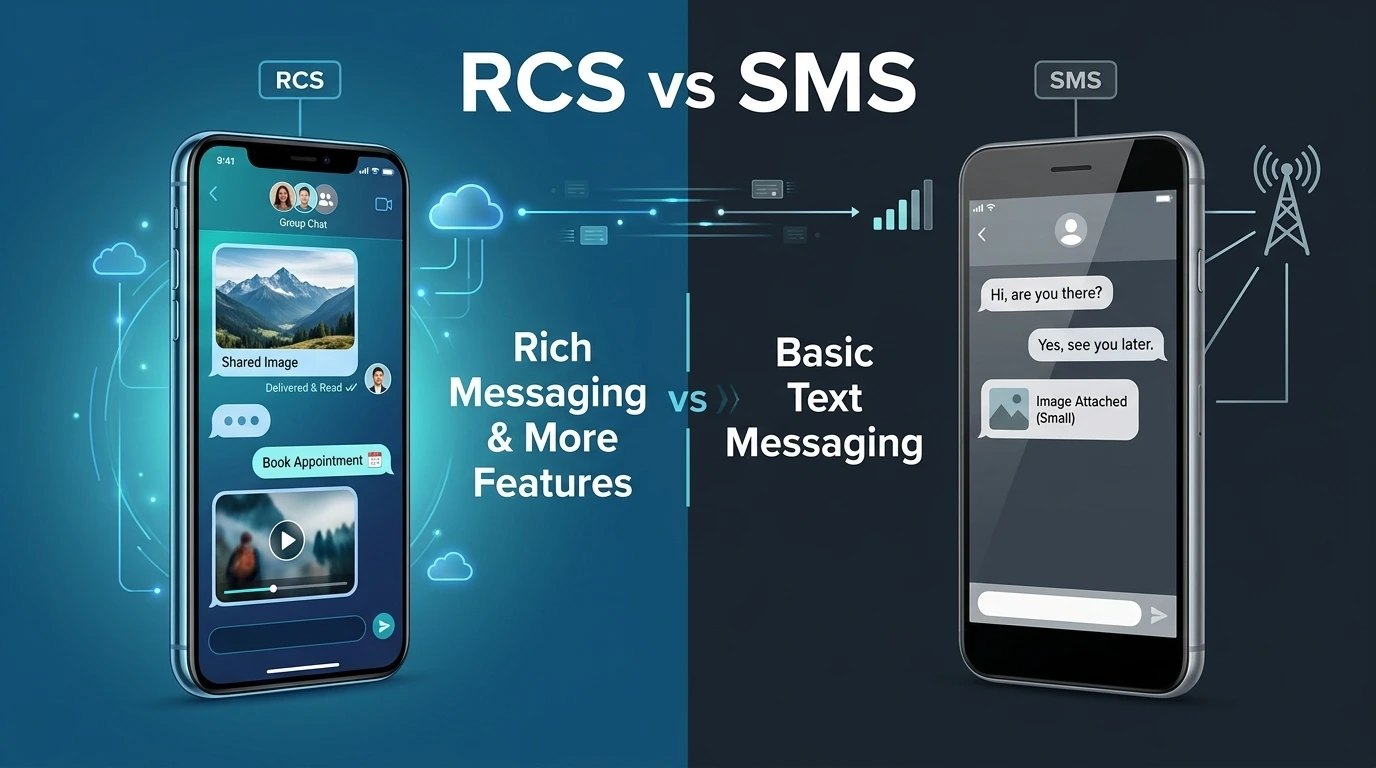
The difference between rcs and sms lies in how messages are sent and what features they support. SMS is the traditional texting system that has been around for years. RCS is a newer messaging standard designed to feel more like internet-based chat apps.
Many people use both without noticing. Still, the difference between rcs and sms affects how messages look, how fast they arrive, and what you can do with them.
Let’s explore these differences in a simple and clear way so you can understand modern messaging better.
Key Difference Between the Both
The main difference is technology and features.
- SMS (Short Message Service) sends basic text messages through mobile networks.
- RCS (Rich Communication Services) uses internet data to send advanced messages with images, videos, and real-time features.
Importance – Why Their Difference Matters
Understanding the difference helps learners choose the right messaging style. It improves communication and avoids confusion.
For professionals, messaging tools matter in customer service, marketing, and teamwork. RCS allows richer interaction, while SMS ensures universal reach.
In society, communication is key. Knowing the difference helps people stay connected, share media easily, and communicate clearly across devices.
🔊 Pronunciation Section
RCS
US: /ˌɑːr.siːˈes/
UK: /ˌɑː.siːˈes/
SMS
US: /ˌes.emˈes/
UK: /ˌes.emˈes/
Now that you know how to say them, let’s define them clearly.
📚 Core Definitions
RCS (Rich Communication Services)
RCS is a modern messaging protocol that allows rich features like images, typing indicators, and read receipts. It feels interactive and dynamic.
Example:
“I saw when my friend was typing on RCS.”
SMS (Short Message Service)
SMS is a basic text messaging service that sends short messages without internet. It is simple and reliable.
Example:
“I sent a quick SMS to confirm the meeting.”
📚 10 Clear Differences Between RCS and SMS
1. Message Features
RCS supports images, videos, and typing indicators. SMS supports only plain text.
- Example for RCS: “I sent a photo and saw when it was read.”
- Example for SMS: “I sent a short text message.”
2. Internet Requirement
RCS needs internet data. SMS works without internet.
- Example for RCS: “I need Wi-Fi or data to send messages.”
- Example for SMS: “I can send messages without internet.”
3. Message Length
RCS allows long messages. SMS limits characters.
- Example for RCS: “I wrote a long paragraph easily.”
- Example for SMS: “My message got split into parts.”
4. Media Sharing
RCS supports high-quality media. SMS compresses images heavily.
- Example for RCS: “The image stayed clear.”
- Example for SMS: “The image looked blurry.”
5. Read Receipts
RCS shows when messages are read. SMS does not.
- Example for RCS: “I know when my message was seen.”
- Example for SMS: “I don’t know if it was read.”
6. Typing Indicators
RCS shows when someone is typing. SMS does not.
- Example for RCS: “I see typing dots.”
- Example for SMS: “No typing indicator appears.”
7. Security
RCS can offer encryption (depending on app). SMS is not encrypted.
- Example for RCS: “My chat feels more secure.”
- Example for SMS: “Messages are not protected.”
8. Compatibility
RCS works on supported devices and apps. SMS works on all phones.
- Example for RCS: “It works only on compatible devices.”
- Example for SMS: “It works on any phone.”
9. Cost
RCS uses internet data. SMS may charge per message.
- Example for RCS: “It uses my data plan.”
- Example for SMS: “I pay per text message.”
10. User Experience
RCS feels like a chat app. SMS feels basic.
- Example for RCS: “It looks like modern messaging.”
- Example for SMS: “It feels simple and old-style.”
🎯 Why Knowing the Difference Matters
Students benefit from understanding modern communication tools. It helps them communicate more effectively in digital environments.
Professionals use messaging for business. Knowing when to use RCS or SMS helps improve customer engagement and clarity.
In daily life, choosing the wrong system can cause delays or misunderstandings.
Real-world consequences of confusion
You might expect read receipts but never get them. Or you may send media that arrives in poor quality.
🧠 Why People Get Confused
Similar Abbreviations
Both are short forms with three letters, which makes them look similar.
Semantic Overlap
Both send messages, so users think they are the same.
Context-Based Usage
Phones switch between RCS and SMS automatically.
Influence of Informal Speech
People just say “text message” without specifying the type.
🎭 Connotation & Emotional Tone
Connotation = the emotional meaning associated with a word.
RCS
- Positive: Modern, interactive, smart
- Neutral: Data-dependent
- Example: “RCS feels advanced and smooth.”
SMS
- Positive: Reliable, simple
- Neutral: Basic, limited
- Example: “SMS is dependable but simple.”
🗣 Usage in Metaphors, Similes & Idioms
- “RCS is like a smart chat app in your phone.”
- “SMS is like a simple note passed quickly.”
These comparisons help explain their roles clearly.
📊 Comparison Table
| Feature | RCS | SMS |
|---|---|---|
| Meaning | Rich messaging system | Basic text messaging |
| Tone | Modern | Simple |
| Usage | Multimedia communication | Short texts |
| Context | Internet-based messaging | Mobile network messaging |
| Formality | Informal | Informal |
⚖️ Which Is Better in What Situation?
When to use RCS
Use RCS when you want rich features like images, typing indicators, and read receipts. It works best with internet access.
When to use SMS
Use SMS when you need reliability without internet. It works on all phones.
Situational clarity
RCS suits modern communication. SMS suits emergency or basic use.
Contextual correctness
Choose based on device support and connectivity.
📖 Literary or Cultural References
- Book: Alone Together (Technology, Sherry Turkle, 2011)
- Movie: Her (USA, 2013)
These works explore how technology shapes communication, similar to the shift from SMS to RCS.
❓ FAQs
1. Is RCS replacing SMS?
RCS is growing but has not fully replaced SMS. SMS still works everywhere. Many phones use both systems together.
2. Do all phones support RCS?
No, not all phones support RCS. It depends on the device and messaging app. Most modern Android phones support it.
3. Does RCS cost money?
RCS uses mobile data or Wi-Fi. It does not charge per message like SMS. Costs depend on your data plan.
4. Is SMS still useful?
Yes, SMS is very useful. It works without internet and on all devices. It is reliable for basic communication.
5. Which is more secure?
RCS can offer better security features. SMS does not have encryption. However, security depends on the app used.
🏁 Conclusion
The difference between rcs and sms is mainly about simplicity versus advanced features. SMS offers basic, reliable communication that works everywhere. RCS brings modern messaging with media sharing, read receipts, and interactive features.
Both systems serve important roles. SMS ensures you can always send a message, even without internet. RCS enhances your experience when connectivity is available.
Understanding this difference helps you communicate more effectively and choose the right method for each situation. As technology grows, knowing these basics keeps you informed and confident.
Keep learning and exploring how communication evolves in the digital world.

Ezra Hale is a thoughtful contributor to Distinly.com, where he explores philosophical ideas and the subtle differences behind everyday concepts. His writing blends logic, language, and human insight to clarify complex distinctions. Ezra encourages readers to think deeper, question assumptions, and appreciate the meaning behind words and ideas in modern discourse.