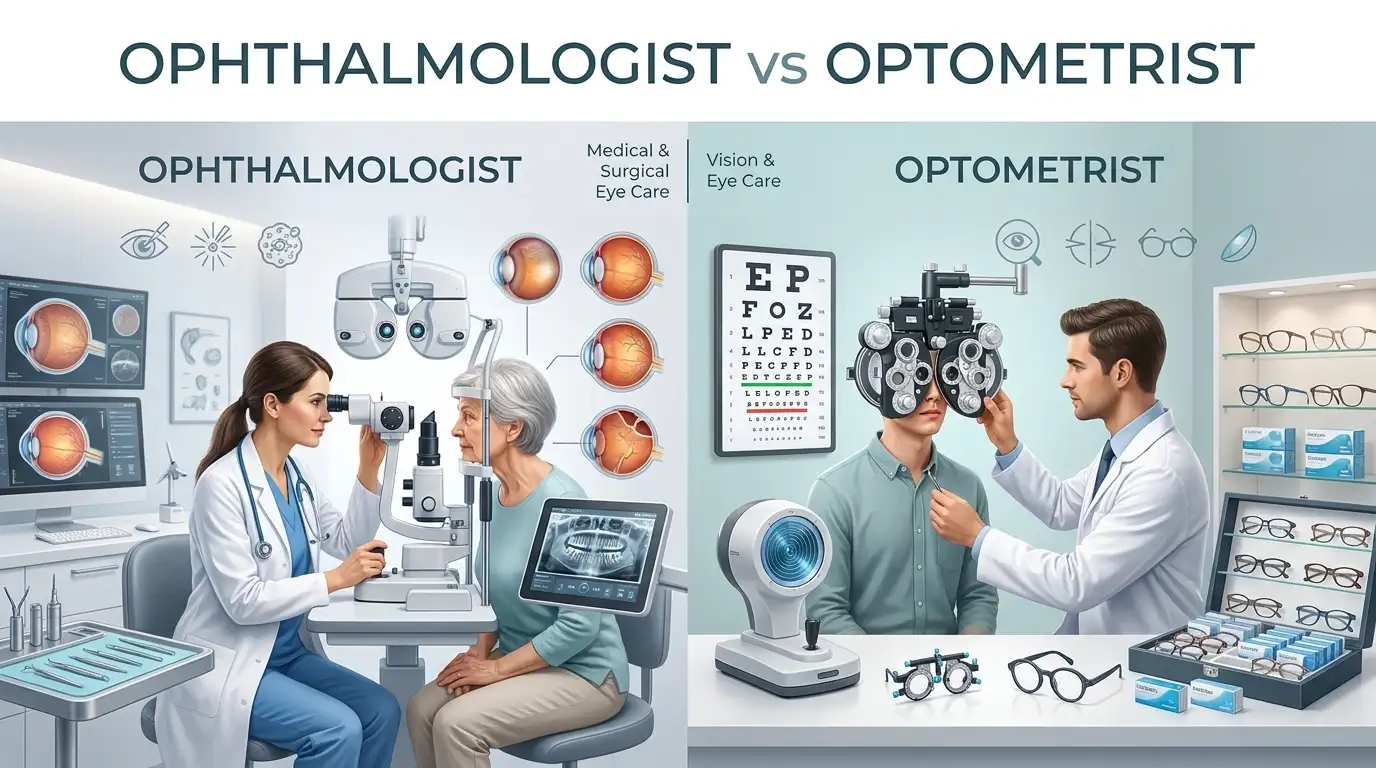
Difference between ophthalmologist and optometrist often confuses people during eye checkups. Imagine you walk into an eye clinic with blurry vision. The receptionist asks, “Do you want to see an ophthalmologist or an optometrist?” You pause because both sound similar.
The difference between ophthalmologist and optometrist lies in their training, skills, and the type of eye care they provide. While both help with vision, they play very different roles in eye health.
Many people use these terms interchangeably, but understanding the difference between ophthalmologist and optometrist can save time and ensure proper treatment.
Let’s break it down step by step so you know exactly who to visit and when.
🔑 Key Difference Between the Both
The key difference is:
- Ophthalmologist is a medical doctor who can perform eye surgery and treat serious eye diseases.
- Optometrist is a healthcare professional who checks vision and prescribes glasses or contact lenses.
In short, ophthalmologists handle complex medical issues, while optometrists focus on routine eye care.
🌍 Importance – Why Their Difference Matters
Knowing the difference between ophthalmologist and optometrist is important for everyone.
For learners, it builds clear understanding in health education. It helps students choose the right professional in real-life situations.
For experts and healthcare workers, it ensures accurate referrals and proper patient care. Misunderstanding roles can delay treatment.
In society, this knowledge improves health decisions. It helps people get the right care quickly, especially for serious eye problems.
🔊 PRONUNCIATION SECTION
Ophthalmologist
US: /ˌɒfθælˈmɑːlədʒɪst/
UK: /ˌɒfθælˈmɒlədʒɪst/
Optometrist
US: /ɒpˈtɒmətrɪst/
UK: /ɒpˈtɒmətrɪst/
Now that you can pronounce them correctly, let’s explore what each one really does.
📚 CORE DEFINITIONS
Ophthalmologist
An ophthalmologist is a medical doctor who specializes in eye and vision care. They diagnose diseases, perform surgery, and provide advanced treatment. The tone is serious and clinical.
Example: A patient with cataracts visits an ophthalmologist for surgery.
Optometrist
An optometrist is a healthcare professional who examines eyes and corrects vision problems. They prescribe glasses and contact lenses. The tone is practical and routine.
Example: A student visits an optometrist for a vision test and new glasses.
📚 10 Clear Differences Between Ophthalmologist and Optometrist
1. Level of Education
Ophthalmologists complete medical school and specialized training.
Optometrists complete a Doctor of Optometry (OD) degree.
- Example (Ophthalmologist): A surgeon trained for eye operations.
- Example (Optometrist): A professional trained in vision testing.
2. Scope of Practice
Ophthalmologists treat diseases and perform surgery.
Optometrists provide vision care and basic eye health services.
- Example (Ophthalmologist): Treating glaucoma.
- Example (Optometrist): Prescribing glasses.
3. Surgical Ability
Ophthalmologists can perform eye surgeries.
Optometrists cannot perform surgery.
- Example (Ophthalmologist): Laser eye surgery.
- Example (Optometrist): Referring patients for surgery.
4. Focus Area
Ophthalmologists focus on medical and surgical care.
Optometrists focus on vision correction and eye exams.
- Example (Ophthalmologist): Treating retinal diseases.
- Example (Optometrist): Checking eyesight.
5. Severity of Cases
Ophthalmologists handle serious and complex conditions.
Optometrists handle mild to moderate vision issues.
- Example (Ophthalmologist): Eye infections or tumors.
- Example (Optometrist): Nearsightedness.
6. Use of Equipment
Ophthalmologists use advanced surgical tools.
Optometrists use diagnostic tools for eye exams.
- Example (Ophthalmologist): Operating microscopes.
- Example (Optometrist): Vision testing charts.
7. Patient Interaction
Ophthalmologists see patients for specialized treatment.
Optometrists see patients regularly for routine checkups.
- Example (Ophthalmologist): Post-surgery follow-up.
- Example (Optometrist): Annual eye exam.
8. Referral System
Ophthalmologists often receive referrals.
Optometrists often refer patients to specialists.
- Example (Ophthalmologist): Accepting complex cases.
- Example (Optometrist): Sending a patient for surgery.
9. Treatment Approach
Ophthalmologists use medical and surgical treatments.
Optometrists use corrective and preventive care.
- Example (Ophthalmologist): Prescribing strong medication.
- Example (Optometrist): Suggesting contact lenses.
10. Professional Role
Ophthalmologists act as medical specialists.
Optometrists act as primary eye care providers.
- Example (Ophthalmologist): Hospital-based specialist.
- Example (Optometrist): Clinic-based practitioner.
🎯 Why Knowing the Difference Matters
Students need to understand the difference between ophthalmologist and optometrist to make informed health decisions. It also helps in exams and real-life situations.
Professionals in healthcare rely on this distinction for proper referrals. It ensures patients receive the right level of care.
For the general public, knowing the difference saves time and avoids confusion when seeking treatment.
Real-world consequences of confusion
If someone visits an optometrist for a serious eye disease, treatment may be delayed. On the other hand, visiting an ophthalmologist for a simple vision test may cost more time and effort.
🧠 Why People Get Confused
Similar Terminology
Both words sound complex and start with “opto” or “ophtha,” which confuses learners.
Overlapping Roles
Both examine eyes, so people assume they do the same work.
Context-Based Usage
In casual speech, people often say “eye doctor” for both.
Informal Influence
Media and everyday language do not clearly distinguish between them.
🎭 Connotation & Emotional Tone
Connotation = the emotional meaning associated with a word.
Ophthalmologist
- Neutral to Serious: Associated with medical expertise and surgery.
- Example: “The ophthalmologist treated the condition.”
Optometrist
- Neutral to Positive: Linked with routine care and accessibility.
- Example: “The optometrist helped me get new glasses.”
🗣 Usage in Metaphors, Similes & Idioms (If Applicable)
These terms are rarely used in idioms but may appear in informal speech:
- “You need an ophthalmologist-level solution.” → Means a complex fix
- “That’s an optometrist-level issue.” → Means a simple correction
These uses are informal and should be used carefully.
📊 Comparison Table
| Feature | Ophthalmologist | Optometrist |
|---|---|---|
| Meaning | Medical eye specialist | Vision care provider |
| Tone | Clinical | Practical |
| Usage | Surgery & disease | Vision correction |
| Context | Hospitals, clinics | Clinics, optical stores |
| Formality | Formal | Formal |
⚖️ Which Is Better in What Situation?
When to Use Ophthalmologist
Visit an ophthalmologist for serious eye conditions like cataracts, glaucoma, or injuries. They provide advanced medical care and surgery.
When to Use Optometrist
Choose an optometrist for routine eye exams, glasses, or contact lenses. They are ideal for regular vision care.
Situational Clarity
If your issue is simple, start with an optometrist. If it is complex, go directly to an ophthalmologist.
Contextual Correctness
Use the correct term in academic or medical discussions to avoid confusion and ensure accuracy.
📖 Literary or Cultural References
- Book: The Eye Book (Children’s Education, Theo LeSieg, 1968)
- Book: Vision and Eye Health (Medical, various authors)
- Movie: Minority Report (USA, 2002) – features eye surgery themes
- Movie: Blindness (Canada/Brazil, 2008) – explores vision loss
❓ FAQs (10 Questions)
1. What is the main difference between ophthalmologist and optometrist?
An ophthalmologist is a medical doctor who treats eye diseases and performs surgery. An optometrist provides vision care and prescribes glasses.
2. Can an optometrist perform surgery?
No, optometrists cannot perform surgery. They refer patients to ophthalmologists for surgical treatment.
3. Who should I see for blurry vision?
Start with an optometrist for a vision test. They will refer you if needed.
4. Who treats serious eye diseases?
Ophthalmologists handle serious eye diseases and complex conditions.
5. Are both considered eye doctors?
Yes, both are eye care professionals, but their roles differ.
6. Do ophthalmologists prescribe glasses?
Yes, but they usually focus on medical treatment rather than routine vision correction.
7. Is an optometrist a doctor?
An optometrist has a Doctor of Optometry degree but is not a medical doctor.
8. Which one is more qualified?
Ophthalmologists have more medical training, especially in surgery.
9. Can I visit an ophthalmologist directly?
Yes, you can, especially for serious issues.
10. Why is the difference important?
It ensures you get the right treatment quickly and efficiently.
🏁 CONCLUSION
The difference between ophthalmologist and optometrist comes down to training, skills, and scope of care. Ophthalmologists are medical specialists who handle complex eye conditions and surgeries. Optometrists provide routine eye care and vision correction.
Understanding this distinction helps you make better healthcare choices. It ensures you visit the right professional at the right time.
Clear knowledge saves time, reduces confusion, and improves eye health outcomes. Whether it’s a simple vision check or a serious condition, knowing who to consult makes all the difference.
Stay informed and take care of your vision it’s one of your most valuable senses.

Ezra Hale is a thoughtful contributor to Distinly.com, where he explores philosophical ideas and the subtle differences behind everyday concepts. His writing blends logic, language, and human insight to clarify complex distinctions. Ezra encourages readers to think deeper, question assumptions, and appreciate the meaning behind words and ideas in modern discourse.