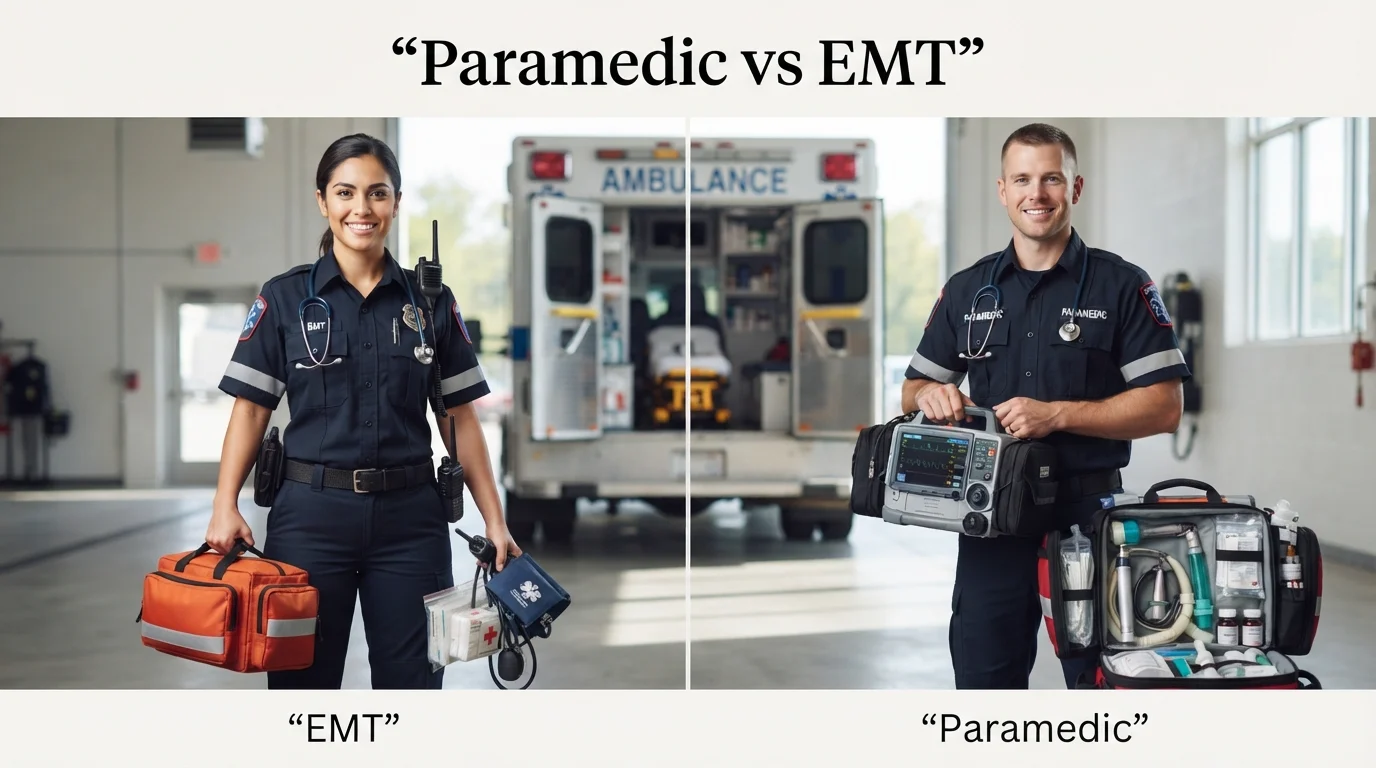
Difference between paramedic and EMT often becomes clear in a real emergency. Imagine a car accident. One responder quickly checks vital signs and stabilizes the patient. Another arrives and starts advanced treatment like giving medications. Both are heroes but their roles are not the same.
The difference between paramedic and EMT lies in training, skills, and responsibilities. Both are part of emergency medical services (EMS). They save lives, provide care, and transport patients to hospitals. Yet, their level of expertise is different.
Understanding the difference between paramedic and EMT helps students, job seekers, and even everyday people. It helps you know who does what in an emergency and how healthcare systems work.
Let’s explore this topic step by step so you can clearly understand both roles.
Key Difference Between the Both
The key difference is simple:
- EMTs (Emergency Medical Technicians) provide basic life support.
- Paramedics provide advanced life support with deeper medical training.
Paramedics can perform more complex procedures, while EMTs focus on immediate and essential care.
Importance – Why Knowing the Difference Matters
Knowing this difference is important for many reasons.
First, it helps students choose the right career path. If you want quick entry into healthcare, EMT is a good start. If you want advanced medical skills, paramedic training is better.
Second, professionals need this clarity for teamwork. In emergencies, clear roles save time and lives.
Third, society benefits when people understand emergency systems. It builds trust and awareness during critical moments.
🔊 Pronunciation Section
Paramedic
US: /ˌpærəˈmɛdɪk/
UK: /ˌpærəˈmedɪk/
EMT (Emergency Medical Technician)
US: /ˌiː.emˈtiː/
UK: /ˌiː.emˈtiː/
Now that you know how to say them, let’s understand what they actually mean.
📚 Core Definitions
Paramedic
A paramedic is a highly trained medical professional who provides advanced emergency care. They can give medications, use advanced equipment, and handle serious medical conditions.
Example: A paramedic gives IV medication to a heart attack patient.
EMT
An EMT is a trained responder who provides basic emergency care. They stabilize patients and prepare them for transport.
Example: An EMT applies bandages and gives oxygen to an injured person.
📚 10 Clear Differences Between Paramedic and EMT
1. Level of Training
Paramedics receive advanced and longer training. EMT training is shorter and basic.
- Paramedic Example: Learns advanced cardiac care.
- EMT Example: Learns CPR and first aid.
2. Medical Skills
Paramedics perform complex procedures. EMTs handle basic care.
- Paramedic Example: Inserts IV lines.
- EMT Example: Controls bleeding.
3. Decision-Making
Paramedics make critical medical decisions. EMTs follow set protocols.
- Paramedic Example: Chooses medication for a patient.
- EMT Example: Follows emergency guidelines.
4. Equipment Use
Paramedics use advanced tools. EMTs use basic equipment.
- Paramedic Example: Uses cardiac monitors.
- EMT Example: Uses oxygen masks.
5. Scope of Practice
Paramedics have a wider scope. EMTs have limited scope.
- Paramedic Example: Performs intubation.
- EMT Example: Assists breathing manually.
6. Education Duration
Paramedic training takes longer. EMT courses are shorter.
- Paramedic Example: 1–2 years training.
- EMT Example: A few months training.
7. Responsibility Level
Paramedics carry more responsibility. EMTs support them.
- Paramedic Example: Leads emergency care.
- EMT Example: Assists in patient care.
8. Patient Care Depth
Paramedics provide deeper care. EMTs provide immediate care.
- Paramedic Example: Treats severe trauma.
- EMT Example: Stabilizes injury.
9. Certification Levels
Paramedics require higher certification. EMT certification is entry-level.
- Paramedic Example: Advanced licensing exam.
- EMT Example: Basic certification.
10. Career Progression
Paramedic is a higher career level. EMT is often the first step.
- Paramedic Example: Moves into specialized roles.
- EMT Example: Upgrades to paramedic later.
🎯 Why Knowing the Difference Matters
Students need this knowledge to choose the right path. It helps them plan their education and career goals clearly.
Professionals need it for teamwork. Clear roles improve coordination during emergencies.
In society, this understanding builds awareness. People know who to expect during emergencies and what care they will receive.
Real-world consequences of confusion
If people confuse these roles, they may expect wrong services. This can lead to delays or misunderstandings during emergencies. Clear knowledge avoids panic and improves response.
🧠 Why People Get Confused
Similar Terms
Both work in emergency care, so people assume they are the same.
Overlapping Roles
Sometimes EMTs and paramedics work together, which creates confusion.
Everyday Language
People often use both terms interchangeably in casual speech.
Media Influence
Movies and TV shows rarely explain the difference clearly.
🎭 Connotation & Emotional Tone
Connotation = the emotional meaning associated with a word.
Paramedic
- Positive: Skilled, expert, lifesaver
- Neutral: Advanced medical worker
- Example: “The paramedic handled the situation calmly.”
EMT
- Positive: Quick responder, helper
- Neutral: Basic emergency worker
- Example: “The EMT arrived first and stabilized the patient.”
🗣 Usage in Metaphors, Similes & Idioms
These terms are not commonly used in idioms, but they appear in comparisons.
- “He acted like a paramedic in crisis calm and skilled.”
- “She was like an EMT quick to help when needed.”
These uses highlight support and care.
📊 Comparison Table
| Feature | Paramedic | EMT |
|---|---|---|
| Meaning | Advanced emergency provider | Basic emergency responder |
| Tone | Skilled, expert | Helpful, supportive |
| Usage | Complex medical care | Immediate care |
| Context | Serious emergencies | First response |
| Formality | Professional | Professional |
⚖️ Which Is Better in What Situation?
When to use Paramedic
Use “paramedic” when talking about advanced care. For example, in serious medical emergencies like heart attacks.
When to use EMT
Use “EMT” when referring to first responders. They provide quick and basic support.
Situational clarity
Both roles are important. EMTs act first, and paramedics handle complex care later.
Contextual correctness
Choose the word based on skill level. Use EMT for basic care and paramedic for advanced treatment.
📖 Literary or Cultural References
- Book: “Paramedic: On the Front Lines of Medicine” (Memoir, Peter Canning, 1997)
- Movie: “Bringing Out the Dead” (USA, 1999)
These works show the real-life challenges of emergency responders.
❓ FAQs
1. What is the main difference between paramedic and EMT?
The main difference is training and skills. Paramedics have advanced medical training, while EMTs provide basic emergency care.
2. Who arrives first at an emergency?
Usually, EMTs arrive first because they provide immediate response. Paramedics may arrive shortly after for advanced care.
3. Can an EMT become a paramedic?
Yes, many EMTs continue training to become paramedics. It is a common career path.
4. Do paramedics earn more than EMTs?
Yes, paramedics typically earn more due to higher training and responsibilities.
5. Are both paramedics and EMTs important?
Yes, both are essential. They work together to save lives and provide complete emergency care.
6. Can EMTs give medication?
EMTs can give limited medications. Paramedics can give a wider range of drugs.
7. Which role requires more education?
Paramedics require more education and training compared to EMTs.
8. Do both work in ambulances?
Yes, both paramedics and EMTs work in ambulances and emergency settings.
9. Is paramedic a higher position than EMT?
Yes, paramedic is considered a higher-level position.
10. Why do people confuse EMT and paramedic?
People confuse them because both work in emergencies and are often seen together.
🏁 Conclusion
The difference between paramedic and EMT is mainly about skill level, training, and responsibility. EMTs provide quick, basic care and act as first responders. Paramedics bring advanced medical knowledge and handle complex situations.
Understanding this difference helps you make better decisions whether you are choosing a career or simply learning about emergency services. It also improves awareness in society and reduces confusion during critical moments.
Both roles are equally valuable. They work as a team to save lives and protect communities. So next time you see an ambulance, you’ll know the important roles inside it.

Mira Anand is a writer at Distinly.com who focuses on storytelling, communication, and social perspective. Her work highlights subtle differences in language and meaning across cultures and communities. With a clear and empathetic voice, Mira helps readers understand how narratives shape understanding, relationships, and modern dialogue in an increasingly connected world.