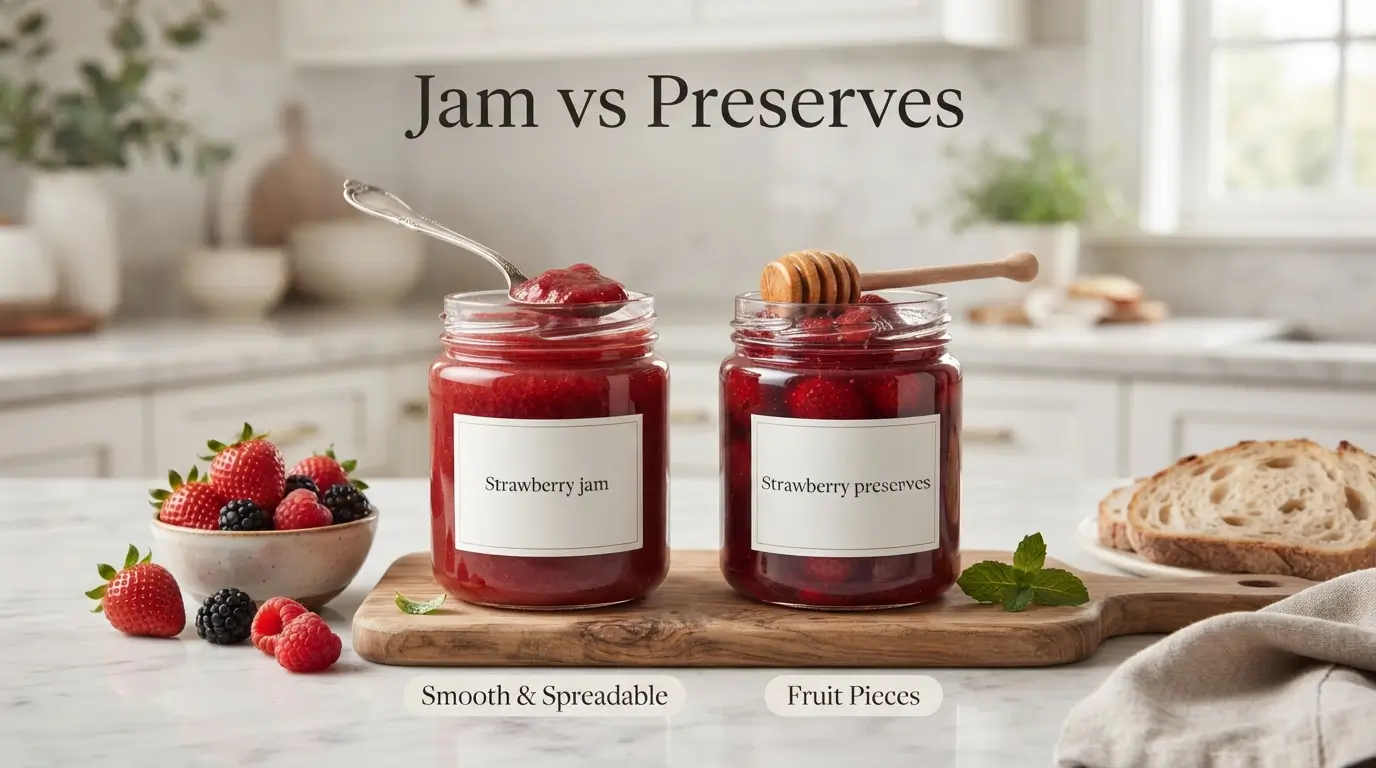
Difference between jam and preserves becomes clear when you open a jar at breakfast and see two spreads that look similar but feel different. One is smooth and easy to spread, while the other has chunks of fruit.
The difference between jam and preserves is often confusing for many people. Both are made from fruit and sugar, and both taste sweet and delicious. Still, they are not the same.
In simple terms, jam is made from crushed fruit, while preserves contain whole or large pieces of fruit. Understanding the difference between jam and preserves helps you choose the right spread for your taste and recipes.
Let’s break it down step by step so you can easily tell them apart.
🔑 Key Difference Between the Both
The main difference between jam and preserves is in the texture and fruit content.
- Jam is smooth and made from mashed fruit.
- Preserves are chunkier and contain whole or large fruit pieces.
🌍 Importance – Why This Difference Matters
Knowing the difference between jam and preserves is useful in everyday life.
For students, it improves vocabulary and food knowledge. It also helps in writing and speaking more accurately.
For professionals like chefs and food experts, this difference is important for recipes. The texture can change the final dish.
In society, clear communication matters. When you ask for jam or preserves, you get exactly what you want without confusion.
🔊 Pronunciation Section
Jam
US: /dʒæm/
UK: /dʒæm/
Preserves
US: /prɪˈzɝːvz/
UK: /prɪˈzɜːvz/
Now that you know how to say them, let’s understand what each one really means.
📚 Core Definitions
Jam
Jam is a fruit spread made by cooking crushed or mashed fruit with sugar. It has a smooth, thick texture. It often feels simple and familiar.
Example: I spread strawberry jam on my toast.
Preserves
Preserves are fruit spreads made with whole fruits or large chunks cooked in sugar syrup. They have a thicker, chunkier texture. They often feel more natural or homemade.
Example: The jar contains peach preserves with big fruit pieces.
📚 10 Clear Differences Between Jam and Preserves
1. Texture
Jam is smooth and easy to spread.
Preserves are chunky and textured.
- Example for Jam: Smooth jam spreads easily on bread.
- Example for Preserves: Fruit pieces stay visible in preserves.
2. Fruit Form
Jam uses crushed or mashed fruit.
Preserves use whole or large fruit pieces.
- Example for Jam: Mashed strawberries in jam.
- Example for Preserves: Whole berries in preserves.
3. Appearance
Jam looks uniform and even.
Preserves look uneven due to fruit chunks.
- Example for Jam: A smooth red layer.
- Example for Preserves: Visible fruit chunks in syrup.
4. Spreadability
Jam spreads very easily.
Preserves can be harder to spread due to chunks.
- Example for Jam: Easy on toast.
- Example for Preserves: Needs gentle spreading.
5. Cooking Process
Jam is cooked until fruit breaks down.
Preserves are cooked gently to keep fruit shape.
- Example for Jam: Fruit becomes soft paste.
- Example for Preserves: Fruit stays intact.
6. Taste Experience
Jam gives a uniform taste.
Preserves offer bursts of fruit flavor.
- Example for Jam: Same taste in every bite.
- Example for Preserves: Strong fruit taste in chunks.
7. Usage in Recipes
Jam works well in baking and fillings.
Preserves are often used as toppings.
- Example for Jam: Used in cakes or cookies.
- Example for Preserves: Used on toast or desserts.
8. Visual Appeal
Jam looks simple and smooth.
Preserves look rich and rustic.
- Example for Jam: Plain spread.
- Example for Preserves: Decorative fruit pieces.
9. Preparation Style
Jam requires more stirring.
Preserves need careful handling.
- Example for Jam: Continuous mixing.
- Example for Preserves: Gentle cooking.
10. Storage Feel
Jam feels more processed.
Preserves feel more natural or homemade.
- Example for Jam: Smooth jar content.
- Example for Preserves: Chunky, fresh look.
🎯 Why Knowing the Difference Matters
Students benefit from knowing the difference because it improves their vocabulary and general knowledge about food. It also helps in understanding recipes clearly.
Professionals like chefs must know the difference to choose the right ingredient. The texture of jam or preserves can affect the final dish.
In daily life, clear communication avoids mistakes. If you ask for preserves but get jam, the texture may not match your needs.
Real-world consequences of confusion
Using jam instead of preserves in a recipe may change the texture. This can affect both taste and presentation of the dish.
🧠 Why People Get Confused
Similar appearance
Both look like fruit spreads and are stored in jars.
Semantic overlap
Both are made from fruit and sugar, so people think they are the same.
Context-based usage
In casual speech, people often use the terms interchangeably.
Influence of informal speech
Many brands and households do not strictly follow the difference.
🎭 Connotation & Emotional Tone
Connotation = the emotional meaning associated with a word.
Jam
- Positive: Comfort, simplicity
Example: Jam reminds people of home breakfasts. - Neutral: Basic fruit spread
Example: Jam is used daily. - Negative: Sometimes seen as too processed
Preserves
- Positive: Natural, homemade feel
Example: Preserves feel fresh and rich. - Neutral: Traditional spread
Example: Preserves are common in many cultures. - Negative: May feel heavy or chunky for some people
🗣 Usage in Metaphors, Similes & Idioms
- “In a jam” (in trouble)
- “Preserve the moment” (keep something special)
Examples:
- I was in a jam when I lost my keys.
- We should preserve this happy moment forever.
📊 Comparison Table
| Feature | Jam | Preserves |
|---|---|---|
| Meaning | Crushed fruit spread | Whole fruit spread |
| Tone | Simple, everyday | Rich, natural |
| Usage | Baking, spreading | Toppings, desserts |
| Context | Quick meals | Special dishes |
| Formality | Neutral | Slightly traditional |
⚖️ Which Is Better in What Situation?
When to use Jam
Use jam when you want a smooth and easy spread. It works well in sandwiches, baking, and quick breakfasts.
When to use Preserves
Use preserves when you want texture and strong fruit flavor. They are great for toppings and desserts.
Situational clarity
Choose based on texture needs. Smooth → jam. Chunky → preserves.
Contextual correctness
In recipes, always follow the ingredient listed. Substituting may change the final result.
📖 Literary or Cultural References
- Book: The Tale of Peter Rabbit (Children’s Fiction, Beatrix Potter, 1902) – includes traditional food like fruit spreads.
- Movie: Paddington (UK, 2014) – famous for marmalade, similar to jam and preserves.
❓ FAQs (10 Questions)
1. Is jam the same as preserves?
No, jam is smooth, while preserves contain whole fruit pieces.
2. Which is healthier, jam or preserves?
Both can be similar in nutrition. Preserves may feel more natural due to fruit chunks.
3. Can I use jam instead of preserves?
Yes, but the texture will change in recipes.
4. Why are preserves chunkier?
They are cooked gently to keep fruit pieces intact.
5. Does jam have less fruit?
Not always, but the fruit is mashed instead of whole.
6. Are preserves more expensive?
Sometimes, because they require careful preparation.
7. What is closer to fresh fruit?
Preserves are closer due to whole fruit pieces.
8. Can I make both at home?
Yes, both are easy to prepare with fruit and sugar.
9. Do they taste different?
Yes, preserves offer stronger fruit bursts.
10. Why do people mix up these terms?
Because both look similar and are used in similar ways.
🏁 Conclusion
The difference between jam and preserves mainly comes down to texture and fruit form. Jam is smooth and made from crushed fruit, while preserves contain whole or large fruit pieces.
Understanding this difference helps you make better choices in cooking and daily use. It also improves your vocabulary and communication.
Next time you pick up a jar, take a closer look. You will easily know whether it is jam or preserves. Keep learning small differences like this they make a big impact on your understanding.

Aamer Shahzad is the founder of Distinly.com, a fast-growing educational platform focused on high-intent “difference between” topics. With over 8 years of experience in English language education and analytical writing, I specialize in breaking down complex “difference between” topics into clear, structured, and easy-to-understand explanations. Distinly.com is your go-to resource for enhancing English skills and writing with confidence.
I specializes in building search-optimized, research-driven comparison content designed for clarity, authority, and long-term digital asset value.