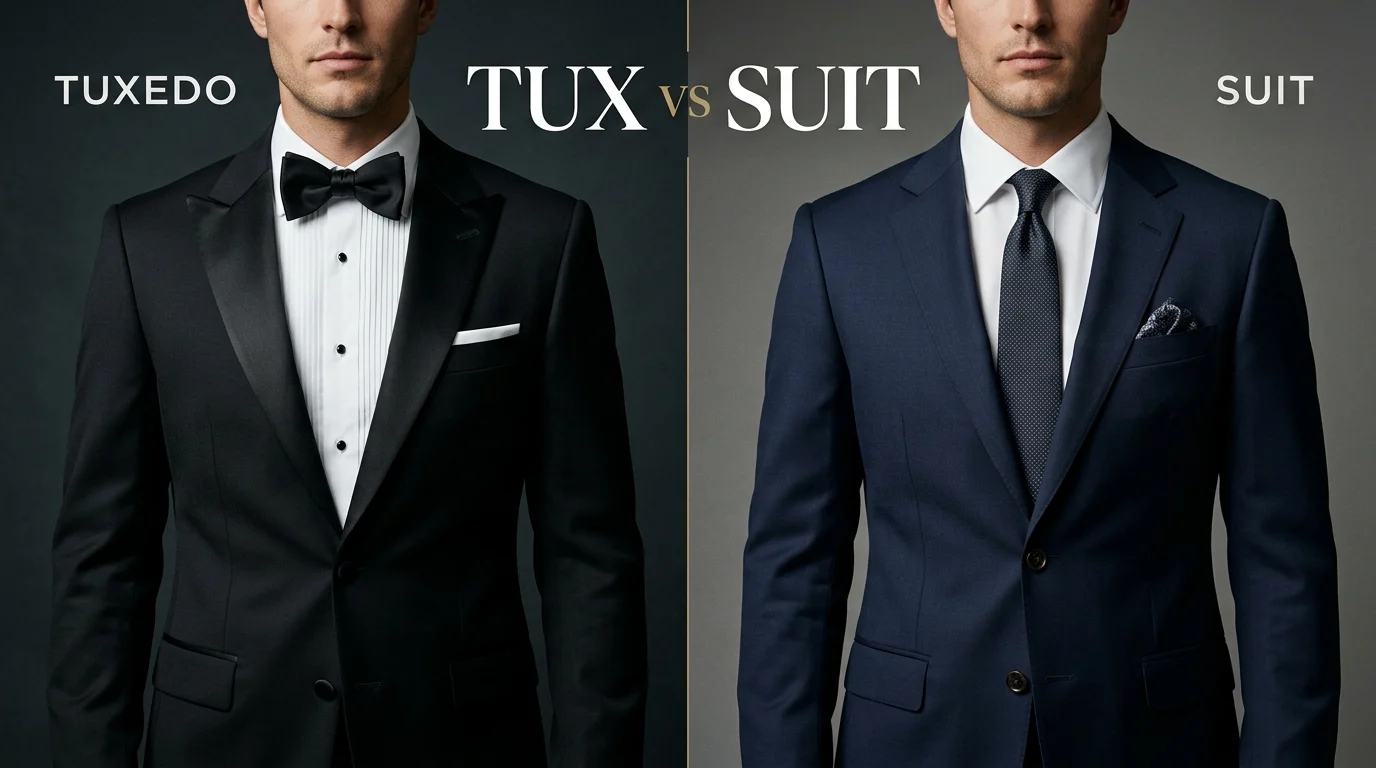
The difference between tux and suit mainly comes down to formality, design, and when you wear them. A tuxedo is a formal evening outfit traditionally associated with the black-tie dress code. It usually has satin or grosgrain details on the lapels and trousers and is worn with a bow tie. A regular suit is more flexible. It can work for business, weddings, interviews, dinners, and many formal or semi-formal events.
In simple terms, a tux is a specialized type of formal suit, while a regular suit is a much broader category of clothing. The difference between tux and suit becomes easiest to see when you compare their lapels, trousers, shirt, neckwear, shoes, and dress code.
If an invitation says black tie, a tuxedo is normally the expected choice. When it says formal attire, a dark suit may be appropriate depending on the event. If it says black tie optional, you can usually choose between a tuxedo and a very dark formal suit.
Tux vs. Suit: Quick Comparison
| Feature | Tuxedo | Suit |
|---|---|---|
| Main purpose | Formal evening wear | Versatile formal or professional wear |
| Typical dress code | Black tie | Business, cocktail, formal, semi-formal |
| Lapels | Usually satin or grosgrain | Usually the same fabric as the jacket |
| Trousers | Often have a satin side stripe | Usually plain |
| Shirt | Formal tuxedo shirt | Standard dress shirt |
| Neckwear | Traditionally black bow tie | Usually necktie; sometimes no tie |
| Shoes | Very formal black dress shoes | Leather dress shoes in many styles |
| Colors | Usually black or midnight blue | Many colors and patterns |
| Time of day | Traditionally evening | Day or evening |
| Versatility | Limited to formal occasions | Much more versatile |
What Is a Tuxedo?
A tuxedo is a formal evening suit designed for special occasions. It is usually made with a black or midnight-blue jacket and matching trousers. Traditional tuxedos have satin or grosgrain details on the lapels and often a matching stripe down the outer seam of the trousers.
The classic tuxedo outfit also includes a white formal shirt, black bow tie, formal black shoes, and sometimes a cummerbund or waistcoat. Emily Post lists a black tuxedo, white formal shirt, black bow tie, and formal black shoes as core elements of traditional black-tie attire.
A tuxedo is not simply a black suit. The special trim and accessories give it a more formal appearance.
Common tuxedo features
- Satin or grosgrain lapels
- Matching formal trousers
- Satin trouser stripe
- White formal shirt
- Black bow tie
- Formal black shoes
- Cummerbund or waistcoat in traditional styling
- Minimal, polished accessories
Tuxedos can also have different lapel styles. Peak lapels and shawl lapels are especially common.
What Is a Suit?
A suit is a matching set of clothing, usually consisting of a jacket and trousers made from the same material. A three-piece suit adds a matching waistcoat.
Suits come in many colors, fabrics, patterns, and levels of formality. A navy wool suit can work at a business meeting, while a dark charcoal suit can work at a wedding or formal dinner.
Unlike a tuxedo, a regular suit normally does not have satin or grosgrain trim. The lapels are usually made from the same fabric as the jacket.
This makes a suit much easier to use for different occasions.
The Main Difference Between a Tux and a Suit
The biggest difference is the level and type of formality.
A tuxedo is designed for formal evening occasions, especially those with a black-tie dress code. A suit is designed to cover a much wider range of situations.
There are also visible differences:
1. Lapels
Tuxedo lapels are traditionally faced with satin or grosgrain. This creates a subtle contrast between the shiny lapel and the main fabric of the jacket.
Regular suit lapels usually use the same material as the rest of the jacket.
2. Trousers
Tuxedo trousers often have a satin or grosgrain stripe running down the outer seam. They are designed to match the formal jacket.
Regular suit trousers usually have no satin stripe.
3. Neckwear
A traditional tuxedo is worn with a black bow tie.
A regular suit is most often worn with a standard necktie, although some modern settings allow an open collar or other styling.
4. Shirt
Tuxedo shirts are more formal than ordinary dress shirts. They may have pleated or piqué fronts, French cuffs, and shirt studs.
A suit can be worn with a much wider range of dress shirts.
5. Shoes
Tuxedos traditionally call for very formal black footwear. Patent leather or other highly polished formal shoes are common.
Suits allow more choice. Depending on the event, you might wear black or brown leather Oxfords, Derbies, loafers, or other dress shoes.
6. Versatility
A suit is the more flexible option.
You can wear the same navy suit to work, a wedding, a dinner, an interview, or a networking event by changing the shirt, tie, and shoes.
A tuxedo is much more occasion-specific.
Is a Tuxedo a Type of Suit?
Yes. A tuxedo is a type of suit, but not every suit is a tuxedo.
The word suit is a broad term for matching garments such as a jacket and trousers. A tuxedo is a specialized formal evening suit with distinctive styling and accessories.
Think of it this way:
Suit = broad category
Tuxedo = specific formal evening type of suit
This is why saying that a tuxedo and a suit are completely unrelated is incorrect. A tuxedo belongs within the wider family of suits.
When Should You Wear a Tuxedo?
Wear a tuxedo when the dress code specifically calls for black tie.
Common occasions include:
- Black-tie weddings
- Formal evening galas
- Formal dinners
- Some award ceremonies
- Prom
- Certain formal receptions
- Other events that specifically request black tie
Emily Post identifies black tie as a formal dress code and lists a tuxedo as the standard men’s outfit.
The invitation should always be your first guide. The time of day, venue, and type of event can help, but the written dress code matters most.
When Should You Wear a Suit?
A suit is usually the better choice when the event calls for:
- Business attire
- Formal attire that does not specify black tie
- Cocktail attire
- Semi-formal attire
- Most daytime weddings
- Job interviews
- Business dinners
- Networking events
- Professional meetings
- Many evening social events
For example, a navy or charcoal suit with a white shirt and conservative tie can look appropriate at a formal wedding that does not require black tie. Wedding etiquette guides also distinguish formal attire from black tie, with dark suits commonly accepted for formal daytime occasions.
Can You Wear a Suit to a Black-Tie Event?
If the invitation simply says black tie, a regular suit is generally not the correct choice.
Black tie is a specific dress code, not just another way of saying “wear something formal.” The traditional expectation for men is a tuxedo with the appropriate formal accessories.
A dark suit may look elegant, but it does not become a tuxedo simply because it is black.
There is an important exception.
What Does Black Tie Optional Mean?
Black tie optional gives men two main choices:
- A traditional tuxedo
- A dark, formal suit
Emily Post specifically describes black-tie optional as allowing a tuxedo or a dark suit with a white dress shirt and conservative tie.
So “optional” does not mean casual. It means you are not required to wear a tuxedo if you have a suitable dark formal suit.
A charcoal, navy, or black suit is generally a better choice than a light-colored or highly patterned suit for this dress code.
Is a Black Suit the Same as a Tuxedo?
No.
This is one of the most common mistakes.
A black suit can be very formal, but color alone does not make it a tuxedo. A tuxedo has traditional design details such as satin or grosgrain lapels and, in classic styles, a matching stripe on the trousers.
For example:
Black suit:
Black jacket + matching black trousers + regular lapels + dress shirt + necktie
Tuxedo:
Black or midnight-blue dinner jacket + matching formal trousers + satin/grosgrain details + formal shirt + bow tie
The two can look similar from a distance, but the details and dress code are different.
Tuxedo vs. Suit for a Wedding
The right choice depends on the wedding’s dress code.
Black-tie wedding
Wear a tuxedo.
If the invitation says black tie, a tuxedo is the standard choice for men.
Black-tie optional wedding
You can wear either:
- A tuxedo
- A dark formal suit
If you already own a well-fitting tuxedo, it is an easy choice. If not, a dark navy, charcoal, or black suit can work when styled formally.
Formal wedding
A dark suit is often appropriate, especially for a daytime wedding. Evening weddings may call for a darker and dressier look.
Semi-formal wedding
A suit is usually enough. A tuxedo may look too formal unless the couple gives different instructions.
The invitation is more useful than guessing based only on the word “wedding.”
Tuxedo vs. Suit for Prom
Prom is often a tuxedo-friendly event because it tends to be a formal evening occasion.
If the school’s or venue’s dress code permits it, students may have more freedom with tuxedo colors, lapel styles, and accessories than they would at a traditional black-tie event.
Still, check the event’s rules before choosing a nontraditional style.
Tuxedo vs. Suit for a Job Interview
A suit is almost always the more appropriate choice for a standard job interview.
A tuxedo can look dramatically overdressed in a business setting because it is designed for evening formalwear, not normal professional dress.
For most professional interviews, a well-fitting navy, charcoal, or other conservative suit is a safer choice.
Tuxedo vs. Suit for a Dinner
It depends on the dress code.
If the invitation says black tie, wear a tuxedo.
If it says formal, a tuxedo or dark suit may be appropriate depending on the event.
When it says cocktail attire, a suit is usually the better option.
If there is no clear dress code, consider the venue, time, and purpose of the dinner. A formal evening at an upscale venue calls for a dressier outfit than a casual restaurant dinner.
Can You Wear a Tuxedo During the Day?
Traditionally, tuxedos are evening wear. Modern dress codes are more flexible in some settings, but a daytime tuxedo can still look unusual unless the event specifically calls for it.
If you are attending a daytime wedding or business event, a suit is normally a more natural choice.
For a formal daytime event, follow the invitation rather than assuming that “more formal” always means “tuxedo.”
Tuxedo vs. Suit: Which Is More Formal?
A tuxedo is generally more formal than a regular suit.
A simplified formality order looks like this:
Casual → Smart Casual → Cocktail/Semi-Formal → Formal → Black Tie → White Tie
A standard suit can appear at several points on this scale depending on its fabric, color, styling, and the dress code.
A tuxedo is much more closely tied to the black-tie end of the scale.
A tuxedo is also not the same as white tie, which is a more formal dress code with a tailcoat, white bow tie, waistcoat, and other traditional elements.
Tuxedo vs. Suit: Which Is More Versatile?
A suit is more versatile.
One good suit can serve several purposes. You can change its appearance with different shirts, ties, shoes, and pocket squares.
A tuxedo has fewer uses because its design is closely connected to formal evening events.
That does not make a tuxedo less useful. It simply means you should buy or rent one when you expect to attend events where black tie is appropriate.
Tuxedo and Suit Accessories
Accessories also help separate the two styles.
Traditional tuxedo accessories
- Black bow tie
- Formal white shirt
- Cufflinks
- Shirt studs when appropriate
- Cummerbund or waistcoat
- Black formal shoes
- Simple pocket square
Typical suit accessories
- Necktie
- Dress shirt
- Belt
- Pocket square
- Leather dress shoes
- Watch
- Optional tie bar or cufflinks
You should not simply combine random tuxedo and suit elements.
For example, wearing a standard business suit with a tuxedo shirt and black bow tie does not automatically create a traditional tuxedo. The jacket and trousers still determine much of the outfit’s identity.
Common Mistakes About Tuxedos and Suits
Mistake 1: Thinking every black suit is a tuxedo
Color does not define a tuxedo. Its construction and formal details matter.
Mistake 2: Wearing a tuxedo to every formal event
A tuxedo is not automatically the right answer whenever an invitation says “formal.” Formal attire can allow a dark suit, depending on the event.
Mistake 3: Treating black tie optional as casual
Black tie optional still calls for a polished, formal outfit. The alternative to a tuxedo is generally a dark formal suit, not business casual clothing.
Mistake 4: Ignoring the invitation
The event’s dress code should come before personal preference.
Mistake 5: Choosing style over fit
A tuxedo or suit that fits poorly can look less polished than a simpler outfit that fits correctly. Shoulder fit, jacket length, trouser break, and sleeve length all matter.
Tuxedo vs. Suit: British and American Terms
There is also a useful vocabulary difference.
In American English, tuxedo is the common word for this type of formal evening outfit.
In British English, the usual term is dinner suit. Dinner jacket can also refer to the jacket itself. Oxford lists “dinner suit” as the British English term corresponding to “tuxedo,” while Cambridge likewise labels dinner suit as the UK term and tuxedo as the US equivalent.
The word tux is an informal shortened form of tuxedo.
The word tuxedo comes from Tuxedo Park in New York, where the style was associated with fashionable evening clothing.
Tux vs. Suit: Which One Should You Choose?
Use the dress code first, then consider the event.
| If the invitation says… | Best choice |
|---|---|
| Black tie | Tuxedo |
| Black tie optional | Tuxedo or dark formal suit |
| Formal | Usually a dark suit; tuxedo may work for an evening event |
| Cocktail | Suit |
| Semi-formal | Suit |
| Business formal | Suit |
| Business casual | Neither is usually required |
| Daytime wedding | Usually a suit |
| Black-tie evening wedding | Tuxedo |
| Job interview | Suit |
If you are unsure, do not judge only by the color of the clothing. Look at the dress code, time, venue, and formality of the event.
Frequently Asked Questions
Is a tuxedo better than a suit?
Neither is universally better. A tuxedo is better when the event calls for black tie. A suit is better when you need a versatile outfit for business, weddings, interviews, or other formal and semi-formal occasions.
Can I wear a black suit instead of a tuxedo?
Usually not for a strict black-tie event. A black suit can be acceptable when the dress code says black tie optional or allows a formal dark suit.
Is a tuxedo just a fancy suit?
A tuxedo is a type of formal suit, but it has distinctive details and a specific role in evening dress. Satin or grosgrain trim, formal trousers, and traditional black-tie accessories help distinguish it from an ordinary suit.
Can you wear a regular tie with a tuxedo?
Traditional black tie calls for a black bow tie. Modern fashion sometimes allows variations, but if the invitation says black tie and you want the safest traditional choice, use a black bow tie.
Is a tuxedo more formal than a suit?
Yes. A tuxedo is generally more formal than a standard suit and is associated with black-tie evening events.
What is the difference between a tux and a dinner suit?
In most contexts, there is no major difference. Tuxedo is the common American term, while dinner suit is commonly used in British English.
Test Your Knowledge
1. What is the main dress code associated with a tuxedo?
A. Smart casual
B. Black tie
C. Business casual
D. Casual
Correct answer: B. Black tie
2. Which feature is commonly found on a traditional tuxedo?
A. Denim lapels
B. Satin or grosgrain lapels
C. Cargo pockets
D. Wool cuffs
Correct answer: B. Satin or grosgrain lapels
3. What does “black tie optional” usually allow for men?
A. Jeans or a blazer
B. A polo shirt or suit
C. A tuxedo or dark formal suit
D. Casual trousers and sneakers
Correct answer: C. A tuxedo or dark formal suit
4. Which outfit is generally better for a job interview?
A. Tuxedo
B. Dark or conservative suit
C. Dinner jacket with bow tie
D. Cummerbund and tuxedo trousers
Correct answer: B. Dark or conservative suit
5. Is every black suit a tuxedo?
A. Yes
B. Only at night
C. Only at weddings
D. No
Correct answer: D. No
6. What is a tuxedo commonly called in British English?
A. Lounge jacket
B. Dinner suit
C. Business suit
D. Morning suit
Correct answer: B. Dinner suit
Conclusion
The difference between tux and suit is not simply that one is black and the other can have different colors. A tuxedo is a specialized formal evening suit, usually marked by satin or grosgrain details and traditionally worn with a bow tie. A regular suit is more versatile and works across professional, formal, and semi-formal settings.
For a strict black-tie event, choose a tuxedo. For most business occasions, interviews, cocktail events, and many weddings, a well-fitting suit is the more practical choice. When the invitation says black tie optional, either a tuxedo or a dark formal suit can work.
The safest rule is simple: read the dress code first, then choose the outfit that matches it.
External link sources
- Emily Post — Black Tie Dress Code — authoritative guidance on black-tie attire and black-tie optional.
- Emily Post — Attire Guide: Dress Codes — useful for comparing black tie, formal, and other dress codes.
- Oxford Learner’s Dictionary — Tuxedo — definition, British usage, pronunciation, and word origin.
- Cambridge Dictionary — Dinner Suit — British/American terminology comparison.
- GQ — Tuxedo vs. Suit: A 101 Guide — detailed menswear comparison and formalwear hierarchy.
- The Knot — Formal Wedding Attire — current guidance on formal versus black-tie wedding dress codes.

Mira Anand is a writer at Distinly.com who focuses on storytelling, communication, and social perspective. Her work highlights subtle differences in language and meaning across cultures and communities. With a clear and empathetic voice, Mira helps readers understand how narratives shape understanding, relationships, and modern dialogue in an increasingly connected world.