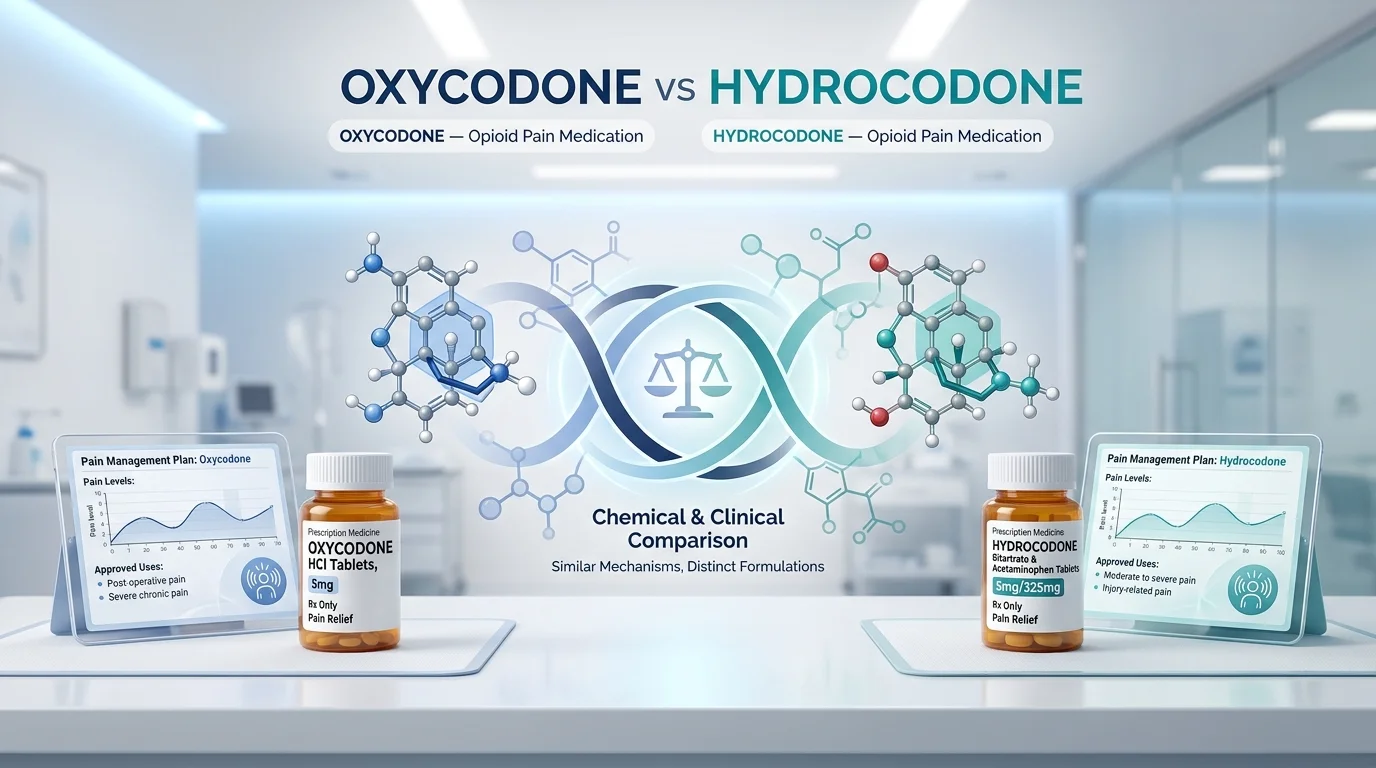
Difference between oxycodone and hydrocodone often becomes important when someone receives a prescription for pain relief. Imagine a patient after surgery asking, “Which medicine is stronger or safer?” That simple question leads to a deeper comparison.
The difference between oxycodone and hydrocodone lies in how these medications work, their strength, and how doctors prescribe them. Both belong to a group of drugs called opioids, used to treat moderate to severe pain.
Many people search for the difference between oxycodone and hydrocodone because the names sound similar, and both are commonly used. However, they are not identical in effect or use.
Let’s break down their meanings, uses, and differences in a clear and simple way.
🔍 Key Difference Between the Both
The main difference is:
- Oxycodone is generally stronger and used for more severe pain
- Hydrocodone is slightly milder and often used for moderate pain
Both relieve pain, but doctors choose them based on the patient’s condition and needs.
🌍 Importance – Why Their Difference Matters
Understanding the difference between oxycodone and hydrocodone is very important for safety and awareness.
For students and learners, it improves health literacy. Knowing basic drug differences helps in understanding medical topics and prescriptions.
For healthcare professionals, accuracy is critical. Correct usage ensures proper pain management and reduces risks like misuse or overdose.
In society, awareness helps prevent medication errors. It also encourages responsible use of prescription drugs, which is essential in addressing global concerns about opioid misuse.
🔊 Pronunciation Section
Oxycodone
US: /ˌɑːk.siˈkoʊ.doʊn/
UK: /ˌɒk.sɪˈkəʊ.dəʊn/
Hydrocodone
US: /ˌhaɪ.droʊˈkoʊ.doʊn/
UK: /ˌhaɪ.drəʊˈkəʊ.dəʊn/
Now that you know how to pronounce them, let’s define each clearly.
📚 Core Definitions
Oxycodone
Oxycodone is a strong opioid used to treat moderate to severe pain. Doctors often prescribe it after surgery or for serious injuries.
It has a powerful and controlled medical tone due to its potency.
Example:
A doctor prescribed oxycodone after major surgery to manage intense pain.
Hydrocodone
Hydrocodone is a moderately strong opioid used for pain relief and sometimes combined with other drugs like acetaminophen.
It carries a slightly milder tone compared to stronger opioids.
Example:
The patient received hydrocodone for pain after a dental procedure.
📚 10 Clear Differences Between Oxycodone and Hydrocodone
1. Strength (Severity)
Oxycodone is generally stronger than hydrocodone. Doctors use it for more intense pain.
- Example for Oxycodone: Used after major surgery.
- Example for Hydrocodone: Used after minor procedures.
2. Pain Level Treated
Oxycodone treats moderate to severe pain. Hydrocodone treats mild to moderate pain.
- Example for Oxycodone: Cancer-related pain management.
- Example for Hydrocodone: Injury-related pain.
3. Drug Formulation
Oxycodone is available alone or combined. Hydrocodone is often combined with other medications.
- Example for Oxycodone: Prescribed as a single drug.
- Example for Hydrocodone: Often combined with acetaminophen.
4. Duration of Action
Oxycodone may last longer, especially in extended-release forms. Hydrocodone usually has a shorter duration.
- Example for Oxycodone: Extended-release for all-day relief.
- Example for Hydrocodone: Taken multiple times daily.
5. Effect on the Brain
Both affect the brain’s pain receptors, but oxycodone produces a stronger effect.
- Example for Oxycodone: Strong pain relief signals.
- Example for Hydrocodone: Moderate relief signals.
6. Risk of Dependence
Both carry addiction risk, but oxycodone may have a higher risk due to its strength.
- Example for Oxycodone: Requires strict monitoring.
- Example for Hydrocodone: Still requires caution.
7. Prescription Practices
Doctors prescribe oxycodone more carefully. Hydrocodone is more commonly prescribed.
- Example for Oxycodone: Used in controlled cases.
- Example for Hydrocodone: Used more widely.
8. Psychological Impact
Oxycodone may cause stronger euphoria. Hydrocodone has milder effects.
- Example for Oxycodone: Strong sense of relief.
- Example for Hydrocodone: Mild relaxation.
9. Cost and Availability
Oxycodone can be more expensive. Hydrocodone is often more accessible.
- Example for Oxycodone: Higher cost prescription.
- Example for Hydrocodone: More affordable option.
10. Usage Context
Oxycodone is used in severe medical cases. Hydrocodone is used in general pain treatment.
- Example for Oxycodone: Post-surgical recovery.
- Example for Hydrocodone: Dental or injury pain.
🎯 Why Knowing the Difference Matters
Students benefit by understanding basic pharmacology and health concepts. This knowledge builds awareness about safe medication use.
Professionals, especially in healthcare, must distinguish between these drugs clearly. Correct decisions can improve patient outcomes and reduce risks.
In daily life, knowing the difference helps patients ask better questions and follow prescriptions responsibly.
Real-world consequences of confusion
Mixing up these medications can lead to incorrect dosing or misuse. This may result in serious health risks, including overdose or ineffective pain relief.
🧠 Why People Get Confused
Similar Spelling or Pronunciation
Both names look and sound alike, which easily causes confusion.
Semantic Overlap
Both drugs treat pain and belong to the same opioid category.
Context-Based Usage
Doctors may prescribe both for similar conditions, depending on severity.
Influence of Informal Speech
People often refer to both simply as “painkillers,” which hides the difference.
🎭 Connotation & Emotional Tone
Connotation = the emotional meaning associated with a word.
Oxycodone
- Positive: Strong relief
Example: Oxycodone helped control severe pain. - Neutral: Prescription medication
- Negative: High addiction risk
Hydrocodone
- Positive: Effective pain management
Example: Hydrocodone eased moderate pain. - Neutral: Common medication
- Negative: Risk of misuse
🗣 Usage in Metaphors, Similes & Idioms
These medical terms are not commonly used in idioms. However, they may appear metaphorically:
- “That solution worked like oxycodone—fast and powerful.”
- “His response was like hydrocodone—effective but mild.”
📊 Comparison Table
| Feature | Oxycodone | Hydrocodone |
|---|---|---|
| Meaning | Strong opioid | Moderate opioid |
| Tone | Powerful | Mild |
| Usage | Severe pain | Moderate pain |
| Context | Post-surgery, serious cases | General pain relief |
| Formality | Medical | Medical |
⚖️ Which Is Better in What Situation?
When to use Oxycodone
Doctors use oxycodone for severe pain, such as after major surgery. It works well when strong relief is needed.
When to use Hydrocodone
Hydrocodone suits moderate pain, like dental procedures or injuries. It provides relief without extreme potency.
Situational clarity
The choice depends on pain level and patient condition.
Contextual correctness
Doctors decide based on safety, effectiveness, and medical history.
📖 Literary or Cultural References
- Book: Dreamland: The True Tale of America’s Opiate Epidemic by Sam Quinones (Non-fiction, 2015)
- Movie: Beautiful Boy (USA, 2018)
These works explore opioid use and its impact on society.
❓ FAQs
1. Which is stronger, oxycodone or hydrocodone?
Oxycodone is generally stronger. Doctors use it for more severe pain, while hydrocodone is used for moderate pain.
2. Are both drugs addictive?
Yes, both are opioids and can be addictive. Proper medical supervision is essential.
3. Can they be used interchangeably?
No, they are not always interchangeable. Doctors choose based on pain severity and patient needs.
4. Why do doctors prescribe hydrocodone more often?
Hydrocodone is milder and suitable for common pain conditions. It is often combined with other medications.
5. Is oxycodone more dangerous?
It can be riskier due to its strength, especially if misused. Careful monitoring is required.
🏁 Conclusion
The difference between oxycodone and hydrocodone mainly lies in strength, usage, and risk level. Oxycodone provides stronger relief for severe pain, while hydrocodone is used for moderate conditions.
Understanding this distinction helps patients use medications safely and responsibly. It also supports better communication with healthcare providers.
Clear knowledge reduces confusion and improves decision-making. Whether you are a student or a patient, this awareness matters.
Stay informed, follow medical advice, and always use medications responsibly for your well-being.

Aamer Shahzad is the founder of Distinly.com, a fast-growing educational platform focused on high-intent “difference between” topics. With over 8 years of experience in English language education and analytical writing, I specialize in breaking down complex “difference between” topics into clear, structured, and easy-to-understand explanations. Distinly.com is your go-to resource for enhancing English skills and writing with confidence.
I specializes in building search-optimized, research-driven comparison content designed for clarity, authority, and long-term digital asset value.