Difference between soup and stew often comes up when you’re cooking at home or reading a recipe. Imagine you are in your kitchen, stirring a pot, and you wonder, “Is this soup or stew?” It seems simple, but the answer can be tricky.
The difference between soup and stew is mainly about texture, liquid, and cooking style. Both are warm, comforting dishes made with ingredients like vegetables, meat, or grains. Yet, they feel and look quite different.
Many people use these words in the same way. But knowing the difference between soup and stew helps you cook better and speak more clearly.
Let’s break it down step by step so you can understand it easily.
Key Difference Between the Both
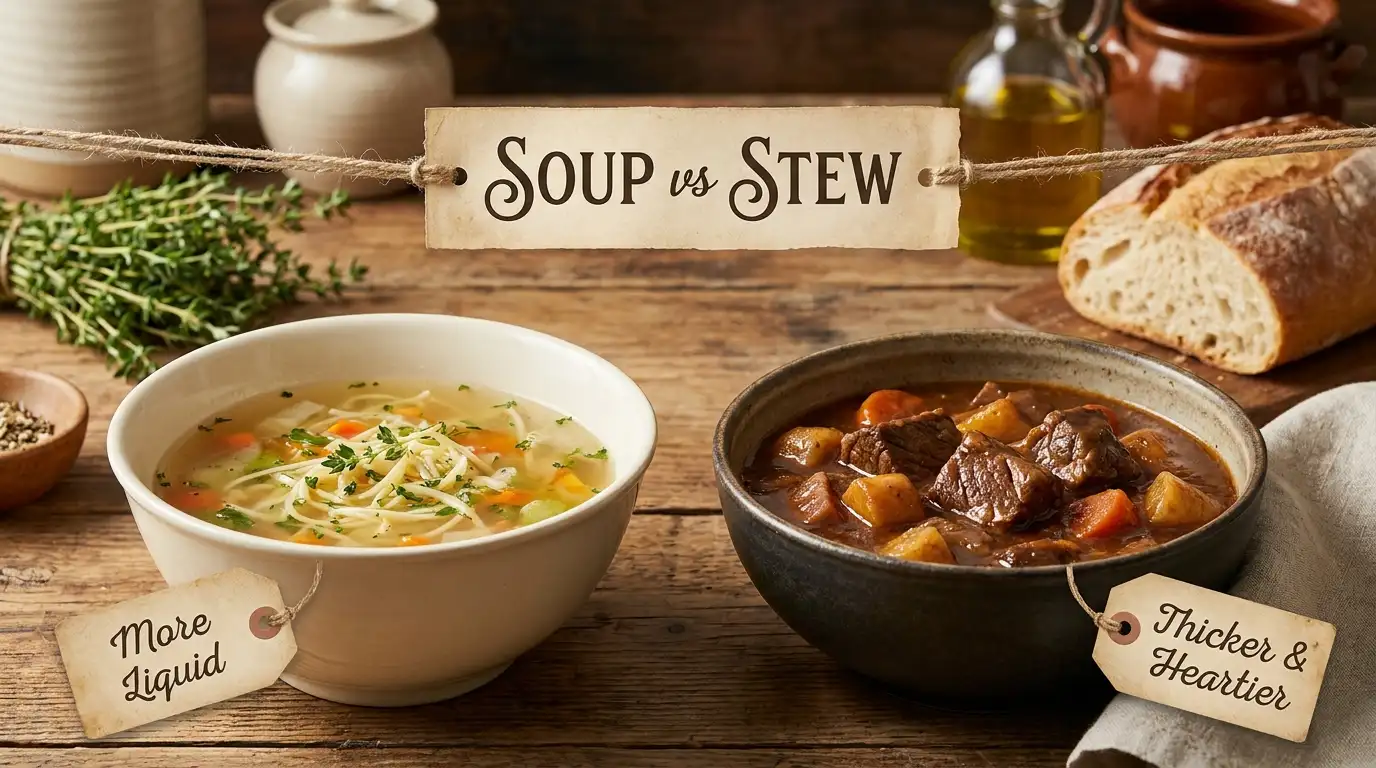
The main difference is liquid vs thickness.
- Soup has more liquid and is usually thin.
- Stew has less liquid and is thick, rich, and hearty.
Soup is often served as a starter. Stew is usually a full meal.
Importance – Why Knowing the Difference Matters 🌍
Understanding this difference is useful for both learners and experts.
For learners, it improves vocabulary and cooking knowledge. You can follow recipes better and speak clearly.
For chefs or professionals, it ensures correct dish preparation. Calling a stew a soup can confuse customers or readers.
In society, food language matters. Clear communication helps avoid misunderstandings in restaurants, cooking shows, and daily conversations.
🔊 Pronunciation Section
Soup
US: /suːp/
UK: /suːp/
Stew
US: /stuː/
UK: /stjuː/
Now that you can say both words correctly, let’s understand their meanings.
📚 Core Definitions
Soup
Soup is a liquid food made by boiling ingredients like vegetables, meat, or grains in water or broth. It is usually light and easy to drink.
Example: I had hot tomato soup before dinner.
Stew
Stew is a thick dish made by slowly cooking solid ingredients in a small amount of liquid. It is rich and filling.
Example: We ate beef stew with bread for dinner.
📚 10 Clear Differences Between Soup and Stew
1. Thickness
Soup is thin and watery. Stew is thick and dense.
- Example for soup: Chicken soup flows easily in a bowl.
- Example for stew: Beef stew stays heavy on the spoon.
2. Liquid Content
Soup contains more liquid. Stew uses less liquid.
- Example for soup: Vegetable soup has a lot of broth.
- Example for stew: Stew has just enough liquid to cook ingredients.
3. Cooking Time
Soup cooks faster. Stew cooks slowly for longer.
- Example for soup: Soup is ready in 30 minutes.
- Example for stew: Stew takes hours to become tender.
4. Purpose
Soup is often a starter. Stew is a main meal.
- Example for soup: Soup comes before the main dish.
- Example for stew: Stew is the main dish itself.
5. Texture
Soup is smooth or slightly chunky. Stew is very chunky.
- Example for soup: Cream soup feels smooth.
- Example for stew: Stew has big pieces of meat and vegetables.
6. Cooking Method
Soup is boiled or simmered. Stew is slow-cooked.
- Example for soup: Soup cooks quickly on high heat.
- Example for stew: Stew cooks slowly on low heat.
7. Serving Style
Soup is served in bowls and often sipped. Stew is eaten with a spoon or fork.
- Example for soup: You can drink soup.
- Example for stew: You chew stew.
8. Nutritional Feel
Soup feels light. Stew feels heavy and filling.
- Example for soup: Soup is good when you are sick.
- Example for stew: Stew keeps you full for hours.
9. Ingredient Size
Soup has smaller pieces. Stew has large chunks.
- Example for soup: Vegetables are finely chopped.
- Example for stew: Vegetables are cut into big pieces.
10. Flavor Intensity
Soup has mild flavor. Stew has strong, rich flavor.
- Example for soup: Soup tastes light.
- Example for stew: Stew tastes deep and rich.
🎯 Why Knowing the Difference Matters
Students need this knowledge to improve vocabulary and avoid mistakes in speaking and writing. It helps them understand recipes and food descriptions.
Professionals, especially chefs and writers, must use the correct term. It builds trust and clarity in communication.
In daily life, using the wrong word can confuse others. Clear language makes conversations smoother.
Real-world Consequences of Confusion
If you order soup but receive stew, you may feel disappointed. In cooking, wrong terms can ruin a recipe. Clear words lead to better results.
🧠 Why People Get Confused
Similar Usage
Both are hot dishes made in a pot. That makes them seem the same.
Context Overlap
People often use both words casually, especially in informal speech.
Visual Similarity
Some thick soups look like stew, which causes confusion.
Language Simplicity
In daily talk, people don’t focus on technical differences.
🎭 Connotation & Emotional Tone
Connotation = the emotional meaning associated with a word.
Soup
- Positive: Comfort, warmth (Chicken soup when sick)
- Neutral: Everyday food
- Negative: Rarely negative
Stew
- Positive: Hearty, satisfying (A warm stew on a cold day)
- Neutral: Regular meal
- Negative: Sometimes heavy or too filling
🗣 Usage in Metaphors, Similes & Idioms
- “In a stew” → feeling worried or upset
- Example: He was in a stew about the exam.
- “Soup up” → improve or make stronger
- Example: They souped up the car engine.
These phrases show how both words appear in everyday language.
📊 Comparison Table
| Feature | Soup | Stew |
|---|---|---|
| Meaning | Liquid dish | Thick dish |
| Tone | Light | Heavy |
| Usage | Starter | Main meal |
| Context | Quick meals | Slow cooking |
| Formality | Neutral | Neutral |
⚖️ Which Is Better in What Situation?
When to Use Soup
Use soup when you want something light, quick, and easy. It works well as a starter or when you are sick.
When to Use Stew
Use stew when you want a full, filling meal. It is great for cold weather and long cooking.
Situational Clarity
Soup fits short meals. Stew fits long, relaxed meals.
Contextual Correctness
Choose the word based on texture and purpose. Thin = soup, thick = stew.
📖 Literary or Cultural References
- Book: Stone Soup (Folklore, Traditional, 1720s)
- Movie: Julie & Julia (USA, 2009) – shows cooking styles including soups and stews
These works highlight how food plays a role in culture and storytelling.
❓ FAQs
1. Is stew just a thick soup?
No, stew is not just thick soup. It has less liquid and cooks slowly. The ingredients stay chunky and rich.
2. Can soup become stew?
Yes, if you reduce the liquid and cook it longer, soup can turn into stew. The texture becomes thicker.
3. Which is healthier, soup or stew?
Both can be healthy. Soup is lighter, while stew is more filling. It depends on ingredients.
4. Why does stew take longer to cook?
Stew uses slow cooking to make meat tender and flavors rich. This process needs more time.
5. Can you drink stew like soup?
No, stew is too thick to drink. You need a spoon to eat it.
🏁 Conclusion
The difference between soup and stew is simple but important. Soup is light, liquid, and quick to prepare. Stew is thick, rich, and slow-cooked. Both are delicious, but they serve different purposes.
Knowing this difference helps you cook better, speak clearly, and understand recipes with ease. It also improves your vocabulary and confidence in daily conversations.
Next time you are in the kitchen or reading a menu, you will know exactly what to expect. Keep learning, stay curious, and enjoy exploring the world of words and food! 😊

Aamer Shahzad is the founder of Distinly.com, a fast-growing educational platform focused on high-intent “difference between” topics. With over 8 years of experience in English language education and analytical writing, I specialize in breaking down complex “difference between” topics into clear, structured, and easy-to-understand explanations. Distinly.com is your go-to resource for enhancing English skills and writing with confidence.
I specializes in building search-optimized, research-driven comparison content designed for clarity, authority, and long-term digital asset value.