The difference between celibacy and abstinence often comes up when people talk about lifestyle choices, personal values, or health decisions. A student hears both words and wonders if they mean the same thing.
The difference between celibacy and abstinence lies in intention and duration. One is often long-term or lifelong, while the other can be temporary or situational.
The difference between celibacy and abstinence is important in education, religion, and health discussions. These terms may sound similar, but they carry different meanings.
Understanding both helps you speak clearly and avoid confusion in serious conversations. Let’s break it down in a simple and practical way.
🔍 Key Difference Between Celibacy and Abstinence
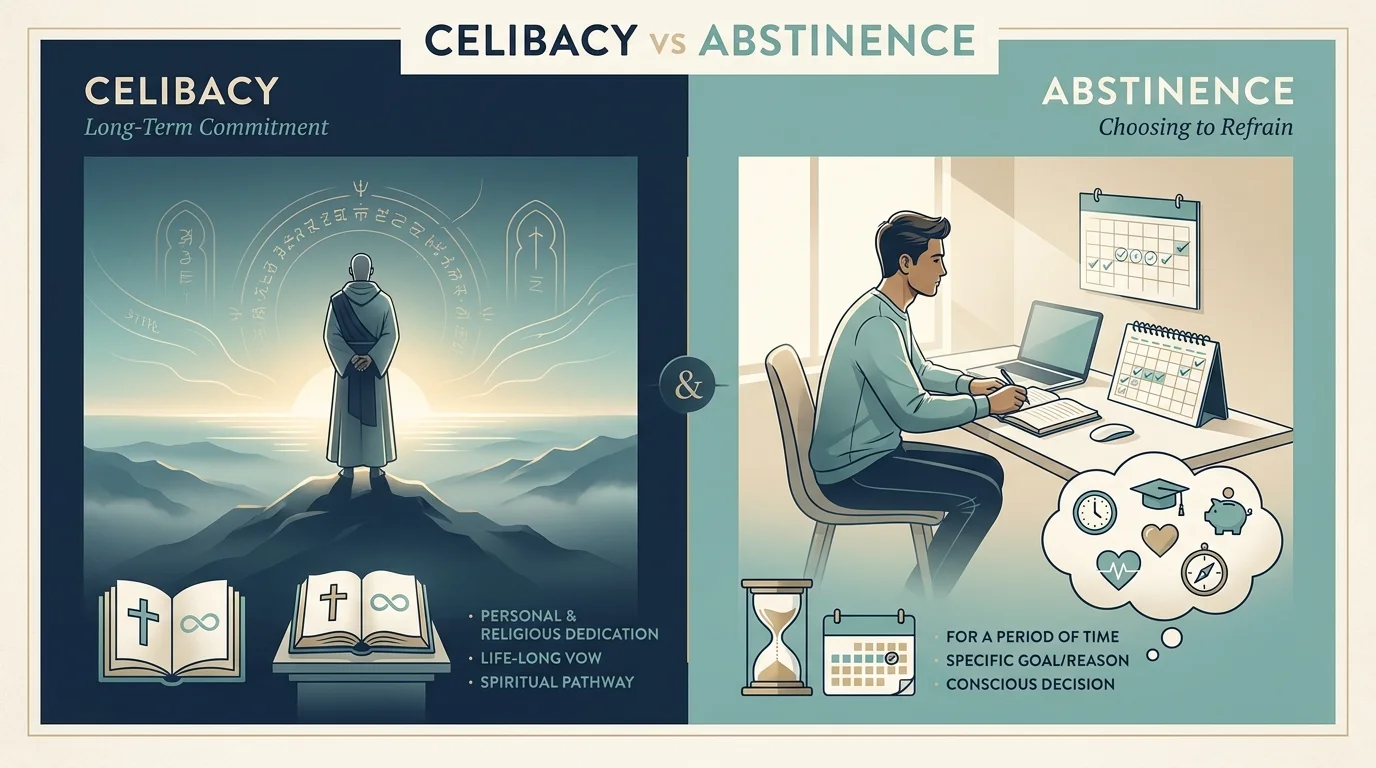
Celibacy usually means a long-term or lifelong decision to avoid sexual activity, often for personal or religious reasons. Abstinence means choosing to avoid sexual activity, usually for a period of time or specific purpose.
🌍 Importance – Why Knowing the Difference Matters
Students need to understand this difference for accurate learning in health and social studies. It helps them use the right word in the right context.
Professionals like educators, counselors, and writers must use these terms correctly. It ensures clear communication and avoids misunderstanding.
In society, people often confuse the two. Knowing the difference supports respectful conversations about personal choices and values.
🧠 Real-world consequences of confusion
Using the wrong term may cause misunderstanding in discussions about health, religion, or personal beliefs.
🔊 Pronunciation Section
Celibacy
US: /ˈsɛlɪbəsi/
UK: /ˈsɛlɪbəsi/
Abstinence
US: /ˈæbstɪnəns/
UK: /ˈæbstɪnəns/
Now, let’s clearly define each term before comparing them.
📚 Core Definitions
✝️ Celibacy
Celibacy is a long-term or lifelong choice to avoid sexual activity. It is often linked to religious, spiritual, or personal commitments. The tone is serious and disciplined.
- Example: A monk chooses celibacy as part of his spiritual life.
🚫 Abstinence
Abstinence is a choice to avoid sexual activity for a certain time. It may be for health, personal, or social reasons. The tone is practical and flexible.
- Example: Teenagers may practice abstinence for health education reasons.
📊 10 Clear Differences Between Celibacy and Abstinence
1. Duration
Celibacy is usually long-term or lifelong. Abstinence is often temporary.
- Celibacy example: A person commits for life.
- Abstinence example: A person chooses it for a few months.
2. Purpose
Celibacy often has spiritual or religious reasons. Abstinence may have health or personal reasons.
- Celibacy: Religious commitment.
- Abstinence: Health or safety choice.
3. Emotional Intensity
Celibacy involves deeper commitment. Abstinence is more flexible.
- Celibacy: Strong personal vow.
- Abstinence: Situational decision.
4. Flexibility
Celibacy is strict and fixed. Abstinence can change over time.
- Celibacy: No change in decision.
- Abstinence: Can be temporary.
5. Context of Use
Celibacy appears in religious or spiritual contexts. Abstinence appears in education and health contexts.
- Celibacy: Religious teachings.
- Abstinence: Health programs.
6. Formality
Celibacy sounds more formal and serious. Abstinence is more common in daily speech.
- Celibacy: Formal discussions.
- Abstinence: Everyday usage.
7. Psychological Impact
Celibacy requires long-term discipline. Abstinence requires short-term control.
- Celibacy: Lifelong commitment.
- Abstinence: Temporary effort.
8. Social Perception
Celibacy is often respected as a deep commitment. Abstinence is seen as a personal choice.
- Celibacy: Spiritual respect.
- Abstinence: Practical choice.
9. Expression Style
Celibacy is expressed as a vow. Abstinence is expressed as a decision.
- Celibacy: “I choose lifelong celibacy.”
- Abstinence: “I am practicing abstinence.”
10. Severity
Celibacy is more strict. Abstinence is less strict.
- Celibacy: No exceptions.
- Abstinence: May change later.
🎯 Why Knowing the Difference Matters
Students benefit from understanding these terms clearly. It improves their vocabulary and helps in exams and discussions.
Professionals like teachers and counselors need this clarity. It ensures accurate advice and communication.
In society, using the correct term avoids confusion and supports respectful conversations about sensitive topics.
🧠 Real-world consequences of confusion
Confusion may lead to wrong assumptions about someone’s beliefs or lifestyle choices.
🧠 Why People Get Confused
Similar Words
Both words relate to avoiding something. This makes them seem similar.
Semantic Overlap
Both involve not engaging in sexual activity. This creates overlap in meaning.
Context Usage
People often use them in similar discussions, especially in education.
Informal Speech
In casual talk, people use them interchangeably, increasing confusion.
🎭 Connotation & Emotional Tone
(Connotation = the emotional meaning associated with a word.)
Celibacy
- Positive: Discipline, devotion
- Negative: Restriction or sacrifice
- Neutral: Lifestyle choice
Example: Celibacy reflects strong personal commitment.
Abstinence
- Positive: Responsibility, control
- Negative: Temporary restriction
- Neutral: Personal decision
Example: Abstinence helps in making safe choices.
🗣 Usage in Metaphors & Expressions
These terms are rarely used in idioms, but they can appear in expressive language:
- “Living a life of celibacy” → deep commitment
- “Choosing abstinence” → temporary control
Examples:
- He lives a life of celibacy for spiritual growth.
- She chose abstinence for personal reasons.
📊 Comparison Table
| Feature | Celibacy | Abstinence |
|---|---|---|
| Meaning | Lifelong avoidance | Temporary avoidance |
| Tone | Serious, spiritual | Practical, flexible |
| Usage | Religious context | Health and social context |
| Context | Long-term commitment | Short-term choice |
| Formality | Formal | Common |
⚖️ Which Is Better in What Situation?
When to use Celibacy
Use celibacy when talking about long-term or lifelong commitments, especially in religious or spiritual contexts.
When to use Abstinence
Use abstinence when discussing temporary choices related to health, education, or personal goals.
Situational Clarity
Choose the word based on duration and purpose. This improves clarity in communication.
Contextual Correctness
Correct usage ensures respect and understanding in sensitive conversations.
📖 Literary or Cultural References
- The Celibate (Novel, Theodore Dreiser, 1911)
- Religious texts discussing celibacy in spiritual life
- Health education materials discussing abstinence programs
❓ FAQs
1. Is celibacy the same as abstinence?
No, they are different. Celibacy is usually long-term or lifelong. Abstinence is often temporary and flexible.
2. Can abstinence become celibacy?
Yes, if a person decides to continue abstinence for life, it may become celibacy.
3. Which term is more common in daily life?
Abstinence is more common in daily conversations. Celibacy is used more in formal or religious contexts.
4. Is celibacy always religious?
No, it can be a personal choice as well. However, it is often linked to religious practices.
5. Why do people confuse these terms?
They both involve avoiding sexual activity. This similarity leads to confusion.
🏁 Conclusion
The difference between celibacy and abstinence mainly lies in duration and purpose. Celibacy is long-term and often spiritual, while abstinence is temporary and practical.
Understanding this difference improves communication and helps in sensitive discussions. It allows people to express their choices clearly.
Both terms reflect personal decisions and values. Using them correctly shows respect and awareness.
Keep practicing these differences in real conversations and writing. It will strengthen your vocabulary and confidence in English.

Aamer Shahzad is the founder of Distinly.com, a fast-growing educational platform focused on high-intent “difference between” topics. With over 8 years of experience in English language education and analytical writing, I specialize in breaking down complex “difference between” topics into clear, structured, and easy-to-understand explanations. Distinly.com is your go-to resource for enhancing English skills and writing with confidence.
I specializes in building search-optimized, research-driven comparison content designed for clarity, authority, and long-term digital asset value.