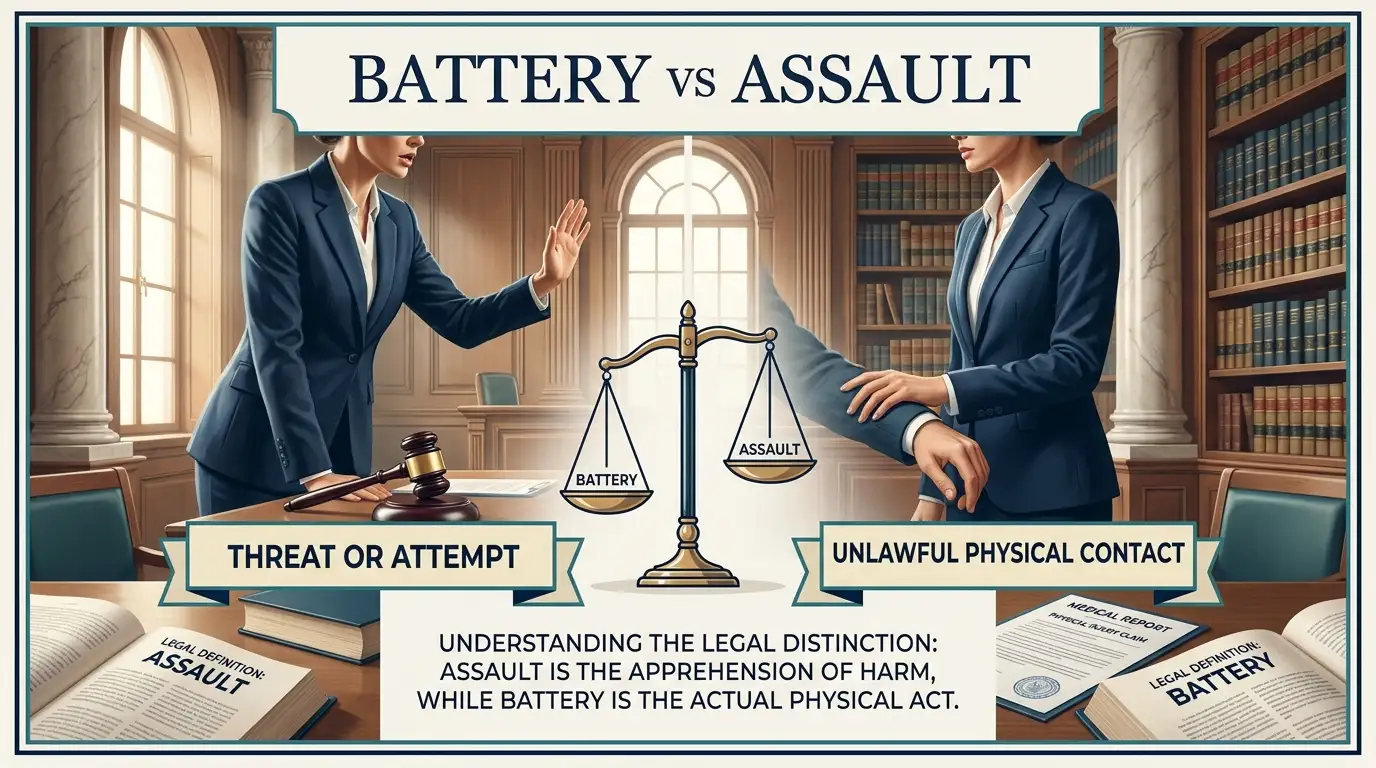
Difference between battery and assault often confuses people, especially in legal discussions or crime-related news. Imagine someone raises their fist and threatens to hit you but stops. Now imagine they actually hit you. Are both actions the same? Not exactly.
The difference between battery and assault lies in the nature of the act. In simple terms, assault is about threat or fear, while battery involves physical contact or harm. These terms may sound similar, but they have distinct legal meanings.
Many learners mix them up because both relate to harm or violence. However, understanding the difference between battery and assault helps you use the terms correctly and understand legal situations better ⚖️.
Let’s break them down clearly step by step.
Key Difference Between the Both
The main difference is:
- Assault is causing fear of harm.
- Battery is actual physical contact or harm.
In short, assault happens before contact, while battery involves touching or hitting.
Importance – Why Their Difference Matters
Understanding this difference is important for both learners and professionals.
First, students benefit because it improves their legal vocabulary and comprehension. It also helps in exams and discussions about law.
Second, professionals such as lawyers, police officers, and journalists must use these terms correctly. A small mistake can change the meaning of a case.
Finally, in society, knowing the difference helps people understand their rights. It also helps in reporting incidents accurately and responsibly.
🔊 Pronunciation Section
Battery
US: /ˈbætəri/
UK: /ˈbætəri/
Assault
US: /əˈsɔːlt/
UK: /əˈsɔːlt/
Now that you know how to pronounce them, let’s define each term clearly before comparing them.
📚 Core Definitions
Battery
In legal terms, battery is the act of intentionally making physical contact with someone in a harmful or offensive way. It involves actual touching or injury.
- Example: Hitting someone during a fight is battery.
Assault
Assault is the act of making someone fear that they are about to be harmed. It does not require physical contact.
- Example: Raising a hand and threatening to hit someone is assault.
📚 10 Clear Differences Between Battery and Assault
1. Nature of Action
Battery involves physical contact, while assault involves threat.
- Example for Battery: Punching someone.
- Example for Assault: Threatening to punch someone.
2. Physical Contact
Battery requires touching. Assault does not require touching.
- Example for Battery: Slapping someone.
- Example for Assault: Swinging a fist but missing.
3. Focus
Battery focuses on harm done. Assault focuses on fear created.
- Example for Battery: Causing injury.
- Example for Assault: Causing fear of injury.
4. Severity
Battery is usually more serious because it involves actual harm. Assault may be less severe but still serious.
- Example for Battery: Breaking someone’s nose.
- Example for Assault: Threatening harm.
5. Timing
Assault often happens before battery. Battery may follow assault.
- Example for Battery: After a threat, a hit occurs.
- Example for Assault: Threat made before any contact.
6. Legal Outcome
Battery often leads to stronger charges. Assault charges depend on threat level.
- Example for Battery: Criminal charge for injury.
- Example for Assault: Charge for threatening behavior.
7. Emotional Impact
Battery causes physical pain and emotional harm. Assault mainly causes fear or anxiety.
- Example for Battery: Victim suffers injury and trauma.
- Example for Assault: Victim feels scared.
8. Evidence Required
Battery needs proof of contact. Assault needs proof of threat or intent.
- Example for Battery: Medical reports.
- Example for Assault: Witness statements.
9. Context of Use
Battery is used in cases of physical violence. Assault is used in cases of threats.
- Example for Battery: Physical fights.
- Example for Assault: Verbal threats with action.
10. Expression Style
Battery is direct action. Assault is implied or threatened action.
- Example for Battery: Direct hit.
- Example for Assault: Gesture suggesting harm.
🎯 Why Knowing the Difference Matters
Students need to understand these terms to improve their legal knowledge. It also helps in reading and writing accurately.
Professionals must use correct terms to avoid legal errors. Mislabeling an incident can affect justice.
In daily life, people need to know their rights. Understanding these terms helps them respond properly in difficult situations.
Real-world consequences of confusion
If someone reports battery as assault, the seriousness of the case may be misunderstood. This can affect legal outcomes and justice.
🧠 Why People Get Confused
Similar Meaning
Both terms relate to harm, so people think they are the same.
Overlapping Context
They often occur together in real situations.
Media Influence
Movies and news sometimes use them incorrectly.
Informal Speech
People use “assault” casually for any physical attack.
🎭 Connotation & Emotional Tone
Connotation = the emotional meaning associated with a word.
Battery
- Negative: Strongly associated with violence and harm.
- Example: “He was charged with battery after the attack.”
Assault
- Negative: Associated with threat and fear.
- Example: “She reported the assault to the police.”
🗣 Usage in Metaphors, Similes & Idioms
These terms sometimes appear in figurative language:
- “The criticism felt like an assault on his confidence.”
- “The team faced a battery of questions.”
Here, “assault” means strong attack, and “battery” means a series of actions.
📊 Comparison Table
| Feature | Battery | Assault |
|---|---|---|
| Meaning | Physical harm | Threat of harm |
| Tone | Severe | Threatening |
| Usage | Physical contact cases | Fear-based cases |
| Context | Violence | Threat |
| Formality | Legal | Legal |
⚖️ Which Is Better in What Situation?
When to use Battery
Use battery when actual physical contact or harm occurs. For example, hitting or pushing someone.
When to use Assault
Use assault when someone creates fear of harm without touching.
Situational clarity
Choose based on whether contact happened or not.
Contextual correctness
Using the right term ensures accurate communication and legal clarity.
📖 Literary or Cultural References
- “Introduction to Criminal Law” (Academic Book, various authors)
- “Law & Order” (TV Show, USA) – features assault and battery cases
❓ FAQs
1. What is the main difference between battery and assault?
Battery involves physical contact, while assault involves creating fear of harm without contact.
2. Can assault happen without battery?
Yes, assault can occur without any physical contact.
3. Can battery happen without assault?
Sometimes, yes. If contact happens without warning, it may be battery without prior assault.
4. Which is more serious, assault or battery?
Battery is often more serious because it involves actual harm.
5. Are both crimes punishable?
Yes, both are punishable under law, depending on severity and context.
🏁 Conclusion
The difference between battery and assault is simple but important. Assault involves the threat or fear of harm, while battery involves actual physical contact or injury.
Understanding this distinction helps you use these terms correctly in legal and everyday contexts. It also improves your awareness of personal rights and responsibilities.
By learning the difference, you avoid confusion and communicate more clearly. Keep building your knowledge, and you will handle complex terms with confidence and accuracy 📘.

Aamer Shahzad is the founder of Distinly.com, a fast-growing educational platform focused on high-intent “difference between” topics. With over 8 years of experience in English language education and analytical writing, I specialize in breaking down complex “difference between” topics into clear, structured, and easy-to-understand explanations. Distinly.com is your go-to resource for enhancing English skills and writing with confidence.
I specializes in building search-optimized, research-driven comparison content designed for clarity, authority, and long-term digital asset value.