Difference between IEP and 504 often comes up when parents or teachers try to support a child in school. Imagine a student who struggles with learning or needs extra help in class. The school offers support, but there are two plans IEP and 504. Which one is right?
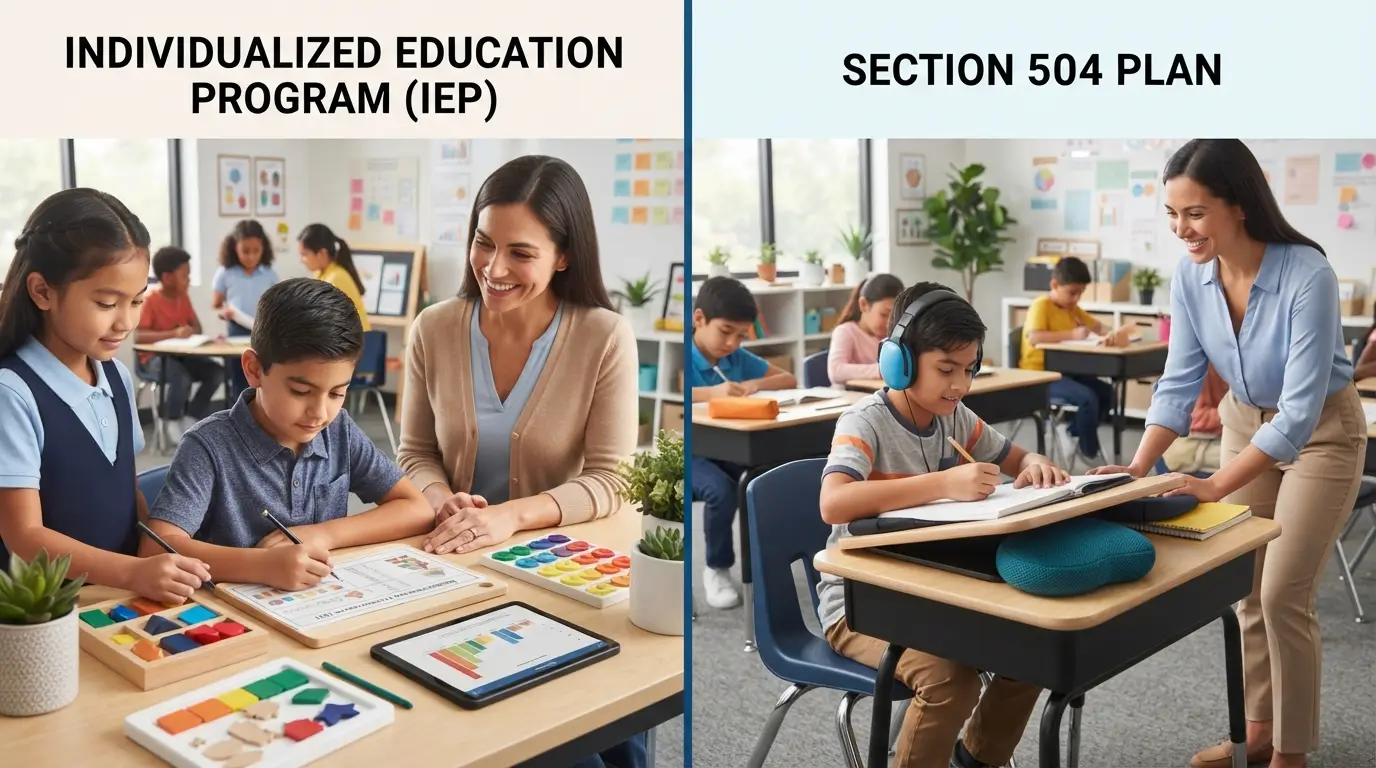
The difference between IEP and 504 is about the level of support and services a student receives. Both are designed to help students succeed, but they work in different ways.
Understanding the difference between IEP and 504 helps parents, teachers, and students make better decisions. It ensures the child gets the right kind of support.
Let’s break this down in a simple and clear way.
🔑 Key Difference Between the Both
The main difference is type of support provided.
- An IEP (Individualized Education Program) offers specialized instruction and services.
- A 504 Plan provides accommodations to support learning without changing the curriculum.
🌍 Importance – Why This Difference Matters
Knowing the difference between IEP and 504 is essential in education.
For students and parents, it ensures the child gets the right help. Choosing the correct plan can improve learning outcomes.
For educators, it helps create effective teaching strategies. It also ensures legal compliance.
In society, this distinction supports inclusive education. It helps all students reach their full potential.
🔊 Pronunciation Section
IEP (Individualized Education Program)
US: /ˌaɪ iː ˈpiː/
UK: /ˌaɪ iː ˈpiː/
504 Plan
US: /ˌfaɪv oʊ ˈfɔːr/
UK: /ˌfaɪv əʊ ˈfɔː/
Now that you know how to pronounce them, let’s define each clearly.
📚 Core Definitions
IEP
An IEP is a formal education plan for students with disabilities who need special instruction. It includes goals, services, and progress tracking. The tone is structured and supportive.
Example: The student receives extra reading lessons through an IEP.
504 Plan
A 504 plan is a support plan that provides accommodations for students with disabilities. It helps them access regular education without changing the curriculum. The tone is flexible and inclusive.
Example: The student gets extra time on tests through a 504 plan.
📊 10 Clear Differences Between IEP and 504
1. Type of Support
IEP offers specialized instruction. 504 provides accommodations only.
- Example for IEP: The student receives one-on-one teaching.
- Example for 504: The student gets extra test time.
2. Eligibility Criteria
IEP has strict eligibility rules. 504 has broader criteria.
- Example for IEP: The student must meet specific disability categories.
- Example for 504: The student needs general support for learning.
3. Legal Framework
IEP falls under special education law. 504 is part of civil rights law.
- Example for IEP: It follows special education guidelines.
- Example for 504: It ensures equal access to education.
4. Curriculum Changes
IEP may modify the curriculum. 504 does not change it.
- Example for IEP: The student studies adjusted content.
- Example for 504: The student follows the same curriculum.
5. Documentation
IEP requires detailed documentation. 504 plans are simpler.
- Example for IEP: It includes goals and progress reports.
- Example for 504: It lists accommodations only.
6. Services Provided
IEP includes therapy and special services. 504 focuses on classroom adjustments.
- Example for IEP: The student gets speech therapy.
- Example for 504: The student sits in the front row.
7. Review Process
IEP is reviewed annually with formal meetings. 504 reviews are less formal.
- Example for IEP: The team meets yearly to update goals.
- Example for 504: The plan is reviewed as needed.
8. Team Involvement
IEP involves a team of specialists. 504 involves fewer people.
- Example for IEP: Teachers, therapists, and parents meet.
- Example for 504: Teachers and parents discuss adjustments.
9. Level of Structure
IEP is highly structured. 504 is more flexible.
- Example for IEP: The plan follows strict rules.
- Example for 504: Adjustments are simpler.
10. Focus of Support
IEP focuses on educational progress. 504 focuses on equal access.
- Example for IEP: The goal is skill improvement.
- Example for 504: The goal is fair participation.
🎯 Why Knowing the Difference Matters
For students and parents, this knowledge ensures the child receives the right support. It can improve confidence and academic success.
For educators, understanding these plans helps them meet student needs effectively. It also ensures legal responsibilities are fulfilled.
In society, this awareness promotes fairness. It supports equal opportunities for all learners.
Real-world consequences of confusion
Choosing the wrong plan may limit a child’s progress. It may also lead to missed support services or legal issues.
🧠 Why People Get Confused
Similar Purpose
Both plans support students with disabilities.
Educational Terms
The terms sound technical and similar.
Overlapping Features
Both provide help in school settings.
Informal Use
People often use them interchangeably without understanding differences.
🎭 Connotation & Emotional Tone
Connotation = the emotional meaning associated with a word.
IEP
- Positive: Structured support, progress-focused
Example: The IEP helped improve learning skills.* - Neutral: Formal education plan
- Negative: Can feel complex or strict
504 Plan
- Positive: Flexible, inclusive
Example: The 504 plan made learning easier.* - Neutral: Accommodation plan
- Negative: May seem limited in support
🗣 Usage in Metaphors, Similes & Idioms
These terms are not common in idioms, but comparisons exist:
- Like an IEP plan → Highly structured support
Example: His schedule is like an IEP very organized.* - Like a 504 plan → Flexible support system
Example: Her approach is like a 504 plan simple and adaptable.*
📊 Comparison Table
| Feature | IEP | 504 Plan |
|---|---|---|
| Meaning | Special education plan | Accommodation plan |
| Tone | Structured | Flexible |
| Usage | Specialized instruction | Classroom adjustments |
| Context | Students with disabilities | General support needs |
| Formality | Highly formal | Moderately formal |
⚖️ Which Is Better in What Situation?
When to use IEP
Choose an IEP when a student needs specialized instruction and services. It is best for significant learning challenges.
When to use 504
Choose a 504 plan when a student needs accommodations but can follow the regular curriculum.
Situational Clarity
Use IEP for intensive support. Use 504 for basic adjustments.
Contextual Correctness
The correct choice depends on the student’s needs and evaluation results.
📖 Literary or Cultural References
- Book: Out of My Mind (Fiction, Sharon M. Draper, 2010)
Highlights challenges faced by students needing support. - Movie: Taare Zameen Par (India, 2007)
Shows the importance of understanding learning differences.
❓ FAQs
1. Is an IEP better than a 504 plan?
Not always. It depends on the student’s needs. IEP is more detailed, while 504 is simpler.
2. Can a student have both IEP and 504?
No, usually a student has one plan based on eligibility.
3. Who qualifies for an IEP?
Students with specific disabilities that affect learning significantly.
4. Who qualifies for a 504 plan?
Students with disabilities that require accommodations but not special instruction.
5. Can a 504 plan turn into an IEP?
Yes, if the student’s needs change, they may qualify for an IEP.
🏁 Conclusion
The difference between IEP and 504 mainly lies in the level of support and structure. An IEP provides specialized instruction and detailed planning, while a 504 plan offers flexible accommodations.
Understanding this difference helps parents, teachers, and students make informed decisions. It ensures that every learner receives the support they need to succeed.
Both plans play an important role in education. Choosing the right one can make a big difference in a student’s life.
Keep learning and stay informed education becomes stronger with clarity and understanding.

Mira Anand is a writer at Distinly.com who focuses on storytelling, communication, and social perspective. Her work highlights subtle differences in language and meaning across cultures and communities. With a clear and empathetic voice, Mira helps readers understand how narratives shape understanding, relationships, and modern dialogue in an increasingly connected world.