The main difference between latte and macchiato is the amount of milk used and how it changes the espresso’s flavor. A latte combines espresso with a generous amount of steamed milk and a thin layer of foam, creating a smooth, creamy drink. A traditional espresso macchiato, on the other hand, is a shot of espresso marked with a small amount of milk or milk foam, so its coffee flavor remains much stronger.
Both drinks start with espresso, but they offer different coffee experiences. A latte is usually milder and milkier, making it popular with people who enjoy a balanced, creamy beverage. A traditional macchiato is smaller and more concentrated, making it appealing to those who want the bold taste of espresso softened by just a little milk.
Understanding the difference between latte and macchiato can be especially helpful when ordering at a coffee shop. The word macchiato can refer to different drinks, including the traditional espresso macchiato and the larger, sweeter caramel macchiato commonly sold by major coffee chains. These drinks can differ significantly in size, sweetness, and milk content.
In this guide, you will learn how lattes and macchiatos are prepared, how their taste and caffeine content compare, what affects their calories, and which drink suits different preferences. By the end, you will know what to order based on whether you prefer creamy coffee, intense espresso, or a sweeter café-style beverage.
Quick Comparison: Latte vs. Macchiato
| Feature | Latte | Traditional Espresso Macchiato |
|---|---|---|
| Main ingredients | Espresso and steamed milk | Espresso and a small amount of milk or foam |
| Milk quantity | Relatively large | Very small |
| Coffee flavor | Smooth and mellow | Bold and intense |
| Texture | Creamy and silky | Espresso-forward, with a small amount of foam or milk |
| Typical serving size | About 8–16 ounces in many cafés | Often around 2–3 ounces, depending on preparation |
| Espresso content | Usually one or two shots | Usually one shot, though recipes vary |
| Caffeine | Depends on the number of espresso shots | Depends on the espresso shot used |
| Calories | Generally higher because of the milk | Usually lower when made without sugar |
| Sweetness | Naturally mild from steamed milk | Strong espresso flavor with little milk sweetness |
| Common variations | Vanilla latte, iced latte, oat milk latte | Espresso macchiato, iced variations, caramel macchiato |
| Best suited for | People who enjoy creamy, milder coffee | People who prefer concentrated espresso flavor |
Note: Serving sizes and recipes vary by country, café, and coffee chain. A caramel macchiato is not the same drink as a traditional espresso macchiato.
What Is a Latte?
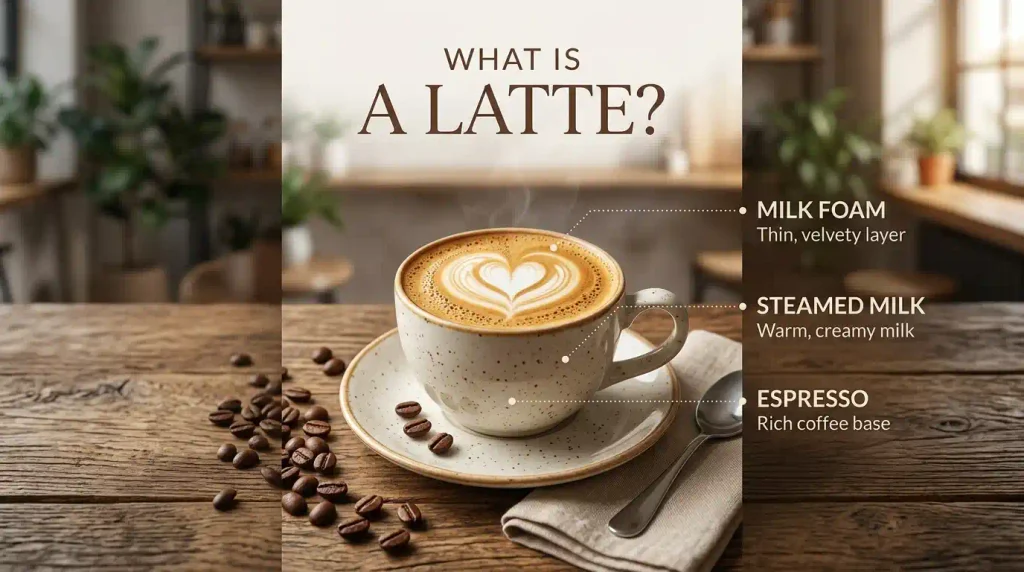
A latte, also called a caffè latte, is an espresso-based coffee drink made with espresso, steamed milk, and a thin layer of milk foam. The word latte means “milk” in Italian, and the full name caffè latte means “coffee with milk.”
Lattes are popular because steamed milk softens espresso’s bitterness and creates a creamy, balanced flavor. They can be served hot or iced and customized with different milk options, syrups, and espresso shots.
Ingredients and Preparation
A typical latte contains:
- Espresso: Provides the coffee flavor and caffeine.
- Steamed milk: Adds creaminess and balances espresso’s intensity.
- Milk foam: Creates a light topping and can be used for latte art.
To prepare a latte, a barista pulls one or more espresso shots, steams the milk until smooth, and pours the milk into the espresso. A small layer of foam finishes the drink.
The proportions vary by café and serving size. A small latte may use one espresso shot, while larger versions often contain two or more.
What Does a Latte Taste Like?
A latte tastes smooth, creamy, and relatively mild compared with a straight espresso or traditional macchiato. The coffee remains noticeable, but the milk reduces its intensity and adds natural sweetness.
Its flavor also depends on the espresso beans, roast level, milk type, and any added flavorings. Whole milk creates a richer texture, while skim milk usually produces a lighter mouthfeel. Oat, soy, almond, and other plant-based milks offer additional options.
Types of Lattes
Several latte variations are widely available:
- Classic latte: Espresso, steamed milk, and a light foam topping.
- Iced latte: Espresso and cold milk served over ice.
- Vanilla latte: A latte flavored with vanilla syrup.
- Oat milk latte: A latte made with oat milk instead of dairy milk.
- Mocha latte: A coffee drink combining espresso, milk, and chocolate.
- Decaf latte: A latte prepared with decaffeinated espresso.
Benefits and Limitations of a Latte
Benefits:
- Offers a creamy, approachable espresso flavor.
- Can be customized with different milks and flavors.
- Provides a larger drink than a traditional espresso macchiato.
- Works well as a morning coffee or a drink to enjoy slowly.
Limitations:
- Usually contains more calories than a plain espresso macchiato because it uses more milk.
- Can taste too mild for people who prefer concentrated coffee.
- Flavored versions may contain substantial added sugar.
- Larger servings do not automatically contain more caffeine; the number of espresso shots matters.
What Is a Macchiato?
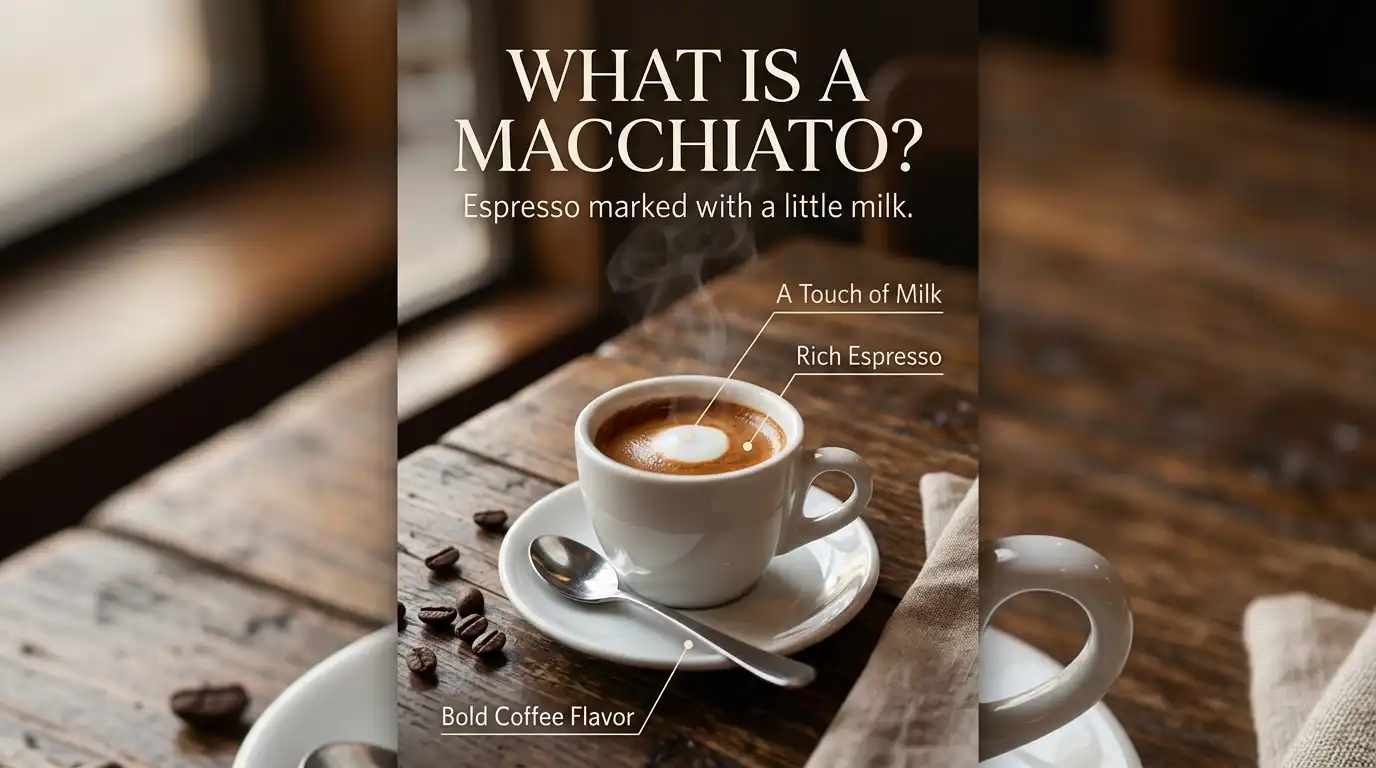
A traditional espresso macchiato is a small espresso drink topped with a little steamed milk or milk foam. The Italian word macchiato means “marked” or “stained,” describing how a small amount of milk marks the espresso.
Unlike a latte, which contains a substantial amount of milk, an espresso macchiato keeps the coffee at the center of the experience. The milk softens the espresso slightly without covering its strong flavor.
However, the word macchiato can mean different things on modern café menus. An espresso macchiato is small and espresso-forward, while a latte macchiato is made primarily with milk and marked with espresso. A caramel macchiato is often a larger, sweetened, layered drink.
Ingredients and Preparation
A traditional espresso macchiato usually contains:
- Espresso: The main ingredient and dominant flavor.
- A small amount of steamed milk: Softens the espresso’s intensity.
- A dollop of milk foam: Often added on top, depending on the recipe.
To make one, the barista prepares an espresso shot and adds a small amount of milk or foam. The finished drink is usually served in a small espresso cup.
The exact quantity of milk varies. Some cafés use mostly foam, while others add a small splash of steamed milk.
What Does a Macchiato Taste Like?
A traditional macchiato tastes bold, rich, and espresso-forward. It retains much of the concentrated coffee character of espresso, with a little milk adding softness and subtle sweetness.
Because the drink contains little milk, its flavor is less creamy than a latte. It can also taste more intense or bitter, depending on the espresso roast, extraction, and beans used.
Types of Macchiatos
The main varieties include:
- Espresso macchiato: Espresso topped with a small amount of milk or foam.
- Latte macchiato: Steamed milk marked with espresso, often served in a taller glass.
- Caramel macchiato: A café-style drink that commonly combines milk, espresso, vanilla flavoring, and caramel sauce.
- Iced caramel macchiato: A cold, layered variation made with milk, espresso, ice, and sweet flavorings.
These varieties are not interchangeable. If you want a strong, small espresso drink, ask for a traditional espresso macchiato. If you want a larger, milkier beverage, specify a latte macchiato or caramel macchiato.
Benefits and Limitations of a Macchiato
Benefits:
- Preserves the strong flavor of espresso.
- Uses less milk than a latte in its traditional form.
- Is usually served in a small portion.
- Can be a good option for people who enjoy espresso but want a little milk to soften it.
Limitations:
- May taste too intense for people who prefer mild coffee.
- Is smaller than a typical latte.
- Can be confused with sweetened, milk-heavy drinks sold under the macchiato name.
- May contain more caffeine per ounce than a latte, but total caffeine depends on the number and size of espresso shots.
Difference Between Latte and Macchiato in Taste, Milk, and Caffeine
The most important distinctions involve the milk-to-espresso ratio, flavor, serving size, and recipe.
1. Milk Content
A latte contains a generous amount of steamed milk, whereas a traditional espresso macchiato uses only a small amount of milk or foam.
This difference changes both the texture and flavor. Lattes feel creamy and smooth, while macchiatos retain a more concentrated espresso character.
2. Flavor and Strength
A latte is usually milder because the milk balances the espresso. A traditional macchiato tastes stronger because espresso makes up most of the drink.
However, “stronger” can mean different things. A macchiato generally has a more intense coffee flavor per sip, but that does not necessarily mean it contains more total caffeine than a large latte.
3. Caffeine Content
Caffeine depends primarily on the espresso used, including the number of shots and the beans or blend.
For example, a one-shot latte and a one-shot espresso macchiato made with the same espresso may contain similar amounts of caffeine, even though the latte is much larger. A two-shot latte may contain more caffeine than a one-shot macchiato.
Practical tip: If caffeine matters to you, ask how many espresso shots the drink contains rather than judging by its size or taste alone.
4. Calories and Sugar
A plain latte generally has more calories than a traditional espresso macchiato because it contains more milk. The exact difference depends on the milk type and serving size.
Added sugar can change the comparison substantially. A caramel macchiato with syrup and caramel sauce may contain considerably more calories and sugar than a plain latte or espresso macchiato.
For a lighter drink, consider unsweetened milk, fewer syrup pumps, or a smaller serving.
5. Texture and Appearance
A latte typically has a larger volume of silky steamed milk, often topped with a thin layer of foam. Baristas may create decorative latte art on its surface.
A traditional macchiato is much smaller, with a visible espresso base and a small mark of milk or foam. A latte macchiato, by contrast, may show distinct layers of milk and espresso in a glass.
When Should You Choose a Latte or a Macchiato?
The right drink depends on how you enjoy your coffee, how much milk you want, and whether you prefer a small or large serving.
Choose a Latte If You:
- Prefer smooth, creamy coffee with a milder espresso flavor.
- Want a drink you can sip over a longer period.
- Enjoy adding vanilla, chocolate, cinnamon, or other flavors.
- Want a hot or iced coffee with a substantial amount of milk.
Real-life example: If you want a 12-ounce morning coffee to sip while working, a latte may suit you better than a traditional macchiato.
Choose a Traditional Macchiato If You:
- Prefer bold espresso flavor.
- Want just a little milk to soften the coffee.
- Enjoy small, concentrated drinks.
- Want to experience the flavor of the espresso without a large quantity of milk.
Real-life example: If you have just finished lunch and want a small coffee with a strong espresso taste, a traditional macchiato may be a good choice.
What If You Want Something Sweeter?
If you enjoy creamy coffee with vanilla and caramel flavors, a caramel macchiato may be more suitable than a traditional espresso macchiato. Despite its name, this café-style drink is usually much milkier and sweeter than the classic Italian version.
When ordering, specify the exact drink to avoid getting something different from what you expected.
Common Mistakes When Comparing Lattes and Macchiatos
1. Assuming Every Macchiato Is Small
A traditional espresso macchiato is small, but a latte macchiato or caramel macchiato can be much larger.
How to avoid it: Ask whether the menu item is an espresso macchiato, latte macchiato, or caramel macchiato.
2. Assuming a Stronger Taste Means More Caffeine
Espresso can taste intense without necessarily providing more total caffeine than a larger drink.
How to avoid it: Compare the number of espresso shots and the serving details instead of relying on flavor alone.
3. Thinking Every Macchiato Is Sugar-Free
A traditional espresso macchiato usually contains no added sugar unless requested. Flavored macchiatos may contain syrups and sauces.
How to avoid it: Check the ingredients and ask for an unsweetened version if you want to limit added sugar.
4. Comparing Calories Without Considering Milk and Syrup
A latte made with whole milk will differ nutritionally from one made with skim or plant-based milk. Added flavorings can also increase calories.
How to avoid it: Compare similar serving sizes and account for milk type, syrup, and toppings.
5. Ordering by Name Without Explaining Your Preference
Coffee shops may use different recipes and serving sizes. A macchiato at one café may differ from a similarly named drink elsewhere.
How to avoid it: Describe what you want for example, “a single espresso with a little milk foam” or “a creamy latte with vanilla.”
Frequently Asked Questions
1. Is a latte stronger than a macchiato?
A traditional macchiato generally has a stronger espresso flavor because it contains much less milk. However, total caffeine depends on the espresso shots used in each drink.
2. Which has more milk, a latte or a macchiato?
A latte contains significantly more milk than a traditional espresso macchiato. A latte macchiato is a different drink that also contains a large amount of milk.
3. Which has more caffeine?
Neither drink automatically has more caffeine. A one-shot latte and a one-shot macchiato made with the same espresso can contain similar amounts, while a latte with extra shots may contain more.
4. Which has fewer calories?
A plain espresso macchiato generally has fewer calories because it contains less milk. However, a sweetened caramel macchiato can have more calories than some lattes.
5. Is a macchiato bitter?
A traditional macchiato can taste more intense or bitter than a latte because its espresso is less diluted by milk. The actual taste depends on the beans and how the espresso is prepared.
6. Can you order an iced latte or iced macchiato?
Yes. Iced lattes are made with espresso, cold milk, and ice. Iced macchiatos vary by recipe; café-style versions may include milk, syrup, espresso, and toppings.
7. Is a caramel macchiato the same as a traditional macchiato?
No. A traditional espresso macchiato is a small espresso with a little milk or foam. A caramel macchiato is usually a larger, sweeter beverage with milk, vanilla flavoring, espresso, and caramel sauce.
8. Which is better for a beginner coffee drinker?
A latte is often a comfortable starting point for someone who prefers a mild, creamy flavor. A traditional macchiato may be more appealing if you already enjoy strong espresso.
Conclusion
The difference between latte and macchiato comes down mainly to milk, flavor, and serving size. A latte combines espresso with plenty of steamed milk for a smooth, creamy drink. A traditional espresso macchiato uses only a small amount of milk or foam, keeping the espresso flavor front and center.
Choose a latte if you prefer a milder coffee, a larger serving, and more room for flavored variations. Choose a traditional macchiato if you want a small drink with a bold espresso taste and just a touch of milk. If you prefer a sweeter, milkier option, a caramel macchiato may be more appropriate.
Ultimately, neither drink is universally better. Once you understand the recipe behind each name, you can order the coffee that best matches your taste, caffeine preferences, and daily routine.
External Source
Espresso Explained — Starbucks Stories
This source explains the basic composition of espresso macchiatos and caffè lattes, helping clarify the differences between these classic espresso drinks.

Aamer Shahzad is the founder of Distinly.com, a fast-growing educational platform focused on high-intent “difference between” topics. With over 8 years of experience in English language education and analytical writing, I specialize in breaking down complex “difference between” topics into clear, structured, and easy-to-understand explanations. Distinly.com is your go-to resource for enhancing English skills and writing with confidence.
I specializes in building search-optimized, research-driven comparison content designed for clarity, authority, and long-term digital asset value.