If you have ever ordered sushi and wondered whether the tiny orange eggs on top were tobiko or masago, you are not alone. These two seafood toppings look very similar, and many restaurants use them in ways that make the difference hard to spot. Yet they are not the same thing.
The confusion around tobiko or masago usually comes down to appearance, texture, taste, price, and the type of fish that produces the roe. Both can add color, saltiness, and a pleasant pop to sushi rolls, but they have different characteristics. Knowing the difference can help you understand a menu, choose a topping, or describe a dish more accurately.
This guide explains tobiko or masago in simple terms. You will learn what each word means, where the names come from, how the two types of roe differ, and which one is commonly used in sushi. We will also look at practical examples, common mistakes, and questions people often ask about tobiko or masago.
Quick Answer
Tobiko and masago are both types of fish roe, but they come from different fish.
- Tobiko is the roe of flying fish.
- Masago is the roe of capelin, a small fish in the smelt family.
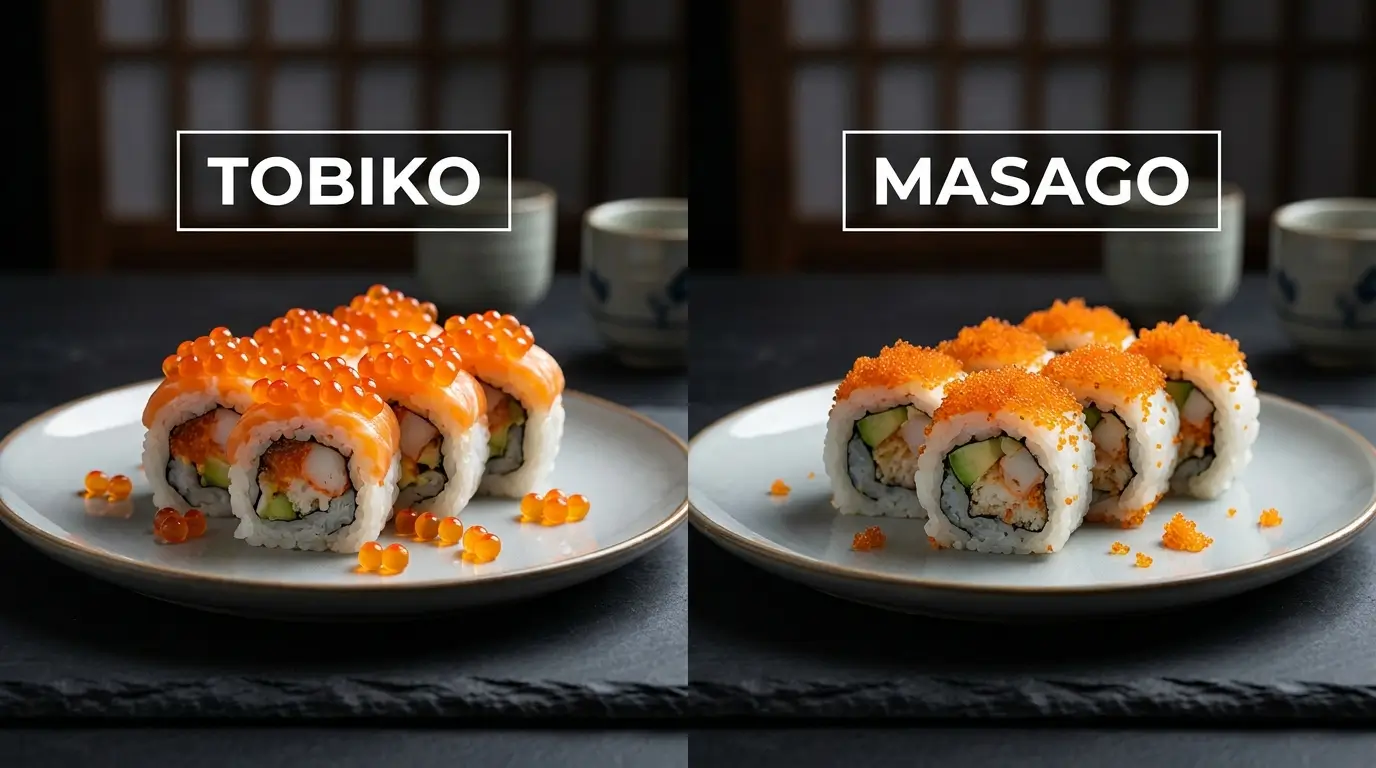
- Tobiko is usually larger, firmer, and more noticeably crunchy.
- Masago has smaller eggs and a softer texture.
- Tobiko is often more expensive.
- Both can be naturally pale or orange and may also be colored or flavored.
A simple way to remember the difference is:
Tobiko = flying fish roe
Masago = capelin roe
For example:
“The sushi roll was topped with bright orange tobiko.”
“The restaurant used masago to give the roll a colorful finish.”
Both sentences are grammatically correct because tobiko and masago are nouns. They name specific foods.
tobiko or masago
tə-BEE-koh or mə-SAH-goh
Give feedback
The Origin of Tobiko or Masago
The two terms come from Japanese food vocabulary, but they refer to different types of roe.
Tobiko is the Japanese culinary term for flying fish roe. The word is associated with tobi, meaning “flying” or “to fly,” and ko, a suffix used in Japanese food terminology for something small or a child. In the context of sushi, tobiko specifically identifies flying fish eggs.
Masago is the Japanese term commonly used for capelin roe. Capelin is a small forage fish belonging to the smelt family. The word masago is established Japanese food vocabulary and is widely used on sushi menus outside Japan as well.
These names are not alternative spellings of the same word. They identify different foods.
That point matters because someone may see two bowls of orange roe and assume that one restaurant simply uses a different name. In reality, tobiko and masago come from different fish.
The Japanese terms have become common in English-language food writing and restaurant menus. English speakers generally keep the original Japanese spellings rather than translating them into phrases such as “flying fish eggs” every time.
Are Tobiko and Masago pronounced differently?
Yes. They do not sound the same.
Tobiko has three syllables, while masago also has three. English speakers may hear different stress patterns depending on how familiar they are with Japanese pronunciation.
Japanese pronunciation is more evenly timed than typical English pronunciation, so an English approximation should not be treated as a perfect representation of native Japanese speech.
The important point for English learners is simple: tobiko and masago are separate nouns with separate meanings.
British English vs American English Spelling
There is no meaningful British-versus-American spelling difference for tobiko or masago.
Both British English and American English normally use the same spellings:
| Term | British English | American English | Meaning |
|---|---|---|---|
| Tobiko | tobiko | tobiko | Flying fish roe |
| Masago | masago | masago | Capelin roe |
This is different from words such as colour/color or centre/center, where British and American English commonly use different spellings.
With tobiko and masago, the terms are Japanese food names that English has adopted. There is no standard UK spelling such as tobico or massago.
Part of speech
Both tobiko and masago function primarily as nouns in English.
You can use them as singular mass nouns when talking about the food generally:
- “Tobiko adds a crunchy texture.”
- “Masago is often used as a sushi topping.”
They can also appear after descriptive words:
- spicy tobiko
- orange masago
- wasabi-flavored tobiko
- seasoned masago
You generally do not need to add an English plural ending when discussing the roe as a food substance.
Which Spelling Should You Use?
Use tobiko when you mean flying fish roe.
Use masago when you mean capelin roe.
There is no need to choose between British and American spellings because both English varieties use these terms in the same form.
For American English readers
If you are writing a menu, food article, recipe, or social post for an American audience, use the standard spellings tobiko and masago.
For British or Commonwealth readers
The same spellings work naturally in British and Commonwealth English. You do not need to change either word.
For a global audience
The safest approach is to use the Japanese food names and explain them the first time:
“Tobiko, or flying fish roe, is often used as a sushi topping.”
For masago:
“Masago is capelin roe commonly used in sushi and Japanese-style dishes.”
This gives readers the familiar menu term while also explaining what it means.
Tobiko vs Masago: Key Differences
The easiest way to understand tobiko or masago is to compare them directly.
| Feature | Tobiko | Masago |
|---|---|---|
| Source fish | Flying fish | Capelin |
| Egg size | Generally larger | Generally smaller |
| Texture | Firm and popping | Softer and finer |
| Flavor | Mild, salty, slightly smoky or briny | Mild, salty, delicate |
| Appearance | Often bright orange | Often orange or pale orange |
| Common use | Sushi, sashimi, garnishes | Sushi rolls, sauces, garnishes |
| Price | Usually higher | Usually lower |
| Availability | Common in sushi restaurants | Very common in sushi restaurants |
The most noticeable difference for many people is texture.
Tobiko tends to have a stronger “pop” when you bite it. Masago is usually finer and less pronounced.
However, color alone is not a reliable way to identify them. Both can be colored in different shades and may be flavored with ingredients such as wasabi, yuzu, or other seasonings.
What Does Tobiko Taste Like?
Tobiko has a mild seafood flavor with a salty, briny character.
Its texture is one of its biggest attractions. The eggs can create a small popping sensation when you bite them. This makes tobiko useful not only for flavor but also for adding contrast to soft sushi rice and fish.
Tobiko may appear in several colors. Orange is common, but sushi chefs and food producers may offer other colors or flavored versions.
The color therefore does not always tell you exactly what type of roe you are eating.
What Does Masago Taste Like?
Masago also has a salty, marine flavor, but its taste is often described as milder and more delicate than tobiko.
Its eggs are smaller, so the texture tends to feel finer. Masago works especially well as a topping for sushi rolls because it provides color and a subtle seafood flavor without dominating the dish.
Restaurants may season or color masago, which means the final flavor can vary.
For example, a wasabi-flavored masago can taste noticeably different from plain masago.
Common Mistakes
1. Treating them as the same food
This is the biggest mistake.
Although both are fish roe and may look almost identical, tobiko comes from flying fish while masago comes from capelin.
2. Assuming orange means tobiko
Orange roe is not automatically tobiko.
Both tobiko and masago can be sold in orange or other colors. Color is not enough to identify the roe.
3. Writing “tobico”
A common spelling error is:
“tobico”
The standard English food term is:
tobiko
The final syllable contains ko, not co.
4. Writing “masago” when you mean any fish eggs
The word masago does not mean fish roe in general.
Fish roe is the broader category. Masago identifies a particular type of roe.
5. Assuming expensive means better
Tobiko often costs more than masago, but that does not automatically make it better.
The right choice depends on what you want from the dish. If you prefer a stronger popping texture, tobiko may be appealing. If you want a smaller, softer roe at a lower cost, masago may work well.
Everyday Examples
These words are most common in food-related writing, menus, recipes, and conversations.
In an email
“Could you confirm whether the sushi platter includes tobiko or masago?”
This is useful when ordering catering or checking ingredients.
In a restaurant review
“The roll was finished with masago, which added a light crunch and a salty seafood note.”
In a recipe
“Sprinkle tobiko over the finished sushi roll before serving.”
Here, tobiko is a noun functioning as the ingredient.
On social media
“This spicy tuna roll with tobiko looks amazing!”
Food creators often use the Japanese name because it is shorter and more recognizable to sushi fans.
In formal food writing
“Tobiko and masago are commonly used as colorful garnishes for sushi and other Japanese-style dishes.”
This wording is appropriate for an article, menu guide, or culinary report.
In everyday conversation
“Is that tobiko on top?”
“No, I think it’s masago.”
The words are simple nouns, so they fit naturally into short questions and answers.
Which One Is Better?
There is no universal winner.
Choose tobiko if you want:
- A firmer texture
- A stronger popping sensation
- A more distinctive roe texture
- A classic flying-fish roe topping
Choose masago if you want:
- Smaller eggs
- A softer texture
- A milder roe experience
- A usually more economical option
For many sushi dishes, the difference may be subtle if the roe is heavily seasoned or mixed into a sauce.
If texture is important to you, however, the difference can be easier to notice.
A Simple Comparison Table
| Question | Tobiko | Masago |
|---|---|---|
| What is it? | Flying fish roe | Capelin roe |
| Is it fish roe? | Yes | Yes |
| Are they the same? | No | No |
| Egg size | Larger | Smaller |
| Texture | More pronounced pop | Fine and soft |
| Common color | Orange | Orange |
| Flavor | Salty and briny | Mild and salty |
| Used in sushi? | Yes | Yes |
| British spelling | Tobiko | Masago |
| American spelling | Tobiko | Masago |
The key distinction is the source fish, not the spelling.
FAQs
Is tobiko the same as masago?
No. Tobiko is flying fish roe, while masago is capelin roe. They can look similar but differ in egg size, texture, and source.
Which is bigger, tobiko or masago?
Tobiko eggs are generally larger than masago eggs. This contributes to tobiko’s more noticeable popping texture.
Does masago taste like tobiko?
They have similar salty, briny qualities because both are fish roe, but they are not identical. Tobiko often has a firmer, more noticeable texture.
Why is tobiko more expensive than masago?
Tobiko is often more expensive because flying fish roe is generally positioned as a more premium sushi ingredient. Actual prices vary by supplier, preparation, and market.
Can tobiko and masago be different colors?
Yes. Although orange is common, roe may be colored or seasoned for different dishes. Color alone cannot reliably tell you whether something is tobiko or masago.
Which one is used on sushi rolls?
Both can be used. Masago is especially common as a topping for sushi rolls, while tobiko is also widely used as a garnish and premium roe ingredient.
Are tobiko and masago English words?
They are Japanese food terms that are widely used in English-language culinary contexts. English generally keeps their Japanese spellings rather than replacing them with separate English spellings.
Conclusion
Tobiko and masago may look alike, but knowing their source makes the difference easy to remember: tobiko comes from flying fish, while masago comes from capelin.
The words are nouns, and neither has a special British or American spelling. Both forms work across English varieties, including menus, recipes, and everyday writing.
When choosing between them, think about texture, flavor, price, and the dish itself. Tobiko offers a firmer pop, while masago is smaller and softer.
Now that you know the difference, practice using these terms in emails, essays, menus, and daily conversations to make your English more precise.

Aamer Shahzad is the founder of Distinly.com, a fast-growing educational platform focused on high-intent “difference between” topics. With over 8 years of experience in English language education and analytical writing, I specialize in breaking down complex “difference between” topics into clear, structured, and easy-to-understand explanations. Distinly.com is your go-to resource for enhancing English skills and writing with confidence.
I specializes in building search-optimized, research-driven comparison content designed for clarity, authority, and long-term digital asset value.