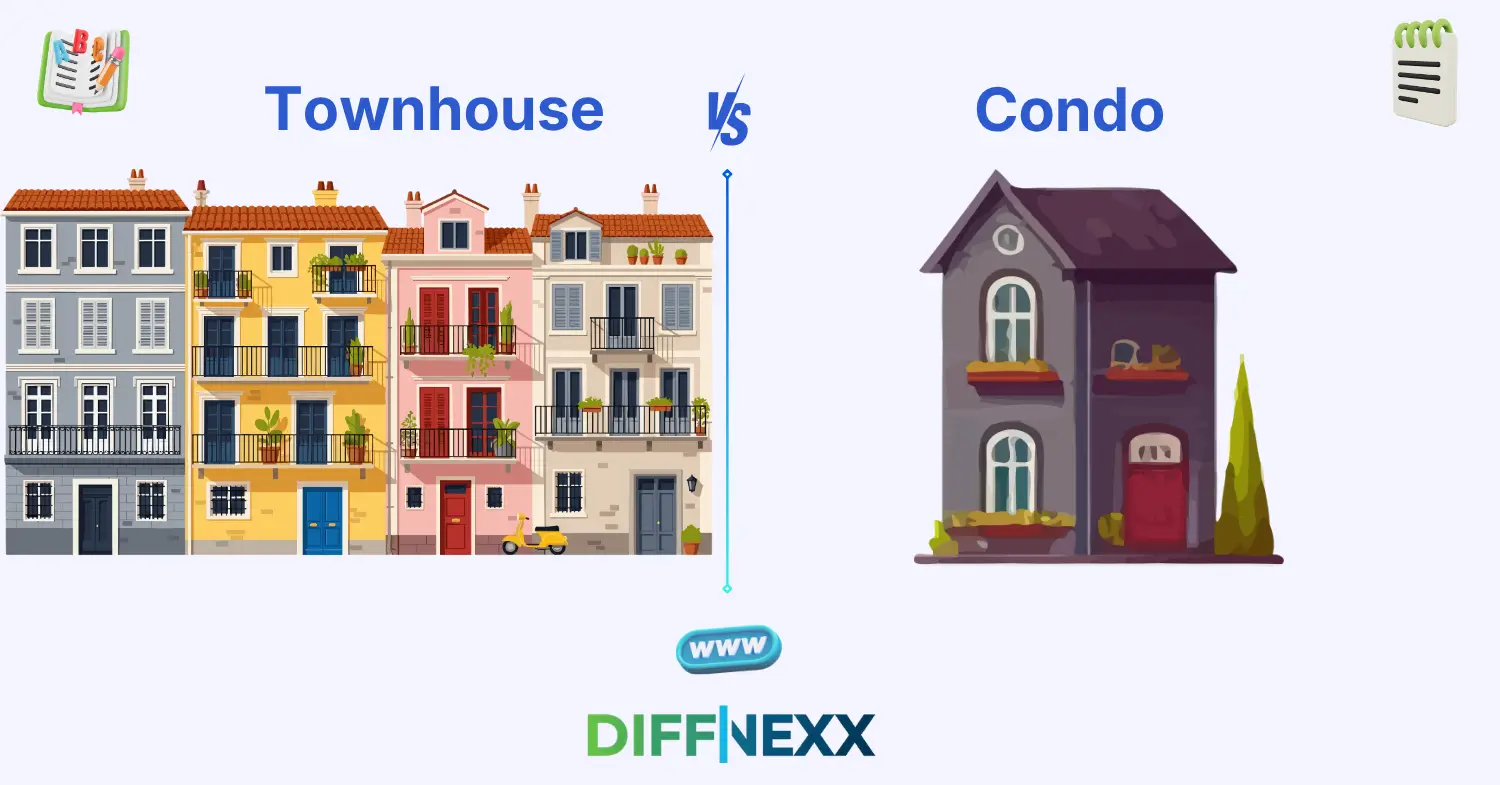
Difference between townhouse and condo often confuses people when buying a home. Imagine you are searching for your first property. You find two options: a townhouse and a condo. Both look attractive, but which one fits your lifestyle?
The difference between townhouse and condo mainly lies in ownership, structure, and responsibilities. While both are popular housing choices, they offer different living experiences.
Understanding the difference between townhouse and condo helps buyers make smart decisions. It ensures you choose a home that matches your needs and budget.
Let’s explore these differences in a simple and practical way.
🔑 Key Difference Between the Both
The main difference is ownership and property structure.
- A townhouse includes ownership of the home and often the land it sits on.
- A condo usually includes ownership of the interior space only, not the land.
🌍 Importance – Why This Difference Matters
Knowing the difference between townhouse and condo is essential in real estate.
For buyers, it helps them choose the right property based on lifestyle and budget.
For real estate professionals, it ensures accurate advice and better client satisfaction.
In society, this knowledge supports better housing decisions and financial planning.
🔊 Pronunciation Section
Townhouse
US: /ˈtaʊnˌhaʊs/
UK: /ˈtaʊnhaʊs/
Condo (Condominium)
US: /ˈkɑːn.doʊ/
UK: /ˈkɒn.dəʊ/
Now that you know how to say them, let’s define each clearly.
📚 Core Definitions
Townhouse
A townhouse is a multi-floor home that shares walls with nearby houses. Owners usually own both the building and the land. The tone reflects independence with shared structure.
Example: She bought a townhouse with a small private yard.
Condo
A condo is a private unit within a larger building or community. Owners own the interior, while shared spaces are managed collectively. The tone reflects convenience and shared responsibility.
Example: He owns a condo in a high-rise building.
📊 10 Clear Differences Between Townhouse and Condo
1. Ownership
Townhouse owners often own the land. Condo owners own only the unit interior.
- Example for townhouse: She owns the home and yard.
- Example for condo: He owns only his apartment space.
2. Structure
Townhouses are separate multi-level homes. Condos are units in a shared building.
- Example for townhouse: Her home has multiple floors.
- Example for condo: His unit is in a tall building.
3. Maintenance Responsibility
Townhouse owners handle more maintenance. Condo owners rely on associations.
- Example for townhouse: She fixes her roof.
- Example for condo: The association handles repairs.
4. Privacy
Townhouses offer more privacy. Condos have shared spaces and closer neighbors.
- Example for townhouse: She enjoys quieter surroundings.
- Example for condo: He shares walls and amenities.
5. Amenities
Condos often include amenities. Townhouses may have fewer shared facilities.
- Example for townhouse: Limited shared features.
- Example for condo: Access to gym and pool.
6. Cost Structure
Townhouses may cost more upfront. Condos may have lower prices but fees.
- Example for townhouse: Higher purchase cost.
- Example for condo: Monthly association fees.
7. Space
Townhouses usually offer more space. Condos are more compact.
- Example for townhouse: She has a larger living area.
- Example for condo: He lives in a smaller unit.
8. Flexibility
Townhouse owners have more freedom to modify property. Condo owners follow stricter rules.
- Example for townhouse: She renovates freely.
- Example for condo: He needs approval for changes.
9. Community Living
Condos emphasize community living. Townhouses balance independence and community.
- Example for townhouse: Moderate interaction with neighbors.
- Example for condo: Strong shared community.
10. Investment Potential
Both can be investments, but condos may be easier to rent. Townhouses may grow in value with land ownership.
- Example for townhouse: Land adds long-term value.
- Example for condo: Easier short-term rental.
🎯 Why Knowing the Difference Matters
For buyers, this knowledge helps avoid costly mistakes. It ensures the property matches lifestyle needs.
For real estate professionals, understanding these differences improves guidance and trust.
In everyday life, it helps people choose homes that fit their preferences and financial goals.
Real-world consequences of confusion
Buying the wrong type of property can lead to unexpected costs, limited freedom, or dissatisfaction with living conditions.
🧠 Why People Get Confused
Similar Appearance
Both can look similar from outside.
Overlapping Features
Both involve shared walls or community living.
Real Estate Terms
The terms are often used loosely.
Informal Usage
People use “condo” and “townhouse” interchangeably.
🎭 Connotation & Emotional Tone
Connotation = the emotional meaning associated with a word.
Townhouse
- Positive: Independent and spacious
Example: A townhouse offers more personal space.* - Neutral: Residential property
- Negative: More maintenance responsibility
Condo
- Positive: Convenient and modern
Example: A condo provides easy living.* - Neutral: Shared living space
- Negative: Less privacy and strict rules
🗣 Usage in Metaphors, Similes & Idioms
These terms are not common in idioms, but comparisons exist:
- Like a townhouse → Balanced independence
Example: His lifestyle is like a townhouse—independent yet connected.* - Like a condo → Shared and convenient
Example: Her routine is like a condo—organized and communal.*
📊 Comparison Table
| Feature | Townhouse | Condo |
|---|---|---|
| Meaning | Multi-level home | Unit in a building |
| Tone | Independent | Convenient |
| Usage | Residential property | Shared community living |
| Context | Land ownership | Interior ownership |
| Formality | Real estate term | Real estate term |
⚖️ Which Is Better in What Situation?
When to use Townhouse
Choose a townhouse if you want more space, privacy, and ownership of land. It suits families and long-term living.
When to use Condo
Choose a condo if you prefer convenience and low maintenance. It suits busy individuals or city living.
Situational Clarity
Your lifestyle and budget determine the better option.
Contextual Correctness
Both are good choices depending on needs and priorities.
📖 Literary or Cultural References
- Book: The Big Short (Non-fiction, Michael Lewis, 2010)
Explores real estate and financial decisions. - Movie: The Pursuit of Happyness (USA, 2006)
Highlights housing struggles and life choices.
❓ FAQs
1. Is a townhouse better than a condo?
It depends on your needs. Townhouses offer space, while condos offer convenience.
2. Do condos have more fees?
Yes, condos usually have monthly maintenance fees.
3. Are townhouses more expensive?
They can be, especially due to land ownership.
4. Which is easier to maintain?
Condos are easier because maintenance is managed.
5. Can both be rented out?
Yes, both can be used as rental properties.
🏁 Conclusion
The difference between townhouse and condo mainly lies in ownership, space, and responsibility. Townhouses offer more independence and space, while condos provide convenience and shared amenities.
Understanding this difference helps you choose the right home based on your lifestyle and budget. It also prevents unexpected costs and limitations.
Both options have their benefits. The best choice depends on your personal needs and long-term goals.
Stay informed and choose wisely your home is one of your most important decisions.

Ezra Hale is a thoughtful contributor to Distinly.com, where he explores philosophical ideas and the subtle differences behind everyday concepts. His writing blends logic, language, and human insight to clarify complex distinctions. Ezra encourages readers to think deeper, question assumptions, and appreciate the meaning behind words and ideas in modern discourse.