Difference between wasp and hornet becomes clear the moment you spot one buzzing near you. Imagine you’re enjoying tea outdoors, and a striped insect flies around your food. You quickly step back and wonder, “Is that a wasp or a hornet?”
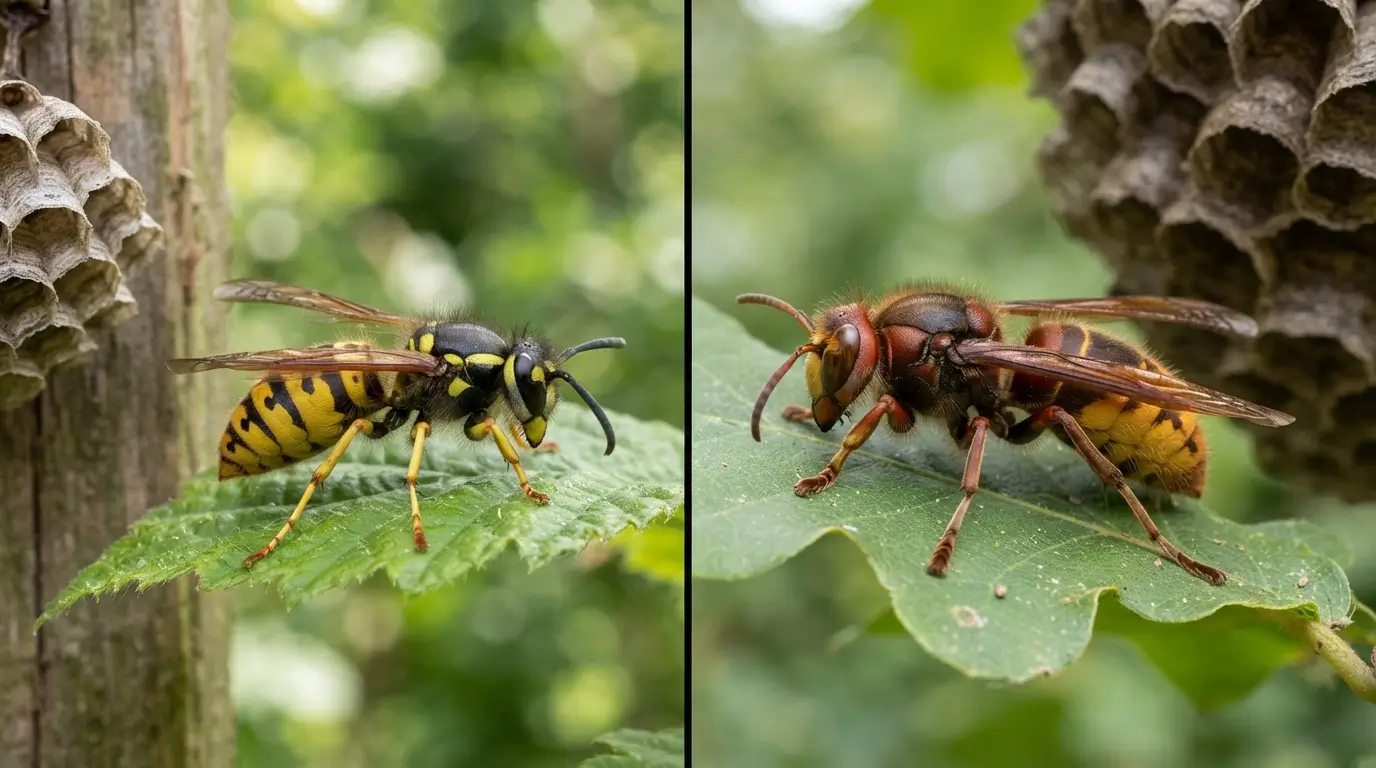
The difference between wasp and hornet is not just about size. It includes behavior, appearance, and even how dangerous they can be. A wasp is a general type of stinging insect. A hornet is actually a larger type of wasp.
Many people use these names the same way. However, the difference between wasp and hornet matters for safety, knowledge, and correct identification.
Let’s break it down in a simple and clear way. 🐝
Key Difference Between the Both
The key difference is:
- Wasp: A broad group of stinging insects with many species.
- Hornet: A specific type of large wasp, usually more robust.
In simple terms, all hornets are wasps, but not all wasps are hornets.
Importance – Why Their Difference Matters
Understanding the difference between wasp and hornet is important for both learners and everyday people.
For students, it builds basic knowledge of nature and insects. It helps them identify species correctly.
For professionals like gardeners or pest control workers, correct identification ensures proper handling and safety.
In society, this awareness reduces fear and prevents harm. People can react calmly instead of panicking.
🔊 Pronunciation Section
Wasp
US: /wɑːsp/
UK: /wɒsp/
Hornet
US: /ˈhɔːr.nɪt/
UK: /ˈhɔː.nɪt/
Now that you know how to say them, let’s define each clearly.
📚 Core Definitions
Wasp
A wasp is a flying insect with a slim body and narrow waist. It can sting and is often attracted to food. It feels common and familiar.
Example: A yellow wasp hovering around a picnic table.
Hornet
A hornet is a large, strong type of wasp with a more rounded body. It can sting and is usually more aggressive when disturbed. It feels more intense.
Example: A large hornet building a nest in a tree.
📚 10 Clear Differences Between Wasp and Hornet
1. Size
Wasps are generally smaller. Hornets are larger and heavier.
- Example for Wasp: Small insect near food.
- Example for Hornet: Bigger insect with loud buzzing.
2. Body Shape
Wasps have thin, narrow bodies. Hornets have thicker, rounder bodies.
- Example for Wasp: Slim waist and long shape.
- Example for Hornet: Stocky and solid body.
3. Color Pattern
Wasps often have bright yellow and black stripes. Hornets have more muted colors like brown and yellow.
- Example for Wasp: Bright yellow stripes.
- Example for Hornet: Duller brown-yellow color.
4. Aggressiveness
Wasps can be aggressive, especially near food. Hornets are more defensive and aggressive near their nests.
- Example for Wasp: Attacks when disturbed.
- Example for Hornet: Attacks strongly near nest.
5. Nesting Style
Wasps build small, open nests. Hornets build large, enclosed nests.
- Example for Wasp: Nest under roof edges.
- Example for Hornet: Big paper-like nest in trees.
6. Sound
Wasps make a lighter buzzing sound. Hornets produce a louder, deeper buzz.
- Example for Wasp: Soft buzzing near ears.
- Example for Hornet: Loud, noticeable buzzing.
7. Diet
Wasps eat insects and sugary foods. Hornets mainly hunt insects.
- Example for Wasp: Eating fruit or sweets.
- Example for Hornet: Hunting other insects.
8. Sting Impact
Wasp stings are painful but usually mild. Hornet stings are more painful due to size.
- Example for Wasp: Sharp but quick pain.
- Example for Hornet: Strong and lasting pain.
9. Human Interaction
Wasps often come close to humans. Hornets usually stay away unless disturbed.
- Example for Wasp: Hovering around drinks.
- Example for Hornet: Staying near nest areas.
10. Scientific Classification
Wasps include many species. Hornets belong to a specific subgroup.
- Example for Wasp: Many types worldwide.
- Example for Hornet: Limited species group.
🎯 Why Knowing the Difference Matters
Students benefit by learning about insects and nature. It improves observation and understanding.
Professionals like pest controllers need this knowledge for safe handling. It helps them choose the right approach.
In daily life, correct identification reduces fear. It helps people react calmly and safely.
Real-world consequences of confusion
If someone mistakes a hornet for a wasp, they may underestimate the danger. This can lead to risky behavior near nests.
🧠 Why People Get Confused
Similar Appearance
Both insects look alike with stripes and wings.
Semantic Overlap
Hornets are a type of wasp, which creates confusion.
Context-Based Usage
People use “wasp” as a general term for all similar insects.
Influence of Informal Speech
Everyday language does not distinguish between them clearly.
🎭 Connotation & Emotional Tone
Connotation = the emotional meaning attached to a word.
Wasp
- Neutral to negative: Common but slightly annoying.
- Example: “That wasp is bothering us.”
Hornet
- Negative: Strong, dangerous, and intimidating.
- Example: “A hornet nest is nearby—be careful.”
🗣 Usage in Metaphors, Similes & Idioms
- “Angry as a wasp” → easily irritated.
- “Stir up a hornet’s nest” → cause serious trouble.
Both expressions show danger, but hornets suggest bigger problems.
📊 Comparison Table
| Feature | Wasp | Hornet |
|---|---|---|
| Meaning | General stinging insect | Large type of wasp |
| Tone | Common | More intense |
| Usage | Everyday insect reference | Specific insect type |
| Context | Gardens, homes | Forests, nests |
| Formality | General term | More specific term |
⚖️ Which Is Better in What Situation?
When to use Wasp
Use “wasp” when referring to common, smaller stinging insects. It fits general conversations.
When to use Hornet
Use “hornet” for larger, more aggressive species. It is more precise and accurate.
Situational clarity
If size and danger matter, use “hornet.” If speaking generally, use “wasp.”
Contextual correctness
In scientific or safety discussions, correct identification is important.
📖 Literary or Cultural References
- Book: The Secret Life of Bees (Fiction, Sue Monk Kidd, 2001)
Explores human connection with insects and nature. - Movie: My Girl (USA, 1991)
Shows the emotional impact of insect stings in a story.
❓ FAQs
1. Are hornets more dangerous than wasps?
Yes, hornets are generally more dangerous because they are larger and their stings are more painful.
2. Can wasps and hornets sting multiple times?
Yes, both can sting more than once because they do not lose their stinger.
3. Do hornets attack humans without reason?
No, hornets usually attack only when they feel threatened, especially near their nests.
4. Are all hornets wasps?
Yes, hornets are a type of wasp, but not all wasps are hornets.
5. How can I avoid being stung?
Stay calm, avoid sudden movements, and keep distance from nests. Do not disturb them.
🏁 Conclusion
The difference between wasp and hornet is clear once you understand their features. Wasps are smaller and more common, while hornets are larger and more intense.
Both insects play important roles in nature, but they require caution. Knowing the difference helps you stay safe and informed.
Clear understanding also improves communication and reduces fear. Instead of panic, you can respond wisely.
Keep learning about the natural world it makes everyday life safer and more interesting. 🌿

Mira Anand is a writer at Distinly.com who focuses on storytelling, communication, and social perspective. Her work highlights subtle differences in language and meaning across cultures and communities. With a clear and empathetic voice, Mira helps readers understand how narratives shape understanding, relationships, and modern dialogue in an increasingly connected world.