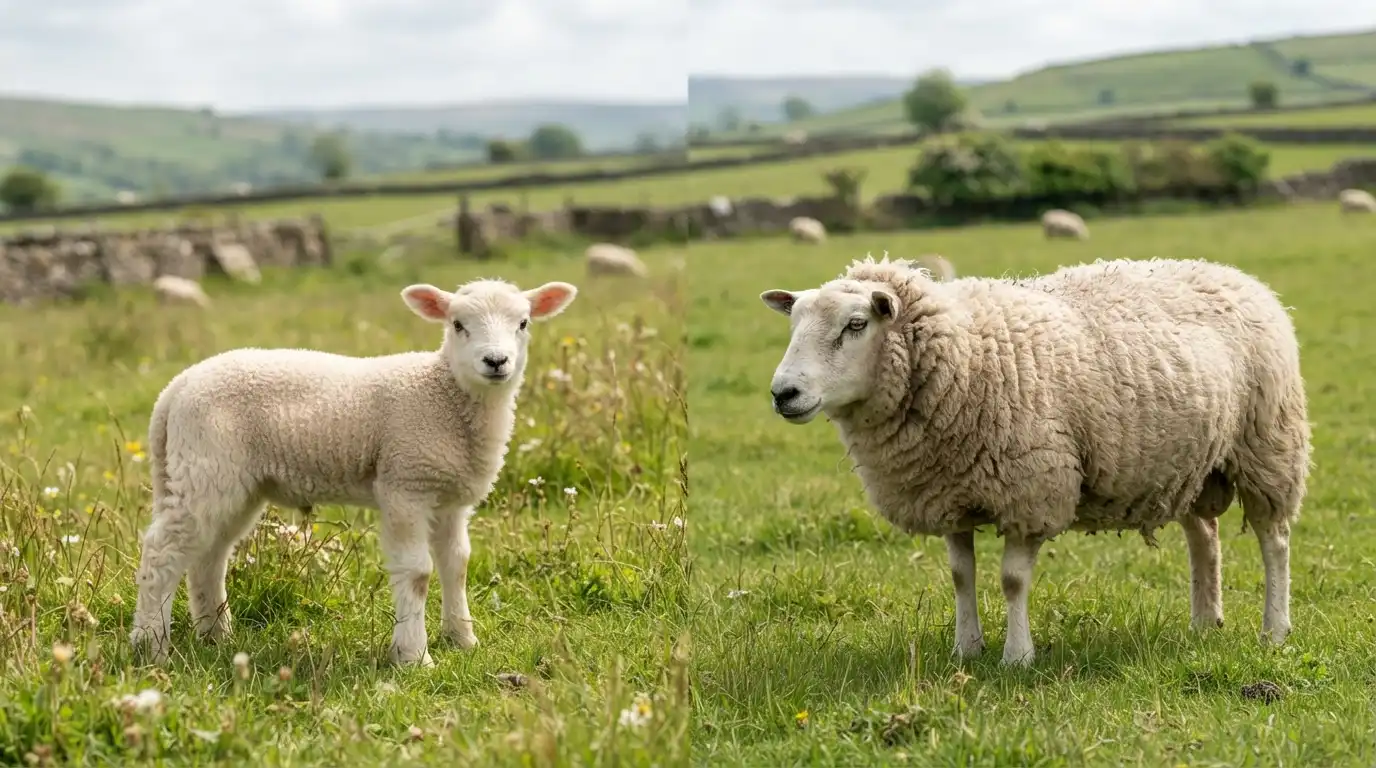
Difference between lamb and sheep is something many people wonder about when visiting a farm or ordering food. You might see fluffy animals in a field and think they are all the same but they are not. Some are young, while others are fully grown.
The difference between lamb and sheep is mainly about age, but there’s more to it. A lamb is a baby sheep, while a sheep is an adult animal. Still, people often mix them up in everyday conversation.
Understanding the difference between lamb and sheep helps in farming, cooking, and even language use. It also makes communication clearer, especially when talking about animals or food.
Now, let’s explore the key differences in a simple and clear way.
🧾 Key Difference Between the Both
The main difference is age.
- A lamb is a young sheep, usually less than one year old.
- A sheep is an adult animal, typically older than one year.
This difference also affects their size, behavior, and even how they are used in agriculture and food.
🌍 Importance – Why This Difference Matters
Knowing the difference between lamb and sheep is important for both learners and experts.
For students and language learners, it improves vocabulary and avoids confusion. Using the correct word shows clarity and confidence in communication.
For farmers and animal experts, the difference is crucial. Lambs and sheep require different care, feeding, and management. Age affects health, breeding, and productivity.
In society, this distinction matters in food culture and trade. For example, lamb meat and mutton (from adult sheep) differ in taste, texture, and value.
🔊 Pronunciation Section
Lamb
US: /læm/
UK: /læm/
Sheep
US: /ʃiːp/
UK: /ʃiːp/
Now that you know how to say them, let’s understand what each word truly means.
📚 Core Definitions
Lamb
A lamb is a young sheep, usually under one year old. It is small, soft, and often playful. The word also carries a gentle and innocent emotional tone.
Example: The lamb followed its mother across the field.
Sheep
A sheep is a fully grown farm animal raised for wool, meat, or milk. It is larger and more mature than a lamb. The tone is neutral and practical.
Example: The farmer sheared the sheep for wool.
📊 10 Clear Differences Between Lamb and Sheep
1. Age
Lambs are young animals, while sheep are adults. Age is the most basic difference.
- Example for lamb: The lamb is only three months old.
- Example for sheep: The sheep is fully grown.
2. Size
Lambs are smaller and lighter. Sheep are bigger and heavier.
- Example for lamb: The lamb fits easily in the farmer’s arms.
- Example for sheep: The sheep is too heavy to carry.
3. Behavior
Lambs are playful and energetic. Sheep are calmer and more stable.
- Example for lamb: The lamb jumps around happily.
- Example for sheep: The sheep grazes quietly.
4. Dependency
Lambs depend on their mothers for milk and care. Sheep are independent.
- Example for lamb: The lamb drinks milk from its mother.
- Example for sheep: The sheep eats grass on its own.
5. Physical Features
Lambs have softer wool and smaller bodies. Sheep have thicker wool and stronger bodies.
- Example for lamb: The lamb’s wool feels very soft.
- Example for sheep: The sheep’s wool is dense and heavy.
6. Use in Farming
Lambs are often raised for meat. Sheep are used for wool, milk, and breeding.
- Example for lamb: Farmers raise lambs for tender meat.
- Example for sheep: Sheep provide wool for clothing.
7. Taste (Food Context)
Lamb meat is tender and mild. Sheep meat (mutton) is stronger in flavor.
- Example for lamb: The lamb dish tastes soft and juicy.
- Example for sheep: Mutton has a rich, strong taste.
8. Growth Stage
Lambs are in the early stage of life. Sheep are fully developed animals.
- Example for lamb: The lamb is still growing.
- Example for sheep: The sheep has reached maturity.
9. Emotional Tone
“Lamb” often suggests innocence and gentleness. “Sheep” can suggest following behavior.
- Example for lamb: She is as gentle as a lamb.
- Example for sheep: He follows others like a sheep.
10. Language Use
“Lamb” is used in affectionate expressions. “Sheep” appears in idioms about behavior.
- Example for lamb: My little lamb, come here.
- Example for sheep: Don’t be a sheep—think for yourself.
🎯 Why Knowing the Difference Matters
For students, knowing this difference improves vocabulary and writing skills. It helps avoid mistakes in exams and conversations.
For professionals, especially in agriculture and food industries, correct usage is essential. It ensures accurate communication and better understanding of products.
In daily life, using the right word avoids confusion. It shows awareness and respect for language.
Real-world consequences of confusion
If someone orders “lamb” but means “mutton,” they may get a completely different taste. In farming, confusion can lead to improper care or feeding.
🧠 Why People Get Confused
Similar Meaning
Both words refer to the same animal species, which causes confusion.
Context-Based Usage
People use “sheep” to refer to all ages informally.
Informal Speech
In casual conversation, accuracy is often ignored.
🎭 Connotation & Emotional Tone
Connotation = the emotional meaning associated with a word.
Lamb
- Positive: Innocence, softness
Example: She has a lamb-like smile. - Neutral: Young animal
- Negative: Rarely negative
Sheep
- Positive: Calmness
- Neutral: Farm animal
- Negative: Blind follower
Example: Don’t act like a sheep.
🗣 Usage in Metaphors, Similes & Idioms
- Like a lamb to the slaughter → Going into danger unknowingly
Example: He walked into the deal like a lamb to the slaughter.* - Black sheep → A person who is different or disliked
Example: He is the black sheep of the family.* - Gentle as a lamb → Very kind and soft
Example: The child is gentle as a lamb.*
📊 Comparison Table
| Feature | Lamb | Sheep |
|---|---|---|
| Meaning | Young sheep | Adult sheep |
| Tone | Soft, innocent | Neutral or symbolic |
| Usage | Emotional, food | General, behavioral |
| Context | Early life stage | Mature stage |
| Formality | Informal & general | Neutral & formal |
⚖️ Which Is Better in What Situation?
When to use Lamb
Use “lamb” when talking about a young animal or when expressing softness and innocence. For example, in cooking or describing gentle behavior.
When to use Sheep
Use “sheep” when referring to the adult animal or when speaking generally about the species.
Situational Clarity
Choose based on age and meaning. If the animal is young, say lamb. If it is grown, say sheep.
Contextual Correctness
In farming, food, or writing, using the correct term improves accuracy and understanding.
📖 Literary or Cultural References
- Book: Animal Farm (Political satire, George Orwell, 1945)
Sheep represent blind followers in society. - Movie: Babe (Australia/USA, 1995)
Features sheep as intelligent and social animals.
❓ FAQs
1. Is a lamb the same as a sheep?
No, a lamb is a young sheep. A sheep is an adult. The difference is mainly age.
2. At what age does a lamb become a sheep?
A lamb becomes a sheep after about one year. This may vary slightly depending on farming practices.
3. Why is lamb meat more popular?
Lamb meat is softer and milder in taste. Many people prefer it over stronger-flavored mutton.
4. Can “sheep” refer to young animals?
Informally, yes. But correctly, “sheep” refers to adults, while “lamb” is specific to the young.
5. Why is “sheep” used as an insult?
It suggests someone follows others without thinking. This comes from sheep behavior in groups.
🏁 Conclusion
The difference between lamb and sheep is simple but important. A lamb is a young, gentle animal, while a sheep is fully grown and more independent. This difference affects language, farming, and even food choices.
Understanding this distinction helps you communicate clearly and avoid confusion. It also adds depth to your vocabulary and cultural knowledge.
Next time you see these animals or hear the words, you’ll know exactly what they mean. Keep learning, stay curious, and enjoy building your language skills step by step.

Mira Anand is a writer at Distinly.com who focuses on storytelling, communication, and social perspective. Her work highlights subtle differences in language and meaning across cultures and communities. With a clear and empathetic voice, Mira helps readers understand how narratives shape understanding, relationships, and modern dialogue in an increasingly connected world.