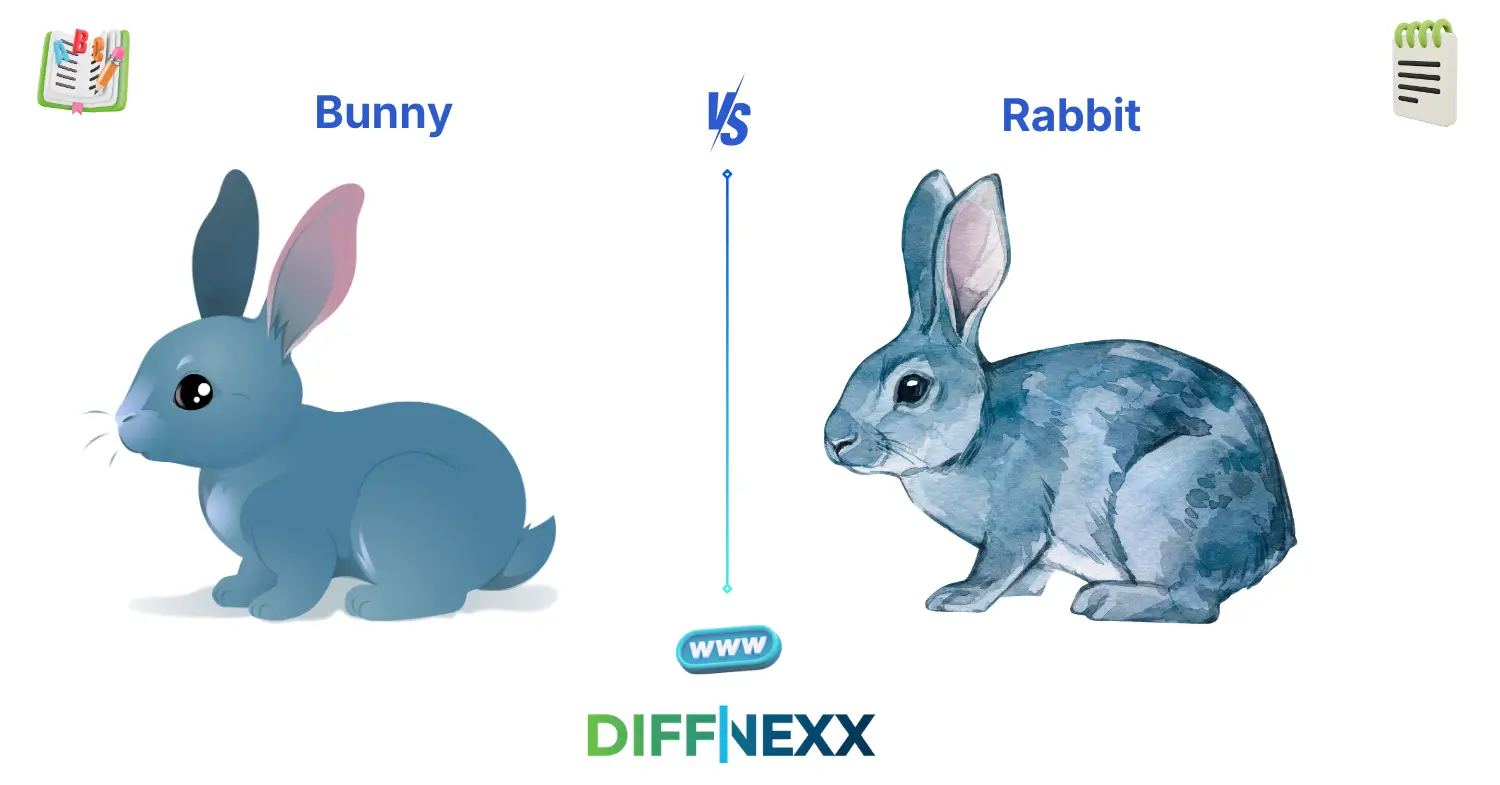
Difference between bunny and rabbit often comes up in everyday conversations, especially when children, stories, or pets are involved. Imagine a child pointing at a fluffy animal and saying “Look, a bunny!” while an adult corrects them by saying “It’s a rabbit.” That moment can feel confusing.
The difference between bunny and rabbit is not about two completely different animals. Instead, it is about language, tone, and usage. “Rabbit” is the scientific and correct term, while “bunny” is more informal and affectionate.
Understanding the difference between bunny and rabbit helps you use the right word in the right situation. It also improves your vocabulary and communication skills.
Let’s explore the differences clearly and simply.
Key Difference Between the Both
The key difference between bunny and rabbit is that “rabbit” is the formal and correct term for the animal, while “bunny” is an informal, cute nickname often used for young or small rabbits.
Importance – Why Is Their Difference Necessary to Know
Knowing the difference between bunny and rabbit is important for learners and language users.
For students, it builds vocabulary accuracy. It helps them understand formal and informal language use.
For professionals, especially teachers or writers, using the correct term ensures clarity and credibility.
In society, correct word choice improves communication. It also helps avoid confusion in education and media.
🔊 Pronunciation Section
Bunny
US: /ˈbʌni/
UK: /ˈbʌni/
Rabbit
US: /ˈræbɪt/
UK: /ˈræbɪt/
Now that you can pronounce them correctly, let’s define each term clearly.
📚 Core Definitions
Bunny
A bunny is an informal, affectionate term for a small or young rabbit. It is often used with children or in cute contexts. The tone is warm and playful.
Example:
“The child hugged the soft bunny toy.”
Rabbit
A rabbit is a small mammal known for its long ears and hopping movement. It is the correct scientific and general term. The tone is neutral and factual.
Example:
“The rabbit lives in a burrow.”
📚 10 Clear Differences Between Bunny and Rabbit
1. Formality 🎓
“Rabbit” is formal and correct. “Bunny” is informal and playful.
- Example for Bunny: “Look at the cute bunny!”
- Example for Rabbit: “The rabbit is a herbivore.”
2. Emotional Tone 😊
“Bunny” feels cute and affectionate. “Rabbit” feels neutral.
- Example for Bunny: “I love this fluffy bunny.”
- Example for Rabbit: “The rabbit eats grass.”
3. Usage Context
“Bunny” is used in casual speech. “Rabbit” is used in academic or general contexts.
- Example for Bunny: “Kids say bunny.”
- Example for Rabbit: “Teachers say rabbit.”
4. Age Association 🐣
“Bunny” often refers to young rabbits. “Rabbit” refers to all ages.
- Example for Bunny: “The bunny is small.”
- Example for Rabbit: “The rabbit is fully grown.”
5. Scientific Accuracy
“Rabbit” is scientifically correct. “Bunny” is not used in science.
- Example for Bunny: “It’s a cute bunny.”
- Example for Rabbit: “Rabbits belong to mammals.”
6. Cultural Usage 🎭
“Bunny” appears in stories and cartoons. “Rabbit” appears in real-life descriptions.
- Example for Bunny: “The Easter Bunny brings eggs.”
- Example for Rabbit: “The rabbit digs tunnels.”
7. Tone in Writing
“Bunny” suits informal writing. “Rabbit” suits formal writing.
- Example for Bunny: “A bunny hopped happily.”
- Example for Rabbit: “The rabbit showed adaptive behavior.”
8. Psychological Impact 🧠
“Bunny” creates warmth and comfort. “Rabbit” creates clarity and accuracy.
- Example for Bunny: “It feels comforting.”
- Example for Rabbit: “It feels informative.”
9. Audience 👥
“Bunny” is used with children. “Rabbit” is used with all audiences.
- Example for Bunny: “Parents say bunny.”
- Example for Rabbit: “Scientists say rabbit.”
10. Expression Style ✍️
“Bunny” is expressive and emotional. “Rabbit” is descriptive and factual.
- Example for Bunny: “The bunny is adorable.”
- Example for Rabbit: “The rabbit is fast.”
🎯 Why Knowing the Difference Matters
Students must understand the difference to improve language accuracy. It helps them switch between formal and informal contexts easily.
Professionals need this clarity for effective communication. Writers, teachers, and speakers must choose the right tone.
In daily life, correct usage prevents confusion. It also helps people communicate clearly in different situations.
Real-world consequences of confusion
Using “bunny” in formal writing may sound unprofessional. Using “rabbit” with children may sound too serious or distant.
🧠 Why People Get Confused
Similar Meaning
Both words refer to the same animal, which creates confusion.
Semantic Overlap
“Bunny” is often used instead of “rabbit,” making them seem identical.
Context-Based Usage
People switch terms based on situation without noticing.
Influence of Informal Speech
Media, cartoons, and family conversations favor “bunny,” increasing confusion.
🎭 Connotation & Emotional Tone
Connotation = the emotional meaning associated with a word.
Bunny
Positive and warm. It suggests cuteness and affection.
- Example: “The bunny looks adorable.”
Rabbit
Neutral. It focuses on facts and description.
- Example: “The rabbit runs quickly.”
🗣 Usage in Metaphors, Similes & Idioms
- “Quick like a rabbit” – means very fast.
- “Soft as a bunny” – means very gentle or soft.
📊 Comparison Table
| Feature | Bunny | Rabbit |
|---|---|---|
| Meaning | Informal name | Actual animal term |
| Tone | Cute, playful | Neutral |
| Usage | Casual speech | Formal/general |
| Context | Children, stories | Science, daily use |
| Formality | Informal | Formal |
⚖️ Which Is Better in What Situation?
When to use Bunny
Use “bunny” in friendly or playful situations. It works well with children, stories, or casual talk.
When to use Rabbit
Use “rabbit” in formal, academic, or general contexts. It ensures accuracy and clarity.
Situational clarity
If tone matters, choose based on audience. Use “bunny” for warmth and “rabbit” for correctness.
Contextual correctness
Matching the word to the situation improves communication and understanding.
📖 Literary or Cultural References
- Book: Alice’s Adventures in Wonderland (Fantasy, Lewis Carroll, 1865) – features the White Rabbit.
- Movie: Peter Rabbit (UK/USA, 2018) – uses “rabbit” as the main term but shows playful tone similar to “bunny.”
❓ FAQs
1. Is a bunny different from a rabbit?
No, they refer to the same animal. “Bunny” is just an informal nickname for a rabbit.
2. Why do people say bunny instead of rabbit?
People use “bunny” because it sounds cute and friendly. It is especially common when talking to children.
3. Is bunny a scientific term?
No, “bunny” is not used in science. “Rabbit” is the correct scientific term.
4. Can adults use the word bunny?
Yes, but it depends on context. It may sound informal or playful in serious settings.
5. Which word is more correct?
“Rabbit” is more correct in formal and general use. “Bunny” is acceptable in casual contexts.
🏁 Conclusion
The difference between bunny and rabbit is simple yet meaningful. Both words refer to the same animal, but their usage depends on tone and context. “Rabbit” is formal, accurate, and widely accepted. “Bunny” is informal, warm, and often used in playful situations.
Understanding this difference helps you communicate clearly and appropriately. It allows you to adjust your language based on audience and purpose.
Small language choices can make a big impact. By using the right word at the right time, you improve both clarity and connection.
Keep learning, stay curious, and enjoy exploring language.

Mira Anand is a writer at Distinly.com who focuses on storytelling, communication, and social perspective. Her work highlights subtle differences in language and meaning across cultures and communities. With a clear and empathetic voice, Mira helps readers understand how narratives shape understanding, relationships, and modern dialogue in an increasingly connected world.