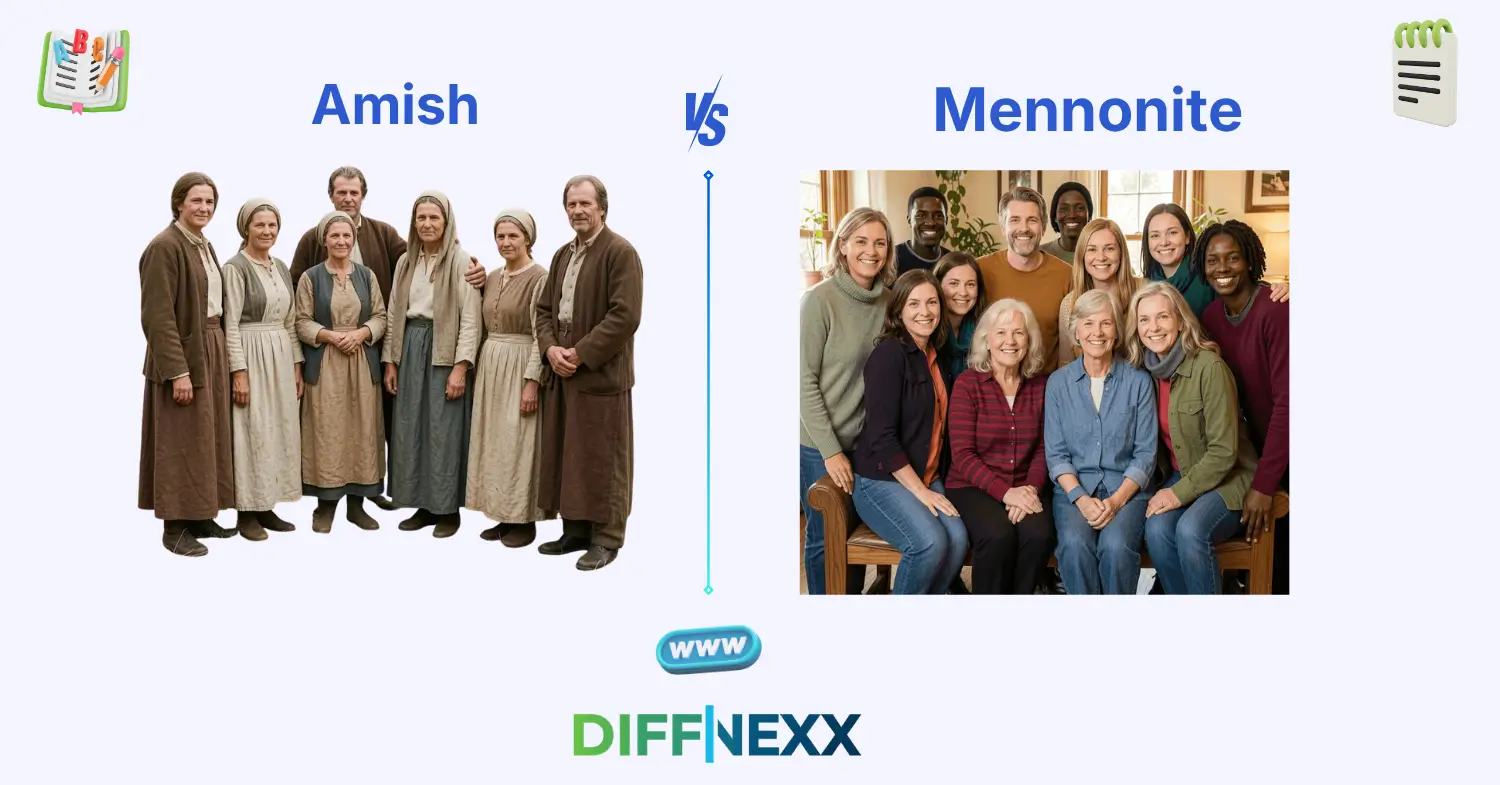
Difference between amish and mennonite often comes up when people see communities living simple, traditional lives. Imagine visiting a rural town where some people travel by horse and buggy, while others use cars but dress modestly. It can feel confusing at first.
The difference between amish and mennonite is mainly about lifestyle, technology use, and religious practices. Both groups share similar roots and beliefs, but they live quite differently in daily life.
Understanding the difference between amish and mennonite helps you avoid common misunderstandings. It also gives insight into how traditions shape modern communities.
Let’s explore their key differences step by step in a simple and clear way.
Key Difference Between the Both
The main difference is:
- Amish communities follow a very strict, traditional lifestyle with limited use of modern technology.
- Mennonite communities are more flexible and often accept modern tools and conveniences.
In short, Amish are more conservative, while Mennonites are generally more adaptable.
Importance – Why Their Difference Matters
Knowing this difference is important for learners and professionals.
For students, it improves cultural understanding and knowledge of religious groups. It also helps in exams and discussions.
For researchers, writers, and journalists, this distinction ensures accurate reporting. It avoids stereotypes and misinformation.
In society, understanding these groups promotes respect. It helps people appreciate diversity and different ways of life.
🔊 Pronunciation Section
Amish
US: /ˈɑːmɪʃ/
UK: /ˈɑːmɪʃ/
Mennonite
US: /ˈmɛnəˌnaɪt/
UK: /ˈmɛnənaɪt/
Now that you know how to say these words, let’s understand what they mean.
📚 Core Definitions
Amish
The Amish are a traditional Christian group known for simple living, plain dress, and avoiding modern technology. They value community, humility, and separation from the modern world.
Example: An Amish family travels using a horse and buggy instead of a car.
Mennonite
The Mennonites are also a Christian group but are more open to modern life. They still value faith and simplicity but often use technology and engage with society.
Example: A Mennonite family may drive a car and use electricity.
📚 10 Clear Differences Between Amish and Mennonite
1. Technology Use
Amish avoid most modern technology.
Mennonites often accept technology.
- Example for Amish: No smartphones or cars.
- Example for Mennonite: Use phones and vehicles.
2. Lifestyle Strictness
Amish follow strict rules.
Mennonites have flexible lifestyles.
- Example for Amish: Strict dress code.
- Example for Mennonite: More relaxed clothing.
3. Clothing Style
Amish wear plain, uniform clothing.
Mennonites dress modestly but vary more.
- Example for Amish: Simple black outfits.
- Example for Mennonite: Modern but modest clothes.
4. Interaction with Society
Amish limit outside contact.
Mennonites interact more with society.
- Example for Amish: Stay within community.
- Example for Mennonite: Work in public jobs.
5. Education
Amish education often ends at a basic level.
Mennonites may pursue higher education.
- Example for Amish: School ends after grade 8.
- Example for Mennonite: Attend college.
6. Transportation
Amish use horse-drawn vehicles.
Mennonites use modern transport.
- Example for Amish: Horse and buggy.
- Example for Mennonite: Cars and buses.
7. Religious Practice
Amish follow traditional worship styles.
Mennonites vary in worship practices.
- Example for Amish: Home-based services.
- Example for Mennonite: Church buildings.
8. Community Rules
Amish communities enforce strict discipline.
Mennonite rules are less strict.
- Example for Amish: Strict community laws.
- Example for Mennonite: More personal choice.
9. Modern Influence
Amish resist modern culture.
Mennonites accept some modern influence.
- Example for Amish: Avoid media.
- Example for Mennonite: Use internet.
10. Expression Style
Amish express values through simplicity.
Mennonites express values with balance.
- Example for Amish: Simple lifestyle choices.
- Example for Mennonite: Mix of tradition and modern life.
🎯 Why Knowing the Difference Matters
Students need this knowledge to understand cultural diversity. It improves learning and awareness.
Professionals must know the difference to avoid mistakes in writing or reporting. Accuracy matters in communication.
In everyday life, understanding these groups helps build respect and avoid stereotypes.
Real-world Consequences of Confusion
Confusing these groups can lead to misunderstandings. It may result in incorrect assumptions or disrespectful views.
🧠 Why People Get Confused
Similar Names
The names sound alike, which causes confusion.
Shared Origins
Both groups come from the Anabaptist movement, so they share beliefs.
Context-Based Usage
Media often uses the terms interchangeably.
Informal Speech
People do not always use precise terms in conversation.
🎭 Connotation & Emotional Tone
Connotation = the emotional meaning associated with a word.
Amish
- Positive: Simplicity, discipline, strong community
- Neutral: Traditional lifestyle
- Example: “The Amish value simple living.”
Mennonite
- Positive: Balance, adaptability, openness
- Neutral: Religious community
- Example: “Mennonites balance tradition and modern life.”
🗣 Usage in Metaphors, Similes & Idioms
These terms are sometimes used symbolically.
- “Living like the Amish” (meaning very simple life)
- “A Mennonite approach” (balanced lifestyle)
Examples:
- “He lives like the Amish—very simple and quiet.”
- “She follows a Mennonite approach to technology.”
📊 Comparison Table
| Feature | Amish | Mennonite |
|---|---|---|
| Meaning | Traditional Christian group | Flexible Christian group |
| Tone | Conservative | Balanced |
| Usage | Cultural/religious context | Cultural/religious context |
| Context | Rural, traditional | Mixed modern and traditional |
| Formality | Formal | Formal |
⚖️ Which Is Better in What Situation?
When to Use Amish
Use “Amish” when referring to strict, traditional communities. It fits discussions about simple living and limited technology.
When to Use Mennonite
Use “Mennonite” when discussing groups that combine faith with modern life. It works in broader social contexts.
Situational Clarity
Choose the term based on lifestyle differences. This ensures accuracy.
Contextual Correctness
Always use the correct term in writing or speech. This shows respect and understanding.
📖 Literary or Cultural References
- Book: “Amish Grace” (Non-fiction, Donald B. Kraybill, 2007)
Explores Amish values and forgiveness. - Movie: “Witness” (USA, 1985)
Shows Amish life and culture.
❓ FAQs
1. Are Amish and Mennonites the same?
No. They share origins but differ in lifestyle and technology use.
2. Which group is more strict?
Amish communities are generally more strict than Mennonites.
3. Do Mennonites use technology?
Yes. Many Mennonites use modern tools like cars and phones.
4. Why do Amish avoid modern life?
They believe it helps maintain community and religious values.
5. Can Amish become Mennonites?
Some individuals may change groups, but it depends on personal beliefs and community rules.
🏁 Conclusion
The difference between amish and mennonite mainly lies in how each group approaches modern life. Amish communities follow strict traditions and avoid most technology, while Mennonites balance tradition with modern living.
Understanding this difference helps you communicate clearly and respectfully. It also deepens your knowledge of cultural and religious diversity.
By learning these distinctions, you become a more informed and thoughtful communicator. Keep exploring such topics to strengthen your understanding of the world.

Ezra Hale is a thoughtful contributor to Distinly.com, where he explores philosophical ideas and the subtle differences behind everyday concepts. His writing blends logic, language, and human insight to clarify complex distinctions. Ezra encourages readers to think deeper, question assumptions, and appreciate the meaning behind words and ideas in modern discourse.