Difference between simile and metaphor often comes up when students try to improve their writing. Imagine a teacher asking you to describe the sun. You say, “The sun is like a ball of fire.” Your friend says, “The sun is a ball of fire.” Both sound similar—but they are not the same.
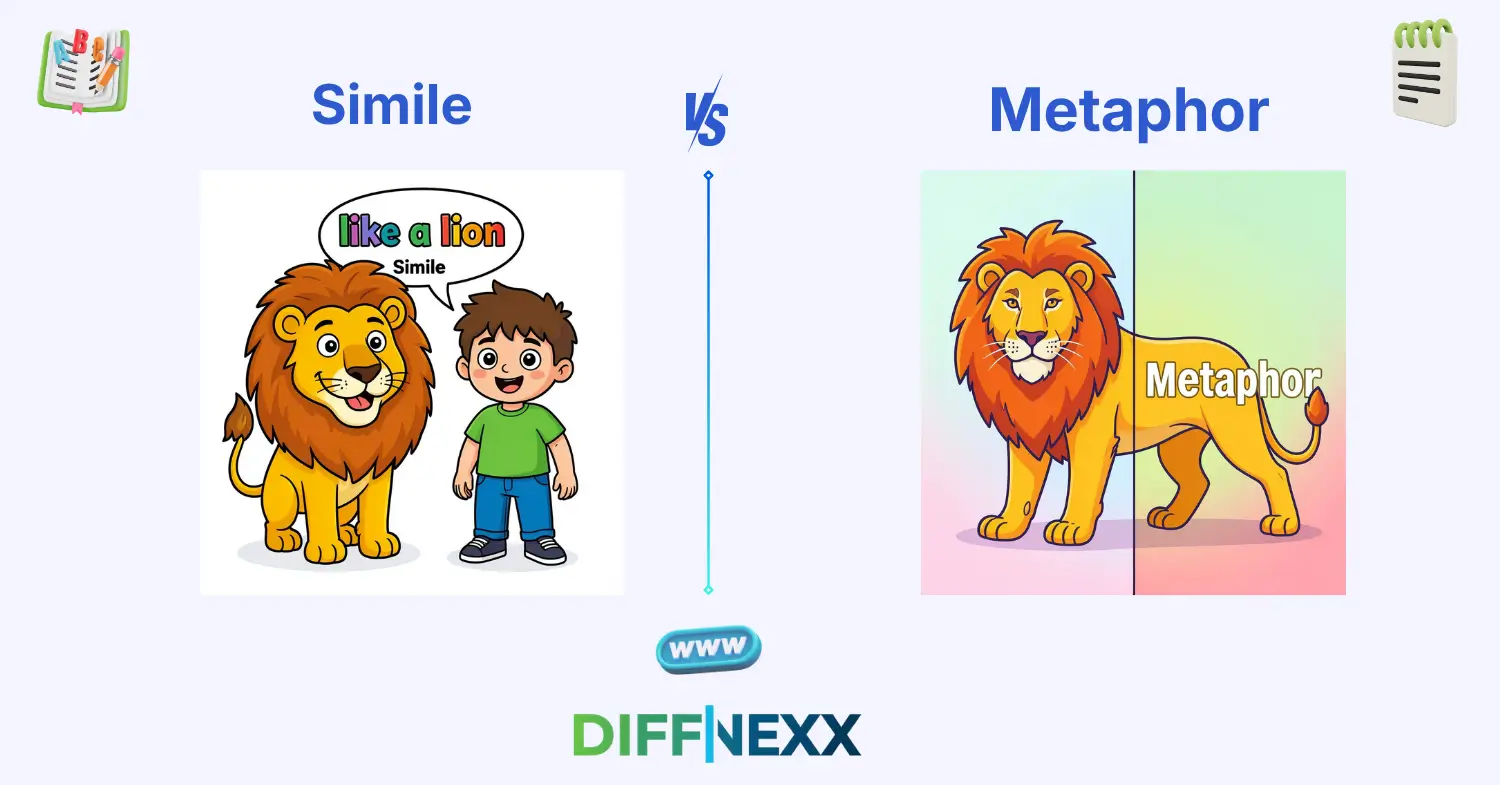
The difference between simile and metaphor lies in how comparisons are made. A simile uses words like “as” or “like” to compare two things. A metaphor, on the other hand, directly states that one thing is another.
Understanding the difference between simile and metaphor helps you write clearly and creatively. It also makes your language more expressive and engaging.
Let’s explore their meanings and differences in a simple and clear way.
Key Difference Between the Both
The main difference is:
- A simile compares two things using “like” or “as.”
- A metaphor compares two things directly without using “like” or “as.”
In short, similes are more explicit, while metaphors are more direct and powerful.
Importance – Why Their Difference Matters
Knowing this difference is useful for both learners and experts.
For students, it improves writing skills. It helps in essays, exams, and creative tasks.
For writers, teachers, and professionals, it adds depth to language. It makes communication more vivid and precise.
In society, strong language skills help people express ideas clearly. It also improves storytelling, speeches, and everyday conversations.
🔊 Pronunciation Section
Simile
US: /ˈsɪməli/
UK: /ˈsɪmɪli/
Metaphor
US: /ˈmetəˌfɔːr/
UK: /ˈmetəfə/
Now that you can say both words correctly, let’s understand what they mean in detail.
📚 Core Definitions
Simile
A simile is a figure of speech that compares two different things using “like” or “as.” It creates a clear and simple image.
Example: “She is as brave as a lion.”
Metaphor
A metaphor is a figure of speech that directly compares two things by saying one is the other. It feels stronger and more imaginative.
Example: “She is a lion.”
📚 10 Clear Differences Between Simile and Metaphor
1. Expression Style
Similes use comparison words.
Metaphors make direct statements.
- Example for Simile: “He runs like the wind.”
- Example for Metaphor: “He is the wind.”
2. Emotional Intensity
Similes are softer and more descriptive.
Metaphors feel stronger and more dramatic.
- Example for Simile: “Her smile is like sunshine.”
- Example for Metaphor: “Her smile is sunshine.”
3. Clarity
Similes are easier to understand.
Metaphors may need deeper thinking.
- Example for Simile: “Cold as ice.”
- Example for Metaphor: “He is ice.”
4. Creativity Level
Similes are simple and common.
Metaphors are more creative and artistic.
- Example for Simile: “Busy like a bee.”
- Example for Metaphor: “He is a busy bee.”
5. Directness
Similes are indirect comparisons.
Metaphors are direct comparisons.
- Example for Simile: “Strong as steel.”
- Example for Metaphor: “He is steel.”
6. Use of Linking Words
Similes always use “like” or “as.”
Metaphors do not use these words.
- Example for Simile: “Bright like the sun.”
- Example for Metaphor: “She is the sun.”
7. Formality
Similes are common in everyday speech.
Metaphors are often used in literature and speeches.
- Example for Simile: “He eats like a horse.”
- Example for Metaphor: “Time is a thief.”
8. Psychological Impact
Similes create gentle imagery.
Metaphors create strong mental pictures.
- Example for Simile: “Soft like cotton.”
- Example for Metaphor: “Her voice is cotton.”
9. Tone
Similes sound explanatory.
Metaphors sound poetic.
- Example for Simile: “As quiet as a mouse.”
- Example for Metaphor: “He is a mouse.”
10. Usage Context
Similes are used in teaching and basic writing.
Metaphors are used in poetry, storytelling, and advanced writing.
- Example for Simile: “Tall like a tree.”
- Example for Metaphor: “He is a tree.”
🎯 Why Knowing the Difference Matters
Students need this knowledge to improve writing and reading skills. It helps them understand literature better.
Professionals, especially writers and teachers, use these tools to create powerful messages. Clear understanding improves communication.
In daily life, using the right expression makes speech more engaging and meaningful.
Real-world Consequences of Confusion
Confusing similes and metaphors can make writing unclear. It may weaken your message or confuse your audience.
🧠 Why People Get Confused
Similar Structure
Both compare two things, which makes them look alike.
Semantic Overlap
They serve the same purpose—comparison—so meanings overlap.
Context-Based Usage
In casual speech, people mix them without noticing.
Influence of Informal Speech
Many learners do not focus on grammar rules in daily conversation.
🎭 Connotation & Emotional Tone
Connotation = the emotional meaning associated with a word.
Simile
- Neutral to Positive: It sounds clear and friendly.
- Example: “Her voice is like music.”
Metaphor
- Positive or Strong: It feels deeper and more powerful.
- Example: “Her voice is music.”
🗣 Usage in Metaphors, Similes & Idioms
Both are common in idioms and expressions.
- Simile: “As busy as a bee” 🐝
- Metaphor: “Time is money” 💰
Example sentences:
- Simile: “He fought like a lion.”
- Metaphor: “He is a lion in battle.”
📊 Comparison Table
| Feature | Simile | Metaphor |
|---|---|---|
| Meaning | Comparison using “like/as” | Direct comparison |
| Tone | Simple and clear | Strong and poetic |
| Usage | Everyday language | Literature and speech |
| Context | Teaching and basic writing | Creative and advanced writing |
| Formality | Less formal | More formal and artistic |
⚖️ Which Is Better in What Situation?
When to Use Simile
Use similes when you want to explain something clearly. They are great for beginners and simple descriptions.
When to Use Metaphor
Use metaphors when you want stronger impact. They work well in poetry, storytelling, and speeches.
Situational Clarity
If your audience is young or learning, choose similes. They are easier to understand.
Contextual Correctness
If you want to sound creative or emotional, choose metaphors. They make your language richer.
📖 Literary or Cultural References
- Book: “Romeo and Juliet” (Drama, William Shakespeare, 1597)
Uses many metaphors like “Juliet is the sun.” - Movie: “Dead Poets Society” (USA, 1989)
Shows the power of metaphor in language and teaching.
❓ FAQs
1. What is the main difference between simile and metaphor?
A simile uses “like” or “as,” while a metaphor makes a direct comparison. This is the key difference.
2. Are similes easier than metaphors?
Yes. Similes are easier because they clearly show the comparison using simple words.
3. Can a sentence have both simile and metaphor?
Usually not in the same comparison. However, a text can include both types in different sentences.
4. Which is more powerful, simile or metaphor?
Metaphors are usually more powerful. They create stronger emotional impact.
5. Why are similes used in teaching?
Similes are simple and clear. They help learners understand comparisons easily.
🏁 Conclusion
The difference between simile and metaphor is simple but important. Similes use “like” or “as” to compare, while metaphors make direct comparisons. This small difference changes how strong and creative your language sounds.
By understanding both, you can improve your writing and communication. You will express ideas more clearly and creatively.
Keep practicing these tools in your daily writing. Over time, you will naturally choose the right one for every situation.

Ezra Hale is a thoughtful contributor to Distinly.com, where he explores philosophical ideas and the subtle differences behind everyday concepts. His writing blends logic, language, and human insight to clarify complex distinctions. Ezra encourages readers to think deeper, question assumptions, and appreciate the meaning behind words and ideas in modern discourse.