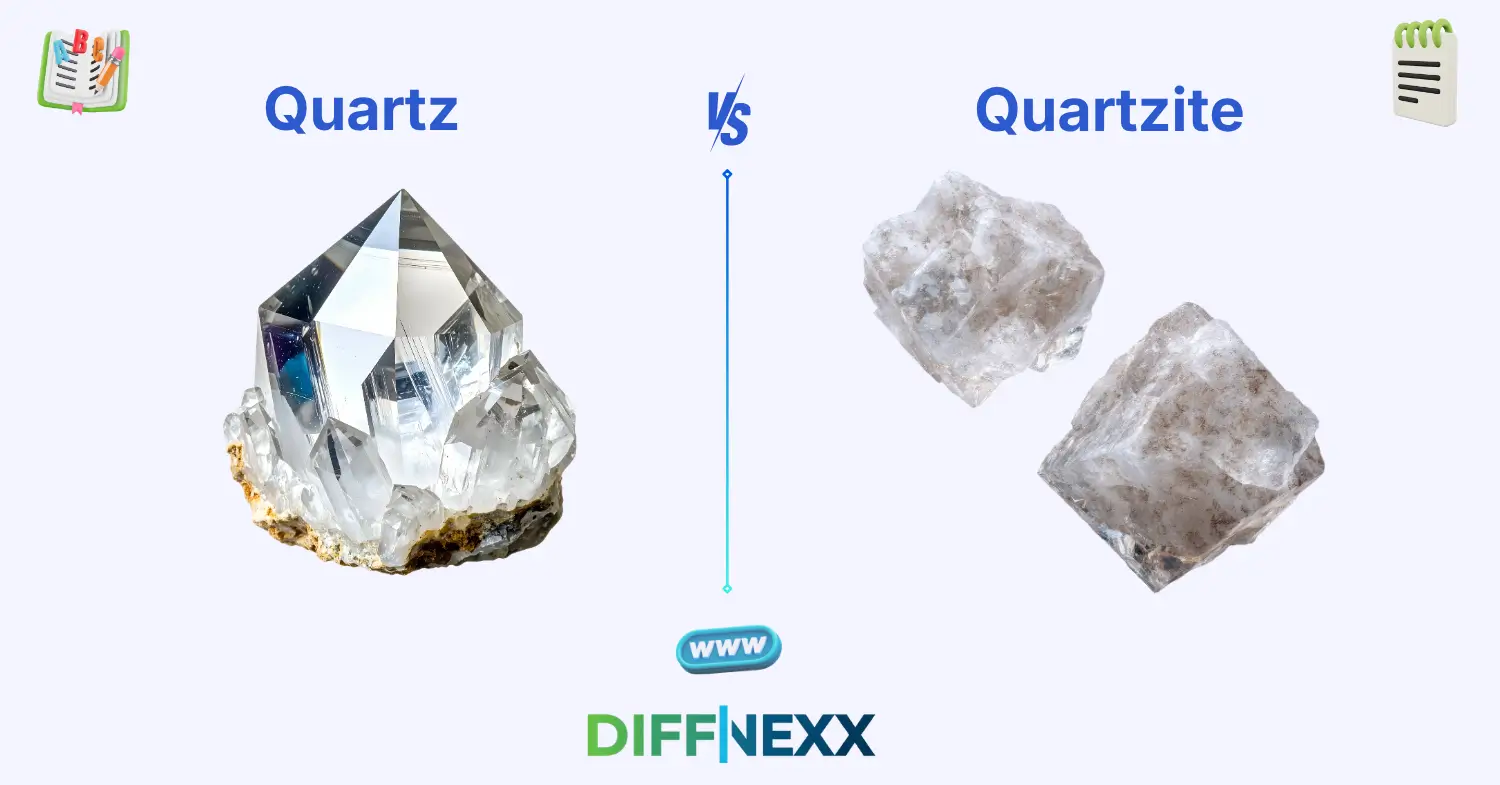
Difference between quartz and quartzite often confuses homeowners choosing countertops. Imagine you are redesigning your kitchen. You see two beautiful materials quartz and quartzite. They look similar, but are they the same?
The difference between quartz and quartzite lies in their composition and how they are made. One is engineered, while the other is natural stone.
Understanding the difference between quartz and quartzite helps you pick the right material for durability, style, and maintenance. It also prevents costly mistakes.
Let’s break it down in a simple and clear way.
🔑 Key Difference Between the Both
The main difference is natural vs engineered material.
- Quartz is an artificial (engineered) stone.
- Quartzite is a natural stone formed in the earth.
🌍 Importance – Why This Difference Matters
Knowing the difference between quartz and quartzite is important in design and construction.
For homeowners, it helps choose the right material for kitchens and bathrooms.
For professionals, it ensures proper recommendations and installations.
In society, it supports better use of natural resources and modern materials.
🔊 Pronunciation Section
Quartz
US: /kwɔːrts/
UK: /kwɔːts/
Quartzite
US: /ˈkwɔːrtsaɪt/
UK: /ˈkwɔːtsaɪt/
Now that you know how to pronounce them, let’s define each clearly.
📚 Core Definitions
Quartz
Quartz is an engineered stone made from natural quartz crystals mixed with resin and pigments. It is designed for durability and uniform appearance. The tone is modern and practical.
Example: She installed quartz countertops in her kitchen.
Quartzite
Quartzite is a natural metamorphic rock formed from sandstone under heat and pressure. It is strong and has a natural look. The tone is organic and premium.
Example: He chose quartzite for its natural beauty.
📊 10 Clear Differences Between Quartz and Quartzite
1. Origin
Quartz is engineered. Quartzite is natural.
- Example for quartz: Made in factories.
- Example for quartzite: Formed in nature.
2. Composition
Quartz contains resin and minerals. Quartzite is pure natural stone.
- Example for quartz: Mixed materials.
- Example for quartzite: Solid rock.
3. Appearance
Quartz has uniform patterns. Quartzite has unique natural patterns.
- Example for quartz: Consistent color.
- Example for quartzite: Natural variations.
4. Durability
Both are strong, but quartzite is harder.
- Example for quartz: Durable surface.
- Example for quartzite: Extremely hard stone.
5. Maintenance
Quartz is low maintenance. Quartzite needs sealing.
- Example for quartz: Easy cleaning.
- Example for quartzite: Requires sealing.
6. Heat Resistance
Quartz is less heat-resistant. Quartzite handles heat better.
- Example for quartz: Avoid hot pans.
- Example for quartzite: Handles heat well.
7. Cost
Quartz is usually more affordable. Quartzite can be expensive.
- Example for quartz: Budget-friendly option.
- Example for quartzite: Premium pricing.
8. Installation
Quartz is easier to install. Quartzite needs expert handling.
- Example for quartz: Standard installation.
- Example for quartzite: Skilled installation required.
9. Design Flexibility
Quartz offers more color choices. Quartzite has natural limited tones.
- Example for quartz: Wide design options.
- Example for quartzite: Natural shades.
10. Environmental Impact
Quartz involves manufacturing. Quartzite is naturally sourced.
- Example for quartz: Factory production.
- Example for quartzite: Quarry extraction.
🎯 Why Knowing the Difference Matters
For homeowners, choosing the right material affects durability and maintenance. It also impacts budget and style.
For design professionals, understanding these materials ensures better project outcomes. It helps match client needs.
In daily life, this knowledge prevents costly mistakes. It also ensures satisfaction with long-term use.
Real-world consequences of confusion
Choosing quartz instead of quartzite (or vice versa) may lead to unexpected maintenance or performance issues.
🧠 Why People Get Confused
Similar Names
Both share the word “quartz.”
Similar Appearance
They often look alike at first glance.
Overlapping Uses
Both are used for countertops and surfaces.
Marketing Terms
Sellers may use terms loosely.
🎭 Connotation & Emotional Tone
Connotation = the emotional meaning associated with a word.
Quartz
- Positive: Modern and practical
Example: Quartz offers easy maintenance.* - Neutral: Engineered surface
- Negative: Less natural feel
Quartzite
- Positive: Natural and luxurious
Example: Quartzite gives a premium look.* - Neutral: Natural stone
- Negative: Higher maintenance
🗣 Usage in Metaphors, Similes & Idioms
These terms are rarely used in idioms, but comparisons exist:
- Like quartz → Consistent and reliable
Example: His work is like quartz—steady and uniform.* - Like quartzite → Strong and natural
Example: Her strength is like quartzite—natural and powerful.*
📊 Comparison Table
| Feature | Quartz | Quartzite |
|---|---|---|
| Meaning | Engineered stone | Natural stone |
| Tone | Modern | Natural |
| Usage | Countertops | Countertops |
| Context | Manufactured | Earth-formed |
| Formality | Design/Construction | Design/Construction |
⚖️ Which Is Better in What Situation?
When to use Quartz
Choose quartz if you want low maintenance and consistent design. It is ideal for busy kitchens.
When to use Quartzite
Choose quartzite if you prefer natural beauty and higher heat resistance. It suits luxury designs.
Situational Clarity
Your lifestyle and maintenance preference decide the best option.
Contextual Correctness
Both materials are excellent but serve different needs.
📖 Literary or Cultural References
- Book: The Nature of Stone (Non-fiction, various authors)
Explores natural materials and geology. - Movie: Into the Wild (USA, 2007)
Reflects appreciation for natural elements.
❓ FAQs
1. Is quartz the same as quartzite?
No, quartz is engineered, while quartzite is natural.
2. Which is stronger?
Quartzite is generally harder than quartz.
3. Which is easier to maintain?
Quartz is easier because it does not need sealing.
4. Is quartz cheaper than quartzite?
Yes, quartz is usually more affordable.
5. Which is better for kitchens?
Both work well, but quartz is better for low maintenance, while quartzite is better for heat resistance.
🏁 Conclusion
The difference between quartz and quartzite mainly lies in origin and performance. Quartz is engineered and easy to maintain, while quartzite is natural and more heat-resistant.
Understanding this difference helps you choose the right material for your home. It ensures long-term satisfaction and better value.
Both options offer beauty and durability. The best choice depends on your lifestyle, budget, and design preference.
Stay informed and choose wisely small details make a big difference.

Aamer Shahzad is the founder of Distinly.com, a fast-growing educational platform focused on high-intent “difference between” topics. With over 8 years of experience in English language education and analytical writing, I specialize in breaking down complex “difference between” topics into clear, structured, and easy-to-understand explanations. Distinly.com is your go-to resource for enhancing English skills and writing with confidence.
I specializes in building search-optimized, research-driven comparison content designed for clarity, authority, and long-term digital asset value.