Difference between parole and probation often comes up when people hear about court decisions or criminal cases. Imagine someone is found guilty of a crime. One person goes to prison and later gets released early. Another person never goes to prison at all but must follow strict rules. Why are their situations different?
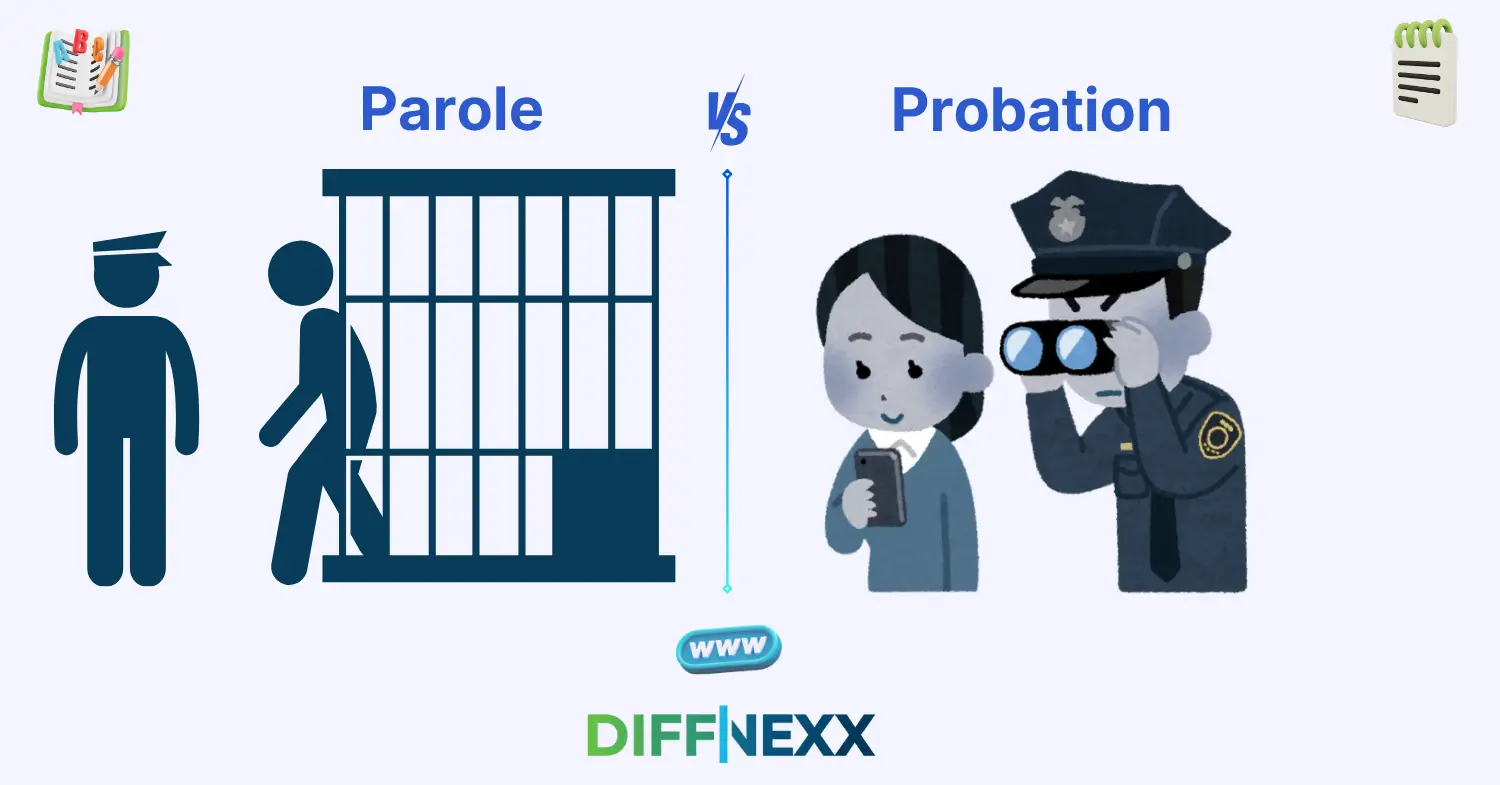
The difference between parole and probation lies in when and how each is applied. Parole happens after a person has served time in prison. Probation is often given instead of prison.
Understanding the difference between parole and probation helps people better understand the justice system. It also makes legal discussions clearer and more accurate.
Let’s explore these differences in a simple and practical way.
🔑 Key Difference Between the Both
The main difference is timing in the legal process.
- Parole is granted after serving part of a prison sentence.
- Probation is given instead of serving time in prison.
Both allow individuals to live in the community under supervision.
🌍 Importance – Why This Difference Matters
Knowing the difference between parole and probation is important in many ways.
For students, it improves understanding of legal terms and systems. It also helps in exams and discussions.
For legal professionals, the distinction is critical. It affects sentencing, supervision, and rehabilitation strategies.
In society, this knowledge promotes awareness. It helps people understand how justice balances punishment and second chances.
🔊 Pronunciation Section
Parole
US: /pəˈroʊl/
UK: /pəˈrəʊl/
Probation
US: /proʊˈbeɪ.ʃən/
UK: /prəˈbeɪ.ʃən/
Now that you know how to say them, let’s define them clearly.
📚 Core Definitions
Parole
Parole is the early release of a prisoner before completing the full sentence. The person must follow strict rules under supervision. The tone reflects conditional freedom.
Example: He was released on parole after serving five years.
Probation
Probation is a court-ordered period of supervision instead of prison. The person stays in the community but must follow certain conditions. The tone suggests a second chance.
Example: She received probation instead of jail time.
📊 10 Clear Differences Between Parole and Probation
1. Timing
Parole happens after prison. Probation happens instead of prison.
- Example for parole: He served time before parole.
- Example for probation: She avoided prison through probation.
2. Purpose
Parole helps reintegrate prisoners into society. Probation prevents incarceration.
- Example for parole: The goal is re-entry.
- Example for probation: The goal is rehabilitation without prison.
3. Authority
Parole is granted by a parole board. Probation is ordered by a judge.
- Example for parole: The board approved his release.
- Example for probation: The judge assigned probation.
4. Prison Involvement
Parole involves prior imprisonment. Probation does not.
- Example for parole: He was in prison before parole.
- Example for probation: She never went to jail.
5. Supervision Level
Both involve supervision, but parole may be stricter.
- Example for parole: He reports frequently to an officer.
- Example for probation: She checks in monthly.
6. Duration
Parole lasts for the remaining sentence. Probation has a fixed term set by the court.
- Example for parole: His parole lasts until sentence completion.
- Example for probation: Her probation lasts two years.
7. Violation Consequences
Breaking parole may return a person to prison. Breaking probation may lead to jail time.
- Example for parole: He returned to prison after violation.
- Example for probation: She faced sentencing after violation.
8. Severity of Crime
Parole often applies to serious offenses. Probation is common for less serious crimes.
- Example for parole: He was convicted of a major offense.
- Example for probation: She committed a minor offense.
9. Freedom Level
Parole offers limited freedom after prison. Probation allows more freedom from the start.
- Example for parole: He has strict movement limits.
- Example for probation: She lives at home with conditions.
10. Psychological Impact
Parole may feel like continued punishment. Probation may feel like a second chance.
- Example for parole: He feels monitored constantly.
- Example for probation: She feels relieved but cautious.
🎯 Why Knowing the Difference Matters
For students, understanding these terms improves legal literacy. It helps them analyze real-world situations accurately.
For professionals, especially in law enforcement and legal fields, clarity ensures proper decision-making and communication.
In everyday life, knowing these differences prevents misunderstanding of legal cases. It promotes informed discussions.
Real-world consequences of confusion
Confusing parole with probation can lead to incorrect assumptions about a person’s legal status. This may affect trust, employment, or social relationships.
🧠 Why People Get Confused
Similar Concepts
Both involve supervision outside prison.
Legal Language
The terms sound formal and complex.
Overlapping Conditions
Both include rules, reporting, and restrictions.
Informal Use
People often use them interchangeably in casual talk.
🎭 Connotation & Emotional Tone
Connotation = the emotional meaning associated with a word.
Parole
- Positive: Opportunity for reintegration
Example: Parole gave him a second chance.* - Neutral: Legal release condition
- Negative: Continued control or restriction
Probation
- Positive: Chance to avoid prison
Example: Probation allowed her to rebuild her life.* - Neutral: Court supervision
- Negative: Seen as punishment for wrongdoing
🗣 Usage in Metaphors, Similes & Idioms
Legal terms are rarely used in idioms, but comparisons exist:
- On parole from stress → Temporarily free from pressure
Example: He felt like he was on parole from stress.* - Under probation rules → Living carefully
Example: She lived like she was under probation rules.*
📊 Comparison Table
| Feature | Parole | Probation |
|---|---|---|
| Meaning | Early prison release | Alternative to prison |
| Tone | Conditional freedom | Second chance |
| Usage | After imprisonment | Instead of prison |
| Context | Serious offenses | Minor offenses |
| Formality | Legal | Legal |
⚖️ Which Is Better in What Situation?
When to use Parole
Parole applies when someone has already served time and is released early. It helps reintegrate individuals into society.
When to use Probation
Probation is used when courts decide prison is not necessary. It allows individuals to stay in the community.
Situational Clarity
Use parole when discussing post-prison release. Use probation when discussing alternative sentencing.
Contextual Correctness
The correct term depends on the legal stage and the court decision.
📖 Literary or Cultural References
- Book: Just Mercy (Legal memoir, Bryan Stevenson, 2014)
Explores justice, sentencing, and rehabilitation. - Movie: The Shawshank Redemption (USA, 1994)
Shows parole and life after prison.
❓ FAQs
1. Is parole better than probation?
It depends on the situation. Probation avoids prison, while parole offers early release after serving time.
2. Can someone have both parole and probation?
Usually not for the same case, but it may happen in different cases.
3. Who decides parole and probation?
Parole is decided by a parole board. Probation is ordered by a judge.
4. What happens if parole rules are broken?
The person may return to prison to serve the remaining sentence.
5. Is probation a punishment?
Yes, it is a legal penalty but less severe than prison.
🏁 Conclusion
The difference between parole and probation mainly lies in timing and purpose. Parole comes after prison, while probation replaces prison. Both aim to support rehabilitation while maintaining legal control.
Understanding this difference helps you interpret legal situations correctly. It also improves communication and awareness of justice systems.
Each system plays a role in balancing punishment and second chances. By learning these terms, you gain a clearer view of how law and society work together.
Keep learning and stay informed knowledge builds confidence and clarity.

Mira Anand is a writer at Distinly.com who focuses on storytelling, communication, and social perspective. Her work highlights subtle differences in language and meaning across cultures and communities. With a clear and empathetic voice, Mira helps readers understand how narratives shape understanding, relationships, and modern dialogue in an increasingly connected world.