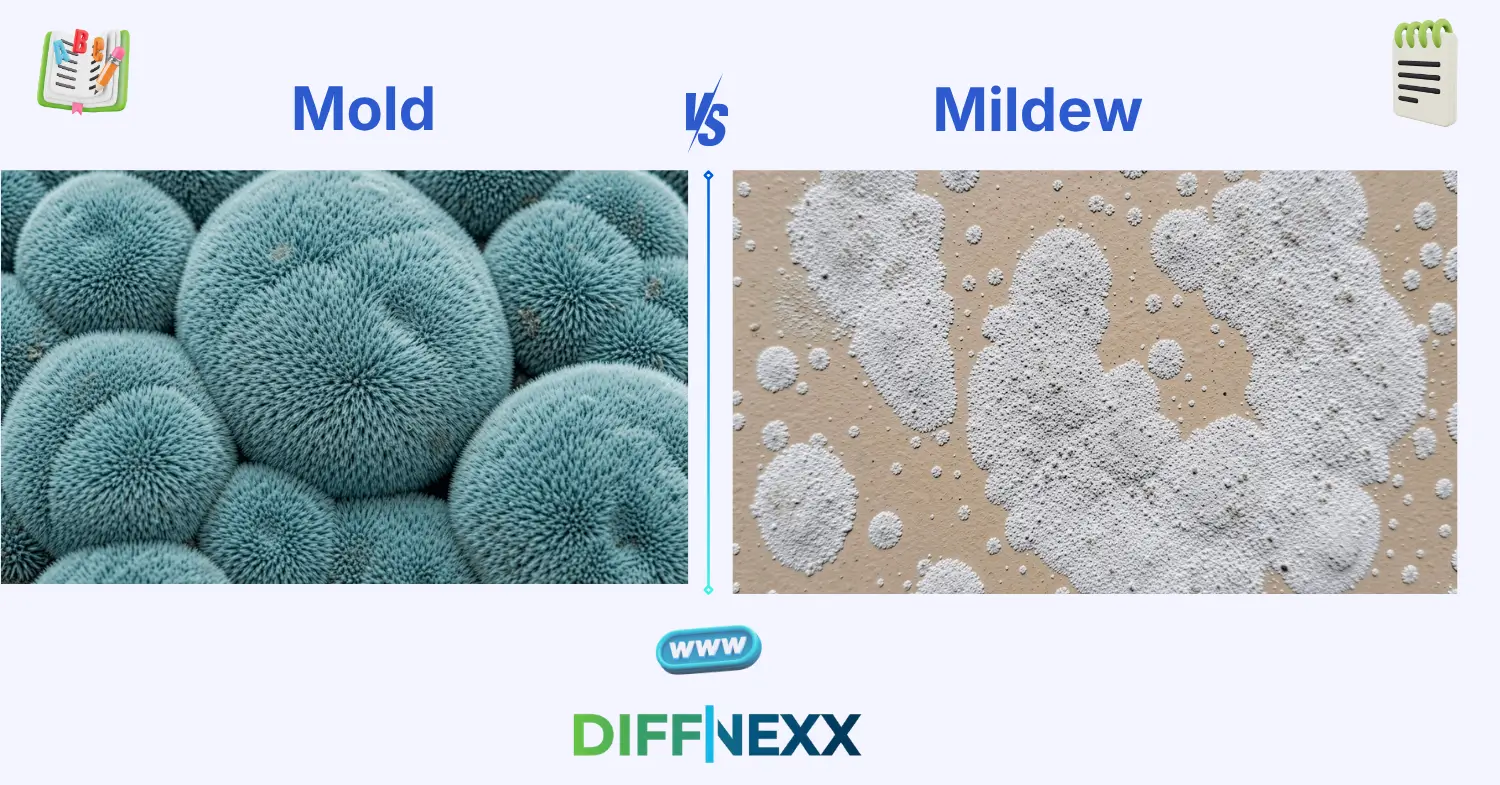
Difference between mold and mildew often becomes clear the moment you notice a strange smell in your bathroom. You wipe the wall, but the stain returns. Is it mold or mildew?
The difference between mold and mildew lies in their appearance, growth, and impact on health. Both are types of fungi, but they behave differently.
Understanding the difference between mold and mildew helps you clean your home properly and protect your health.
Let’s explore their differences in a simple and practical way.
🔑 Key Difference Between the Both
The main difference is severity and structure.
- Mold is thicker, darker, and more harmful.
- Mildew is lighter, surface-level, and easier to clean.
🌍 Importance – Why This Difference Matters
Knowing the difference between mold and mildew is important for everyday life.
For homeowners, it helps prevent damage to walls, furniture, and clothes.
For professionals, like cleaners and builders, it ensures correct treatment and safety measures.
In society, awareness reduces health risks and improves living conditions.
🔊 Pronunciation Section
Mold
US: /moʊld/
UK: /məʊld/
Mildew
US: /ˈmɪl.duː/
UK: /ˈmɪl.djuː/
Now that you can say both correctly, let’s define them clearly.
📚 Core Definitions
Mold
Mold is a type of fungus that grows in thick patches and can be black, green, or blue. It spreads deep into surfaces and can cause health problems. The tone is serious and harmful.
Example: Mold grew behind the damp wall.
Mildew
Mildew is a light, surface-level fungus that appears as white or gray patches. It is easier to remove and less harmful. The tone is mild and manageable.
Example: Mildew formed on the bathroom tiles.
📊 10 Clear Differences Between Mold and Mildew
1. Appearance
Mold looks dark and fuzzy. Mildew looks light and flat.
- Example for mold: Black patches on walls.
- Example for mildew: White powder on tiles.
2. Color
Mold has multiple colors. Mildew is usually white or gray.
- Example for mold: Green or black spots.
- Example for mildew: Pale gray marks.
3. Texture
Mold feels thick and slimy. Mildew feels dry and powdery.
- Example for mold: Sticky surface.
- Example for mildew: Dust-like layer.
4. Growth Depth
Mold grows deep into materials. Mildew stays on the surface.
- Example for mold: Inside wood or walls.
- Example for mildew: On top of fabric.
5. Health Impact
Mold can cause serious health issues. Mildew is less harmful.
- Example for mold: Breathing problems.
- Example for mildew: Mild irritation.
6. Odor
Mold has a strong, musty smell. Mildew has a lighter odor.
- Example for mold: Heavy damp smell.
- Example for mildew: Slight musty scent.
7. Removal Difficulty
Mold is harder to remove. Mildew is easier to clean.
- Example for mold: Needs professional cleaning.
- Example for mildew: Clean with simple solutions.
8. Damage Level
Mold can damage structures. Mildew causes minor damage.
- Example for mold: Weakens wood.
- Example for mildew: Stains surfaces.
9. Common Locations
Mold grows in hidden damp areas. Mildew grows in open moist areas.
- Example for mold: Behind walls.
- Example for mildew: Shower curtains.
10. Spread Speed
Mold spreads quickly and widely. Mildew spreads slowly.
- Example for mold: Covers large areas fast.
- Example for mildew: Limited spread.
🎯 Why Knowing the Difference Matters
For students, understanding mold and mildew helps in science and daily life. It builds awareness about hygiene.
For professionals, correct identification ensures safe cleaning and prevention methods. It also protects clients.
For everyday life, knowing the difference prevents health risks and saves money on repairs.
Real-world consequences of confusion
Mistaking mold for mildew can lead to ignoring a serious problem, which may damage your home and affect your health.
🧠 Why People Get Confused
Similar Names
Both words sound alike and relate to fungi.
Similar Environments
Both grow in damp and humid places.
Overlapping Appearance
At first glance, they may look similar.
Informal Usage
People often use the terms interchangeably.
🎭 Connotation & Emotional Tone
Connotation = the emotional meaning associated with a word.
Mold
- Positive: Rarely positive, mostly negative
Example: Mold indicates a serious issue.* - Neutral: Type of fungus
- Negative: Harmful and dangerous
Mildew
- Positive: Easier to handle
Example: Mildew is simple to clean.* - Neutral: Surface fungus
- Negative: Unpleasant but mild
🗣 Usage in Metaphors, Similes & Idioms
- Like mold → Spreading quickly
Example: Rumors spread like mold.* - Like mildew → Slowly forming
Example: Dust built up like mildew.*
📊 Comparison Table
| Feature | Mold | Mildew |
|---|---|---|
| Meaning | Deep-growing fungus | Surface fungus |
| Tone | Harmful | Mild |
| Usage | Health & structure risk | Surface cleaning |
| Context | Damp hidden areas | Visible moist areas |
| Formality | Scientific/common use | Scientific/common use |
⚖️ Which Is Better in What Situation?
When to use Mold
Use “mold” when describing serious fungal growth that spreads deep and causes damage.
When to use Mildew
Use “mildew” for light, surface-level growth that is easy to clean.
Situational Clarity
Choose the term based on severity and location.
Contextual Correctness
Using the correct word improves clarity in communication and problem-solving.
📖 Literary or Cultural References
- Book: The Hidden Life of Fungi (Science, various authors)
- Movie: Contagion (USA, 2011) – shows how harmful growth spreads
❓ FAQs
1. Is mildew a type of mold?
Yes, mildew is a specific type of mold, but it is less harmful.
2. Which is more dangerous?
Mold is more dangerous due to its deeper growth and health effects.
3. Can mildew turn into mold?
Yes, if not cleaned, mildew can develop into mold over time.
4. How do I remove mildew?
You can clean it with simple household cleaners.
5. When should I call a professional?
Call a professional if mold covers a large area or causes strong odors.
🏁 Conclusion
The difference between mold and mildew is clear when you look at their appearance, growth, and impact. Mold is darker, deeper, and more harmful, while mildew is lighter and easier to handle.
Understanding this difference helps you take the right action quickly. It protects your home and your health.
Both may start small, but ignoring them can lead to bigger problems. Stay aware, act early, and keep your space clean.

Aamer Shahzad is the founder of Distinly.com, a fast-growing educational platform focused on high-intent “difference between” topics. With over 8 years of experience in English language education and analytical writing, I specialize in breaking down complex “difference between” topics into clear, structured, and easy-to-understand explanations. Distinly.com is your go-to resource for enhancing English skills and writing with confidence.
I specializes in building search-optimized, research-driven comparison content designed for clarity, authority, and long-term digital asset value.