Difference between lease and finance often comes up when someone plans to buy a car or equipment. Imagine you walk into a showroom. The seller asks, “Do you want to lease or finance?” You pause. Both sound similar, but they are not the same.
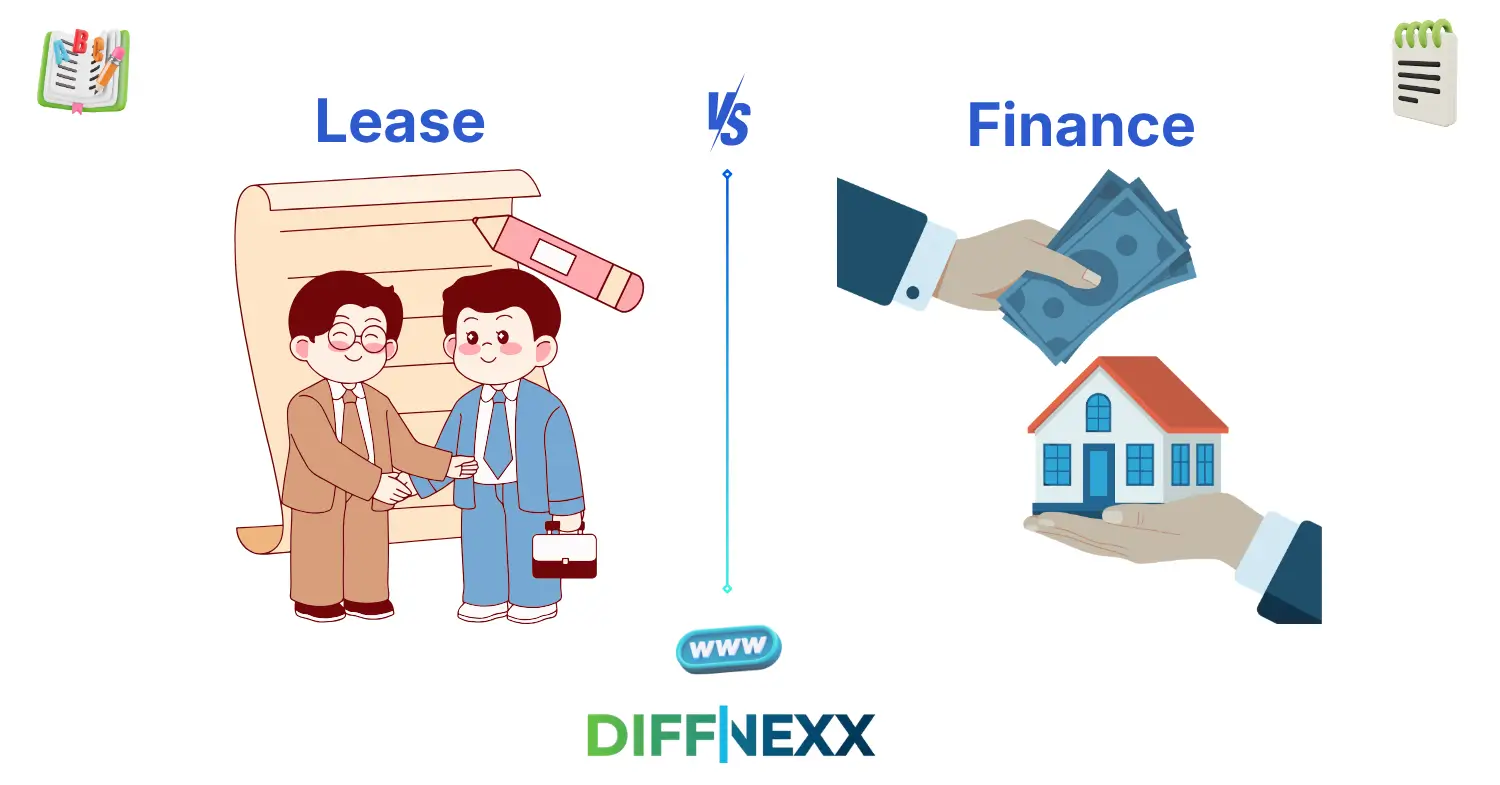
The difference between lease and finance is about how you pay and what you own at the end. Leasing means you use something for a fixed time. Financing means you slowly pay to own it. Both options have benefits depending on your needs.
Many people confuse these terms because they involve monthly payments. However, the difference between lease and finance affects your long-term costs, flexibility, and ownership.
Let’s explore their key differences in a simple and clear way.
Key Difference Between the Both
The main difference is simple:
- Lease: You pay to use an asset for a limited time.
- Finance: You pay in installments to eventually own the asset.
In leasing, ownership stays with the company. In financing, ownership transfers to you after full payment.
Importance – Why Knowing the Difference Matters
Understanding the difference between lease and finance is important for both learners and professionals.
For students and beginners, it builds financial awareness. It helps them make smart choices when buying a car, house, or business equipment.
For professionals, it affects budgeting and long-term planning. Businesses often choose leasing to reduce upfront costs, while financing helps build assets.
In society, this knowledge prevents poor financial decisions. People who understand these options avoid unnecessary debt and choose wisely.
🔊 Pronunciation Section
Lease
US: /liːs/
UK: /liːs/
Finance
US: /ˈfaɪ.næns/
UK: /ˈfaɪ.næns/
Now that you know how to say them, let’s clearly define each term.
📚 Core Definitions
Lease
A lease is an agreement where you pay to use something for a fixed time without owning it. It often feels flexible and short-term.
Example: You lease a car for 3 years and return it afterward.
Finance
Finance means borrowing money to buy something and paying it back over time. It leads to ownership at the end.
Example: You finance a car and own it after paying all installments.
📚 10 Clear Differences Between Lease and Finance
1. Ownership
Leasing does not give ownership. Financing leads to ownership after full payment.
- Example for Lease: You return the car after the lease ends.
- Example for Finance: You keep the car after paying all installments.
2. Duration
Leases are usually short-term. Financing often lasts longer.
- Example for Lease: A 2–3 year lease agreement.
- Example for Finance: A 5–7 year loan plan.
3. Monthly Payments
Lease payments are usually lower. Finance payments are higher because you are buying.
- Example for Lease: Lower monthly car payment.
- Example for Finance: Higher monthly payment for ownership.
4. Maintenance Responsibility
Lease agreements may include maintenance. Finance makes you fully responsible.
- Example for Lease: Company covers some repairs.
- Example for Finance: You pay all repair costs.
5. Flexibility
Leasing offers more flexibility to upgrade. Financing locks you into ownership.
- Example for Lease: You switch to a new model after 3 years.
- Example for Finance: You keep the same car longer.
6. Long-Term Cost
Leasing can cost more over time if repeated. Financing may be cheaper long-term.
- Example for Lease: Continuous leasing increases total cost.
- Example for Finance: One-time purchase leads to savings later.
7. Usage Limits
Leases often have usage limits. Financing has no such limits.
- Example for Lease: Mileage limits on cars.
- Example for Finance: Unlimited usage of your car.
8. Initial Cost
Leasing usually requires a smaller upfront payment. Financing may require a larger down payment.
- Example for Lease: Small initial deposit.
- Example for Finance: Larger down payment.
9. Asset Value
Leased items do not build value for you. Financed items become your asset.
- Example for Lease: No resale value.
- Example for Finance: You can sell the car later.
10. Commitment Level
Leasing is less commitment. Financing is a long-term commitment.
- Example for Lease: Short-term contract.
- Example for Finance: Long-term loan agreement.
🎯 Why Knowing the Difference Matters
Students need this knowledge to build strong financial habits. It helps them avoid confusion when dealing with real-life purchases.
Professionals must understand this difference to manage budgets and investments. Choosing the wrong option can lead to financial loss.
In daily life, clear understanding improves communication. It also helps in making confident decisions.
Real-world consequences of confusion
Confusing lease with finance can lead to regret. For example, someone may think they own a car but later realize they must return it. This creates stress and financial trouble.
🧠 Why People Get Confused
Similar Terms
Both involve monthly payments, which makes them sound alike.
Semantic Overlap
Both relate to acquiring assets like cars or property.
Context-Based Usage
People use these terms loosely in everyday speech.
Informal Influence
Friends and salespeople sometimes explain them poorly, adding to confusion.
🎭 Connotation & Emotional Tone
Connotation = the emotional meaning attached to a word.
Lease
- Neutral to positive: Suggests flexibility and ease.
- Example: “Leasing gives me freedom to upgrade.”
Finance
- Neutral to serious: Suggests commitment and responsibility.
- Example: “Financing helps me own the asset.”
🗣 Usage in Metaphors, Similes & Idioms
While not common in idioms, they appear in comparisons:
- “Leasing a car is like renting a house—you use it but don’t own it.”
- “Financing a car is like planting a tree—you invest now and benefit later.”
📊 Comparison Table
| Feature | Lease | Finance |
|---|---|---|
| Meaning | Temporary use | Ownership through payment |
| Tone | Flexible | Committed |
| Usage | Short-term needs | Long-term goals |
| Context | Rentals, vehicles, equipment | Loans, purchases |
| Formality | Business & personal | Financial & legal |
⚖️ Which Is Better in What Situation?
When to use Lease
Choose leasing if you want flexibility. It works best for short-term needs. For example, if you like changing cars often, leasing is ideal.
When to use Finance
Choose financing if you want ownership. It suits long-term use. For example, if you plan to keep a car for many years, financing is better.
Situational clarity
Leasing is good for temporary use. Financing is better for building assets.
Contextual correctness
Use lease in rental contexts. Use finance in ownership-related decisions.
📖 Literary or Cultural References
- Book: Rich Dad Poor Dad (Finance, Robert Kiyosaki, 1997)
Explains financial decisions like owning vs renting. - Movie: The Big Short (USA, 2015)
Shows how financial systems and decisions impact people.
❓ FAQs
1. Is leasing cheaper than financing?
Leasing usually has lower monthly payments. However, it may cost more over time if you keep leasing repeatedly.
2. Do I own the item after leasing?
No, leasing does not give ownership. You must return the item or buy it at the end.
3. Can I switch from lease to finance?
Yes, some agreements allow you to buy the leased item. This depends on the contract terms.
4. Which option is better for beginners?
Leasing is easier for beginners due to lower costs. Financing is better for long-term financial growth.
5. Is financing always a good choice?
Not always. It depends on your budget and goals. If you cannot afford long-term payments, leasing may be safer.
🏁 Conclusion
The difference between lease and finance is simple but important. Leasing gives you temporary use, while financing leads to ownership. Each option serves a different purpose.
Leasing works best for flexibility and short-term needs. Financing is ideal for long-term investment and ownership. Choosing the right option depends on your goals and financial situation.
Understanding this difference helps you make smarter decisions. It also protects you from confusion and costly mistakes.
Keep learning, stay informed, and always choose what fits your needs best. 📘

Aamer Shahzad is the founder of Distinly.com, a fast-growing educational platform focused on high-intent “difference between” topics. With over 8 years of experience in English language education and analytical writing, I specialize in breaking down complex “difference between” topics into clear, structured, and easy-to-understand explanations. Distinly.com is your go-to resource for enhancing English skills and writing with confidence.
I specializes in building search-optimized, research-driven comparison content designed for clarity, authority, and long-term digital asset value.