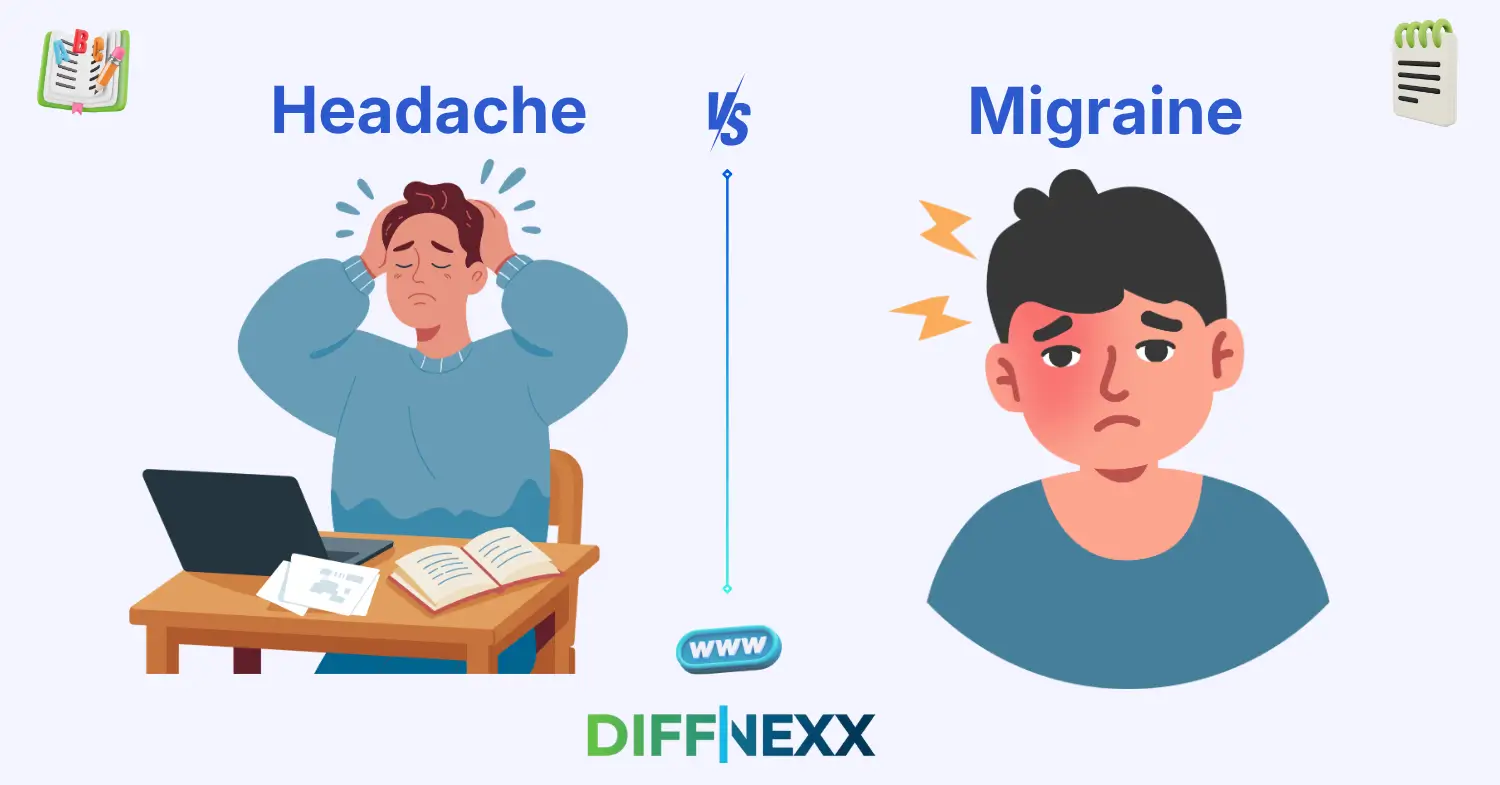
Difference between headache and migraine becomes clear when you experience both. Imagine you have a mild pain after a long day at work. You take rest, and it goes away. That is likely a headache. But another day, the pain is intense, throbbing, and makes you sensitive to light. That may be a migraine.
The difference between headache and migraine lies in their severity, symptoms, and impact on daily life. A headache is common and usually mild. A migraine is more complex and can feel overwhelming.
Many people use these words as if they mean the same thing. However, the difference between headache and migraine is important for proper care and treatment.
Let’s explore their differences in a simple and clear way.
Key Difference Between the Both
The key difference is:
- Headache: General pain in the head, usually mild or moderate.
- Migraine: A neurological condition with severe pain and additional symptoms like nausea and light sensitivity.
A headache is a symptom. A migraine is a condition.
Importance – Why Their Difference Matters
Knowing the difference between headache and migraine helps people take better care of their health.
For learners, it builds awareness about body signals. It helps them understand when pain is normal and when it needs attention.
For professionals, especially in healthcare, correct identification leads to proper treatment. Misunderstanding can delay relief.
In society, awareness reduces misuse of terms and improves communication. It also helps people support others more effectively.
🔊 Pronunciation Section
Headache
US: /ˈhɛd.eɪk/
UK: /ˈhed.eɪk/
Migraine
US: /ˈmaɪ.ɡreɪn/
UK: /ˈmiː.ɡreɪn/
Now that you know how to pronounce them, let’s define each clearly.
📚 Core Definitions
Headache
A headache is pain or discomfort in the head or neck area. It is usually mild and temporary. Emotionally, it feels manageable.
Example: A slight headache after working long hours on a screen.
Migraine
A migraine is a neurological condition with severe, throbbing pain. It often comes with nausea, vomiting, and sensitivity to light or sound. It can feel disabling.
Example: A strong migraine that forces someone to rest in a dark room.
📚 10 Clear Differences Between Headache and Migraine
1. Emotional Intensity
Headaches feel mild and manageable. Migraines feel overwhelming and exhausting.
- Example for Headache: “I have a small headache, but I can work.”
- Example for Migraine: “I can’t function because of this migraine.”
2. Duration
Headaches usually last a few hours. Migraines can last for days.
- Example for Headache: Pain fades after rest.
- Example for Migraine: Pain continues for 24–72 hours.
3. Focus of Pain
Headaches often affect the whole head. Migraines usually affect one side.
- Example for Headache: Dull pain across the head.
- Example for Migraine: Sharp pain on one side.
4. Severity
Headaches are mild to moderate. Migraines are severe.
- Example for Headache: Slight discomfort.
- Example for Migraine: Intense throbbing pain.
5. Associated Symptoms
Headaches rarely have extra symptoms. Migraines include nausea, vision issues, and sensitivity.
- Example for Headache: Only head pain.
- Example for Migraine: Pain with nausea and blurred vision.
6. Triggers
Headaches often come from stress or fatigue. Migraines have specific triggers like light, food, or hormones.
- Example for Headache: Stress causes mild pain.
- Example for Migraine: Bright light triggers severe pain.
7. Impact on Daily Life
Headaches allow normal activity. Migraines can stop all activity.
- Example for Headache: Continue working with discomfort.
- Example for Migraine: Need to lie down in darkness.
8. Treatment Needs
Headaches respond to simple remedies. Migraines often need medical treatment.
- Example for Headache: Rest and water help.
- Example for Migraine: Medication and rest required.
9. Frequency Pattern
Headaches may occur randomly. Migraines often follow patterns.
- Example for Headache: Occasional after stress.
- Example for Migraine: Recurring monthly attacks.
10. Neurological Nature
Headaches are general pain symptoms. Migraines involve the nervous system.
- Example for Headache: Muscle tension causes pain.
- Example for Migraine: Brain activity changes cause pain.
🎯 Why Knowing the Difference Matters
Students need this knowledge to understand their health better. It helps them respond correctly to symptoms.
Professionals must know the difference to provide proper advice and care. Misdiagnosis can lead to ineffective treatment.
In daily life, correct understanding improves communication. It also helps people support others more effectively.
Real-world consequences of confusion
Confusing a migraine with a headache can delay proper treatment. Someone may ignore serious symptoms and suffer longer than necessary.
🧠 Why People Get Confused
Similar Terms
Both involve head pain, so people think they are the same.
Semantic Overlap
The symptoms sometimes overlap, especially in mild migraines.
Context-Based Usage
People casually say “headache” for any pain, even migraines.
Influence of Informal Speech
Everyday language often mixes the two terms incorrectly.
🎭 Connotation & Emotional Tone
Connotation = the emotional meaning attached to a word.
Headache
- Neutral: Common and manageable.
- Example: “This task is a headache, but I’ll handle it.”
Migraine
- Negative: Serious and disabling.
- Example: “This stress feels like a migraine.”
🗣 Usage in Metaphors, Similes & Idioms
- “This problem is a headache” → means something annoying.
- “It hit me like a migraine” → means something intense and overwhelming.
Both words express discomfort but at different levels.
📊 Comparison Table
| Feature | Headache | Migraine |
|---|---|---|
| Meaning | General head pain | Neurological condition |
| Tone | Mild | Severe |
| Usage | Everyday discomfort | Medical condition |
| Context | Stress, fatigue | Triggers, neurological issues |
| Formality | Informal & medical | Mostly medical |
⚖️ Which Is Better in What Situation?
When to use Headache
Use “headache” for mild or general head pain. It fits everyday situations and casual speech.
When to use Migraine
Use “migraine” for severe, recurring pain with symptoms. It is more precise in medical contexts.
Situational clarity
Choose the word based on severity and symptoms. Mild pain is a headache. Severe episodes are migraines.
Contextual correctness
In professional or medical discussions, use “migraine” carefully. In daily talk, “headache” is more common.
📖 Literary or Cultural References
- Book: Brain on Fire (Memoir, Susannah Cahalan, 2012)
Explores neurological conditions and symptoms like migraines. - Movie: Still Alice (USA, 2014)
Shows how neurological conditions affect daily life.
❓ FAQs
1. Is every migraine a headache?
Yes, migraine includes head pain, but it is more complex. It also involves neurological symptoms.
2. Can a headache turn into a migraine?
Sometimes, a headache may develop into a migraine if triggers are present. However, they are different conditions.
3. How do I know if I have a migraine?
If you have severe pain with nausea, light sensitivity, or vision issues, it may be a migraine. Consult a doctor for confirmation.
4. Are migraines dangerous?
Migraines are not usually life-threatening, but they can affect quality of life. Proper treatment is important.
5. What is the best way to treat a headache vs migraine?
Headaches often improve with rest and hydration. Migraines may require medication and medical advice.
🏁 Conclusion
The difference between headache and migraine is clear when you look closely. A headache is common and mild, while a migraine is intense and complex. Both affect the head, but their impact is very different.
Understanding this difference helps you take better care of your health. It also allows you to respond quickly and correctly to symptoms.
Clear knowledge prevents confusion and improves communication. It ensures you seek the right treatment at the right time.
Stay aware, listen to your body, and choose the right words to describe your condition. 🧠

Aamer Shahzad is the founder of Distinly.com, a fast-growing educational platform focused on high-intent “difference between” topics. With over 8 years of experience in English language education and analytical writing, I specialize in breaking down complex “difference between” topics into clear, structured, and easy-to-understand explanations. Distinly.com is your go-to resource for enhancing English skills and writing with confidence.
I specializes in building search-optimized, research-driven comparison content designed for clarity, authority, and long-term digital asset value.