Difference between bronchitis and pneumonia often becomes confusing when someone has a bad cough. Imagine you or a family member develops chest pain, coughing, and fever. A doctor mentions bronchitis or pneumonia but what’s the difference?
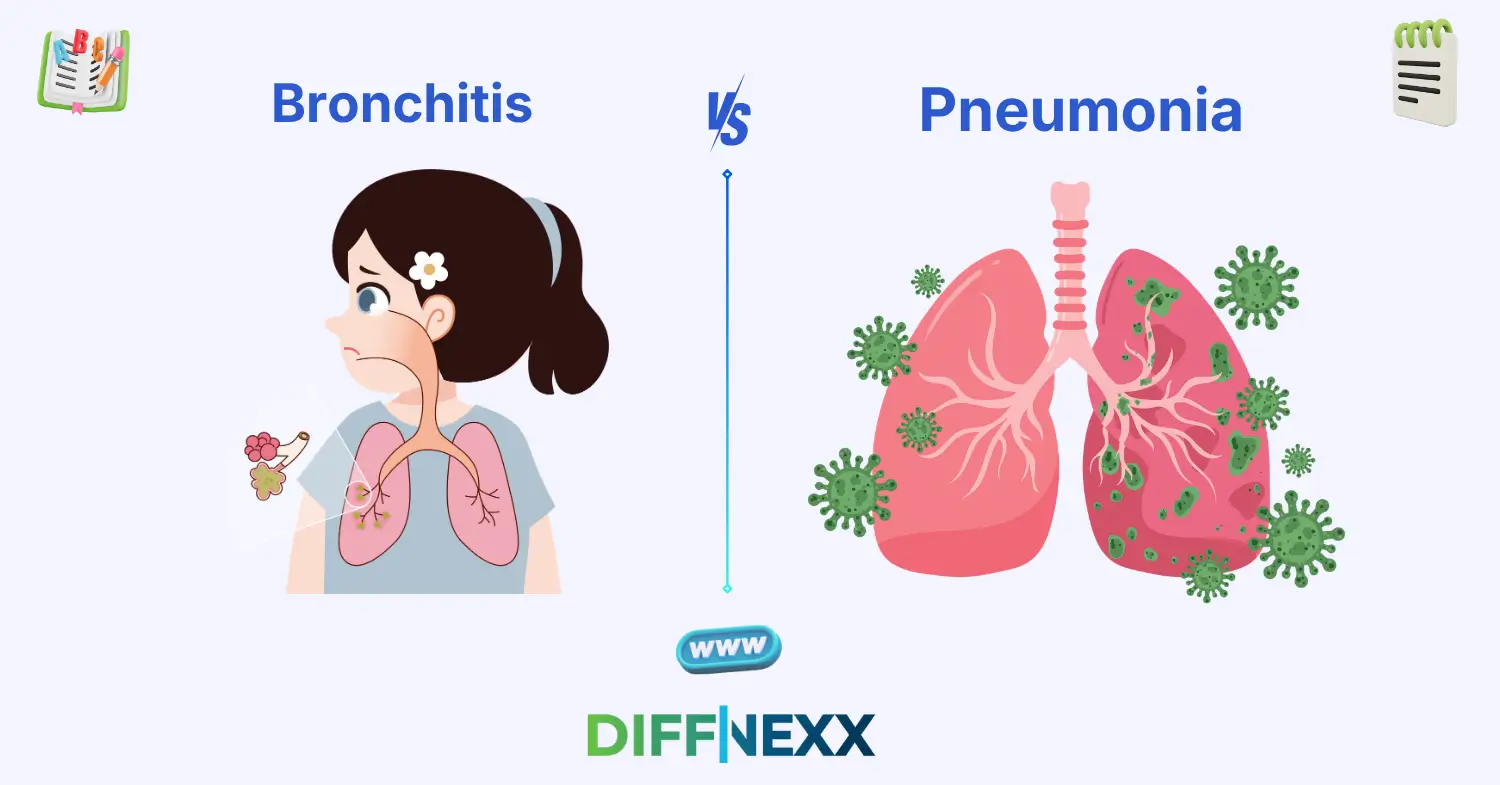
The difference between bronchitis and pneumonia lies in which part of the lungs is affected and how serious the condition is. Both are respiratory illnesses, but they are not the same.
Understanding the difference between bronchitis and pneumonia helps you recognize symptoms early and seek the right treatment. It can also prevent complications.
Let’s explore these differences in a simple and easy way.
🔑 Key Difference Between the Both
The main difference is location and severity.
- Bronchitis affects the bronchial tubes (airways).
- Pneumonia affects the lungs themselves (air sacs).
Pneumonia is usually more serious than bronchitis.
🌍 Importance – Why This Difference Matters
Knowing the difference between bronchitis and pneumonia is very important for health.
For students and learners, it builds awareness about respiratory diseases and symptoms.
For healthcare professionals, accurate diagnosis is critical. It ensures proper treatment and care.
In society, early understanding can reduce complications and improve recovery. It also helps people seek timely medical help.
🔊 Pronunciation Section
Bronchitis
US: /brɑːŋˈkaɪ.t̬ɪs/
UK: /brɒŋˈkaɪ.tɪs/
Pneumonia
US: /nuːˈmoʊ.njə/
UK: /njuːˈməʊ.ni.ə/
Now that you know how to pronounce them, let’s define each clearly.
📚 Core Definitions
Bronchitis
Bronchitis is the inflammation of the bronchial tubes, which carry air to the lungs. It often causes coughing and mucus. The tone is mild to moderate illness.
Example: He developed bronchitis after a cold.
Pneumonia
Pneumonia is an infection of the lungs that fills air sacs with fluid or pus. It can be serious and requires medical care. The tone is severe and urgent.
Example: She was hospitalized with pneumonia.
📊 10 Clear Differences Between Bronchitis and Pneumonia
1. Affected Area
Bronchitis affects airways. Pneumonia affects lung tissue.
- Example for bronchitis: The airways are inflamed.
- Example for pneumonia: The lungs are infected.
2. Severity
Bronchitis is usually less severe. Pneumonia can be serious or life-threatening.
- Example for bronchitis: He recovers at home.
- Example for pneumonia: She needs hospital care.
3. Cause
Bronchitis is often viral. Pneumonia can be viral, bacterial, or fungal.
- Example for bronchitis: It started after a cold.
- Example for pneumonia: Bacteria caused the infection.
4. Symptoms
Bronchitis causes cough and mucus. Pneumonia includes fever, chills, and breathing difficulty.
- Example for bronchitis: He has a persistent cough.
- Example for pneumonia: She has high fever and chest pain.
5. Duration
Bronchitis usually lasts a few weeks. Pneumonia may last longer.
- Example for bronchitis: Symptoms improve in weeks.
- Example for pneumonia: Recovery takes longer time.
6. Treatment
Bronchitis often needs rest and fluids. Pneumonia may require antibiotics or hospitalization.
- Example for bronchitis: He drinks fluids and rests.
- Example for pneumonia: She takes prescribed antibiotics.
7. Breathing Difficulty
Bronchitis causes mild breathing issues. Pneumonia causes serious breathing problems.
- Example for bronchitis: He feels slight chest tightness.
- Example for pneumonia: She struggles to breathe.
8. Chest Pain
Bronchitis may cause mild discomfort. Pneumonia causes sharp chest pain.
- Example for bronchitis: He feels mild irritation.
- Example for pneumonia: She feels sharp pain when breathing.
9. Risk Level
Bronchitis has a lower risk. Pneumonia is riskier, especially for older people and children.
- Example for bronchitis: He recovers without complications.
- Example for pneumonia: She needs close monitoring.
10. Medical Attention
Bronchitis may not require urgent care. Pneumonia often needs immediate attention.
- Example for bronchitis: He manages symptoms at home.
- Example for pneumonia: She visits the hospital quickly.
🎯 Why Knowing the Difference Matters
For students, understanding these conditions improves health awareness. It helps them identify symptoms early.
For health professionals, accurate diagnosis ensures proper treatment. It can save lives.
For everyone, this knowledge reduces risk. It helps people act quickly when symptoms worsen.
Real-world consequences of confusion
Mistaking pneumonia for bronchitis can delay treatment. This may lead to serious complications or hospitalization.
🧠 Why People Get Confused
Similar Symptoms
Both cause coughing and chest discomfort.
Overlapping Conditions
Both affect the respiratory system.
Medical Terms
The names sound complex and similar.
Informal Diagnosis
People often self-diagnose without proper tests.
🎭 Connotation & Emotional Tone
Connotation = the emotional meaning associated with a word.
Bronchitis
- Positive: Manageable illness
Example: Bronchitis can improve with rest.* - Neutral: Common respiratory condition
- Negative: Persistent discomfort
Pneumonia
- Positive: Treatable with care
Example: Pneumonia can be cured with treatment.* - Neutral: Lung infection
- Negative: Serious and dangerous
🗣 Usage in Metaphors, Similes & Idioms
Medical terms are rarely used in idioms, but comparisons exist:
- Like bronchitis → Lingering but manageable
Example: The problem stayed like bronchitis.* - Like pneumonia → Severe and urgent
Example: The crisis hit like pneumonia.*
📊 Comparison Table
| Feature | Bronchitis | Pneumonia |
|---|---|---|
| Meaning | Airway inflammation | Lung infection |
| Tone | Mild to moderate | Serious |
| Usage | Common illness | Medical emergency |
| Context | Airways | Lung tissue |
| Formality | Medical | Medical |
⚖️ Which Is Better in What Situation?
When to consider Bronchitis
If symptoms are mild, like coughing and mucus without high fever, it may be bronchitis.
When to consider Pneumonia
If symptoms include high fever, chest pain, and breathing difficulty, pneumonia is more likely.
Situational Clarity
Always consult a doctor for proper diagnosis. Symptoms alone may not be enough.
Contextual Correctness
Medical tests confirm the condition. Early diagnosis is key.
📖 Literary or Cultural References
- Book: The Emperor of All Maladies (Medical, Siddhartha Mukherjee, 2010)
Discusses diseases and medical understanding. - Movie: Contagion (USA, 2011)
Shows the impact of infectious diseases.
❓ FAQs
1. Is pneumonia worse than bronchitis?
Yes, pneumonia is usually more serious and may require hospital treatment.
2. Can bronchitis turn into pneumonia?
Yes, in some cases, untreated bronchitis can lead to pneumonia.
3. How can I tell the difference at home?
Severe symptoms like high fever and breathing difficulty suggest pneumonia. Always consult a doctor.
4. Are both conditions contagious?
Bronchitis and pneumonia can be contagious if caused by viruses or bacteria.
5. Who is at risk for pneumonia?
older people, young children, and those with weak immunity are at higher risk.
🏁 Conclusion
The difference between bronchitis and pneumonia mainly lies in severity and location. Bronchitis affects the airways and is usually milder, while pneumonia affects the lungs and can be serious.
Understanding this difference helps you recognize symptoms and take action quickly. It also improves communication with healthcare providers.
Both conditions require care, but pneumonia needs urgent attention. Stay aware, act early, and protect your health.
Keep learning and stay healthy knowledge can make a real difference.

Aamer Shahzad is the founder of Distinly.com, a fast-growing educational platform focused on high-intent “difference between” topics. With over 8 years of experience in English language education and analytical writing, I specialize in breaking down complex “difference between” topics into clear, structured, and easy-to-understand explanations. Distinly.com is your go-to resource for enhancing English skills and writing with confidence.
I specializes in building search-optimized, research-driven comparison content designed for clarity, authority, and long-term digital asset value.