Difference between R11 and R13 often becomes confusing when someone is choosing tires or learning about vehicle specifications. You might hear these terms at a repair shop or while buying a new car, and wonder what they actually mean.
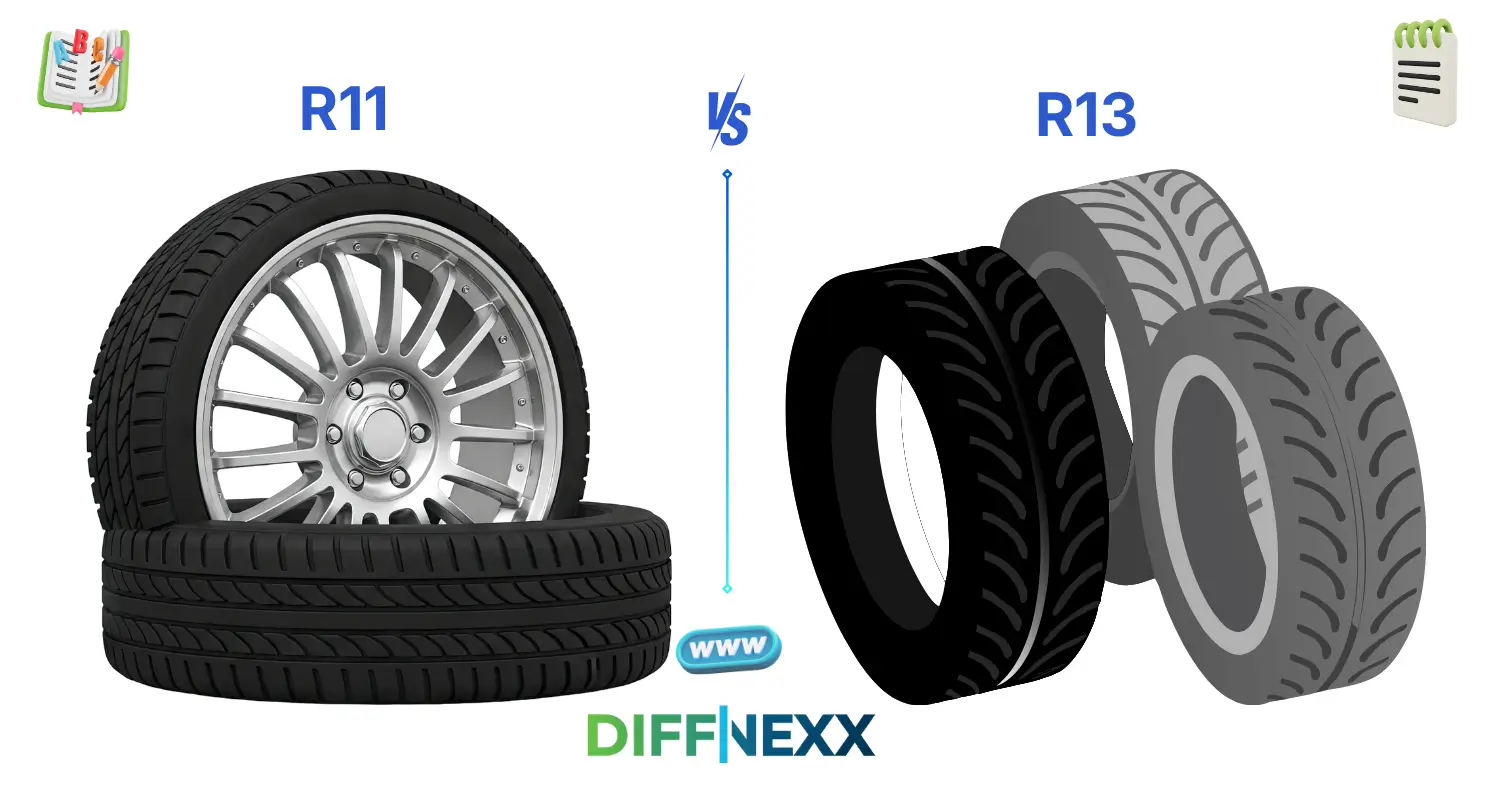
The difference between R11 and R13 is mainly related to tire size, specifically the diameter of the wheel rim in inches. R11 refers to an 11-inch rim, while R13 refers to a 13-inch rim.
Understanding the difference between R11 and R13 helps drivers make better decisions about performance, comfort, and safety. Even though the numbers look small, they can affect how a vehicle behaves on the road.
Let’s explore these differences in a simple and clear way.
Key Difference Between the Both 🧠
The key difference is that R11 tires fit smaller rims (11 inches), while R13 tires fit larger rims (13 inches).
This size difference affects ride comfort, stability, and overall vehicle performance.
Importance – Why Their Difference Matters 🌍
Knowing the difference between R11 and R13 is important for both learners and professionals.
For students and beginners, it builds basic knowledge of vehicles and tire specifications. It helps them understand how size impacts performance.
For mechanics and automotive experts, choosing the correct tire size ensures safety and proper vehicle function.
In everyday life, using the wrong tire size can affect fuel efficiency, handling, and even road safety.
🔊 Pronunciation Section
R11
US: /ɑːr ˈɛlɛvən/
UK: /ɑː ˈɪlɛvən/
R13
US: /ɑːr ˈθɜːrˌtiːn/
UK: /ɑː ˈθɜːtiːn/
Now that you know how to say them, let’s define them clearly.
📚 Core Definitions
R11
R11 refers to a tire designed for an 11-inch wheel rim. It is commonly used in smaller or older vehicles. It provides a basic and compact driving experience.
Example: The small car used R11 tires for city driving.
R13
R13 refers to a tire designed for a 13-inch wheel rim. It is more common in modern small to medium vehicles. It offers better stability and comfort.
Example: The car upgraded to R13 tires for smoother rides.
📚 10 Clear Differences Between R11 and R13
1. Size
R11 has a smaller rim size. R13 has a larger rim size.
- Example for R11: The tire fits a compact wheel.
- Example for R13: The tire fits a larger wheel.
2. Vehicle Compatibility
R11 suits older or smaller cars. R13 suits newer or slightly larger cars.
- Example for R11: Used in older models.
- Example for R13: Used in modern hatchbacks.
3. Ride Comfort
R11 offers basic comfort. R13 provides smoother rides.
- Example for R11: The ride feels slightly rough.
- Example for R13: The ride feels more stable.
4. Stability
R11 offers less stability at higher speeds. R13 offers better stability.
- Example for R11: Slight vibration at speed.
- Example for R13: Balanced driving experience.
5. Handling
R11 provides simple handling. R13 improves control and handling.
- Example for R11: Basic turning control.
- Example for R13: More responsive steering.
6. Fuel Efficiency
R11 may offer slightly better fuel efficiency due to smaller size. R13 may use slightly more fuel.
- Example for R11: Lower fuel consumption.
- Example for R13: Slightly higher fuel use.
7. Road Grip
R11 provides limited grip. R13 offers better road grip.
- Example for R11: Less grip on sharp turns.
- Example for R13: Better traction on roads.
8. Cost
R11 tires are usually cheaper. R13 tires cost more.
- Example for R11: Budget-friendly option.
- Example for R13: Slightly premium pricing.
9. Availability
R11 is less common today. R13 is widely available.
- Example for R11: Harder to find in markets.
- Example for R13: Easily available in shops.
10. Modern Usage
R11 is mostly outdated. R13 is more commonly used today.
- Example for R11: Found in older vehicles.
- Example for R13: Standard in many current cars.
🎯 Why Knowing the Difference Matters
Students benefit by understanding how small technical details affect vehicle performance. It builds practical knowledge.
Professionals rely on correct tire sizing to ensure safety and efficiency. It helps avoid mechanical issues.
For everyday drivers, choosing the right tire improves comfort, reduces risks, and saves money over time.
Real-world Consequences of Confusion
Using the wrong tire size can lead to poor handling, reduced safety, and faster tire wear. It may even damage the vehicle.
🧠 Why People Get Confused
Similar Naming
Both terms look similar, with only numbers changing.
Semantic Overlap
Both refer to tire sizes, which creates confusion.
Context-Based Usage
People often hear these terms without explanation.
Influence of Informal Speech
Casual conversations ignore technical details.
🎭 Connotation & Emotional Tone
Connotation = the emotional meaning associated with a word.
R11
- Neutral: Basic tire size
- Slightly Negative: Seen as outdated
R13
- Positive: Modern and reliable
- Neutral: Standard tire option
🗣 Usage in Metaphors, Similes & Idioms
These terms are technical and not commonly used in idioms. However, they may appear in comparisons:
- “Upgrading from R11 to R13” → improvement
- Example: Switching felt like upgrading performance.
📊 Comparison Table
| Feature | R11 | R13 |
|---|---|---|
| Meaning | 11-inch rim tire | 13-inch rim tire |
| Tone | Basic | Modern |
| Usage | Older vehicles | Modern vehicles |
| Context | Low-speed driving | Mixed driving conditions |
| Formality | Technical | Technical |
⚖️ Which Is Better in What Situation?
When to use R11
Use R11 if your vehicle is designed for smaller rims and you need a budget-friendly option.
When to use R13
Use R13 if your car supports it and you want better comfort and performance.
Situational Clarity
Always follow the manufacturer’s recommendation for tire size.
Contextual Correctness
Choose based on vehicle type, driving needs, and road conditions.
📖 Literary or Cultural References
- Book: Auto Repair For Dummies (Guide, Deanna Sclar, 2019)
- Movie: Ford v Ferrari (USA, 2019) – highlights automotive performance
These references show how vehicle details impact performance.
❓ FAQs
1. Can I replace R11 with R13 tires?
Only if your vehicle supports larger rims. Otherwise, it can affect safety and performance.
2. Which tire size is better for comfort?
R13 generally offers better comfort due to improved stability.
3. Are R11 tires still used today?
Yes, but mostly in older vehicles.
4. Do larger tires improve performance?
They can improve stability and grip, but must match the vehicle design.
5. Is R13 more expensive than R11?
Yes, R13 tires are usually slightly more expensive.
🏁 Conclusion
The difference between R11 and R13 comes down to size, performance, and modern usage. R11 is smaller, simpler, and mostly used in older vehicles. R13 is larger, more stable, and common in modern cars.
Understanding this difference helps you choose the right tire for safety and comfort. It also prevents costly mistakes and improves driving experience.
Always check your vehicle’s specifications before making a decision. With the right knowledge, you can ensure a smoother and safer ride every time. 🚗

Ezra Hale is a thoughtful contributor to Distinly.com, where he explores philosophical ideas and the subtle differences behind everyday concepts. His writing blends logic, language, and human insight to clarify complex distinctions. Ezra encourages readers to think deeper, question assumptions, and appreciate the meaning behind words and ideas in modern discourse.