The difference between typhoon and hurricane often confuses people when they hear news about powerful storms. Imagine watching weather reports from different countries, one says “typhoon,” another says “hurricane.” Are they different or the same?
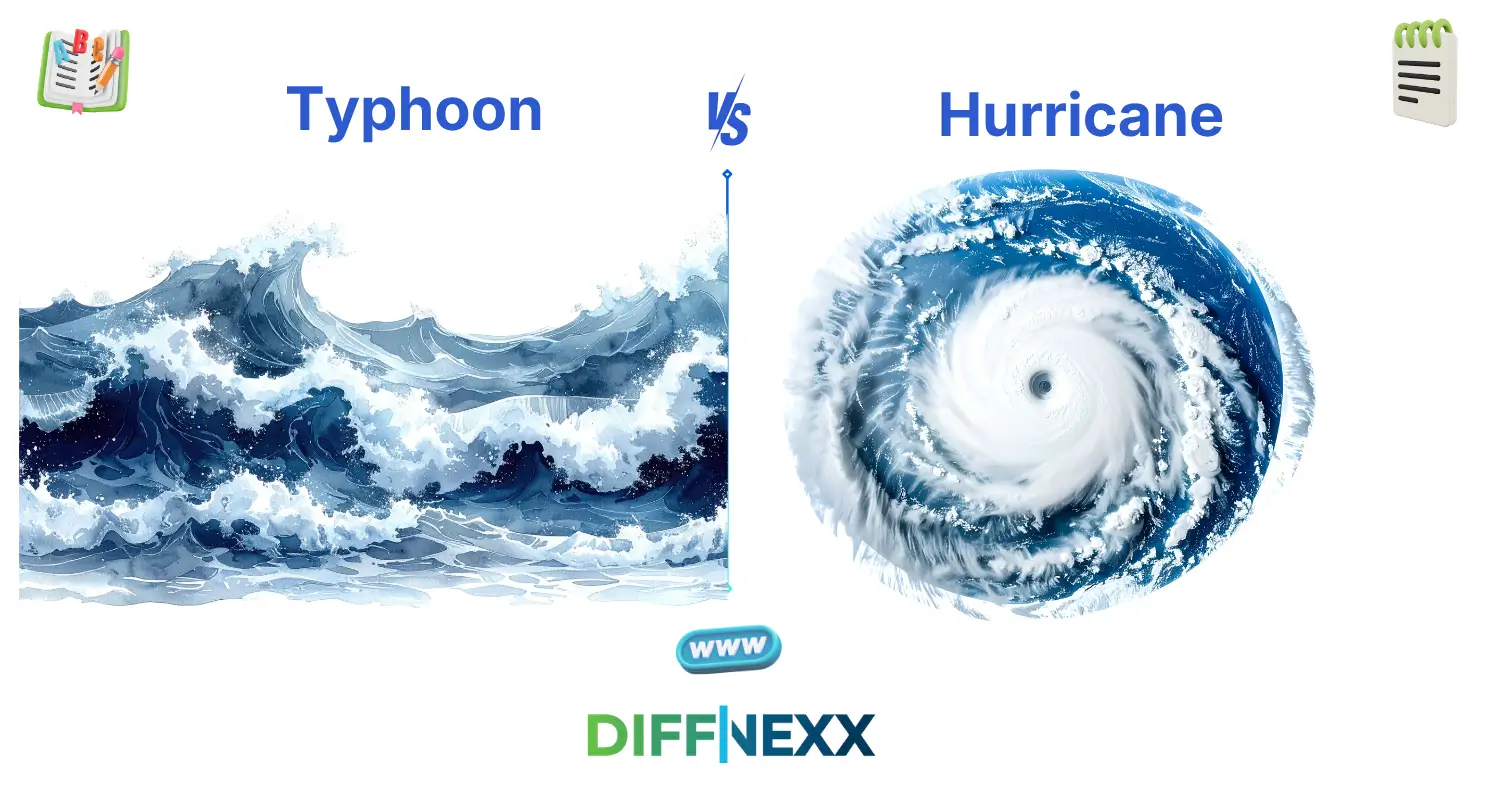
The difference between typhoon and hurricane is mainly about location, not strength. Both are strong tropical storms with heavy rain and fast winds. They can cause serious damage and affect millions of lives.
Many people think they are different types of storms. But in reality, the difference between typhoon and hurricane is mostly based on where they happen in the world.
Let’s explore this clearly so you never get confused again.
Key Difference Between the Both
The main difference is geographical location.
- Typhoon occurs in the Northwest Pacific Ocean.
- Hurricane occurs in the Atlantic Ocean and Northeast Pacific.
Both are the same type of storm, just named differently.
Importance – Why Knowing the Difference Matters 🌍
Understanding this difference helps learners follow global news correctly. It improves geography and science knowledge.
For professionals like meteorologists and journalists, correct terms are essential. Using the wrong term can confuse the audience.
In society, clear knowledge helps people respond better to natural disasters. It supports safety awareness and disaster planning.
🔊 Pronunciation Section
Typhoon
US: /taɪˈfuːn/
UK: /taɪˈfuːn/
Hurricane
US: /ˈhɝːɪˌkeɪn/
UK: /ˈhʌrɪkən/
Now that you can say both words, let’s define them clearly.
📚 Core Definitions
Typhoon
A typhoon is a powerful tropical storm that forms in the Northwest Pacific Ocean. It brings strong winds, heavy rain, and flooding. The tone is often serious and alarming.
Example: The typhoon hit the Philippines with strong winds.
Hurricane
A hurricane is a strong tropical storm that forms in the Atlantic Ocean or the Northeast Pacific. It also causes heavy rain and damage. The tone is equally serious.
Example: The hurricane moved toward Florida quickly.
📚 10 Clear Differences Between Typhoon and Hurricane
1. Location
Typhoons occur in Asia-Pacific regions. Hurricanes occur in the Americas.
- Example for typhoon: A typhoon formed near Japan.
- Example for hurricane: A hurricane formed near the Caribbean.
2. Naming Regions
Different weather organizations name them.
- Example for typhoon: Named by Asian weather agencies.
- Example for hurricane: Named by Atlantic weather centers.
3. Common Countries Affected
Typhoons affect countries like Japan and the Philippines. Hurricanes affect the USA and Mexico.
- Example for typhoon: Typhoon hit coastal China.
- Example for hurricane: Hurricane hit Texas.
4. Seasonal Patterns
Typhoon season is more active year-round. Hurricane season peaks from June to November.
- Example for typhoon: Typhoon formed in October.
- Example for hurricane: Hurricane peaked in September.
5. Cultural Awareness
Typhoon is commonly used in Asia. Hurricane is common in Western media.
- Example for typhoon: Asian news reports typhoons.
- Example for hurricane: US news reports hurricanes.
6. Language Origin
Typhoon comes from Asian and Arabic roots. Hurricane comes from Caribbean language roots.
- Example for typhoon: Word used in East Asia.
- Example for hurricane: Word used in the Americas.
7. Frequency
Typhoons occur more frequently than hurricanes.
- Example for typhoon: Many typhoons form yearly.
- Example for hurricane: Fewer hurricanes form yearly.
8. Storm Basin
Typhoon belongs to the Western Pacific basin. Hurricane belongs to the Atlantic basin.
- Example for typhoon: Pacific basin storm.
- Example for hurricane: Atlantic basin storm.
9. Public Response
Preparedness differs by region.
- Example for typhoon: Asia has early warning systems.
- Example for hurricane: US uses evacuation plans.
10. Expression Style
The terms are used regionally in speech and media.
- Example for typhoon: People in Asia say typhoon.
- Example for hurricane: People in America say hurricane.
🎯 Why Knowing the Difference Matters
Students need this knowledge to understand geography and science topics. It helps them read news and textbooks correctly.
Professionals like reporters and weather experts must use accurate terms. This builds trust and avoids confusion.
In daily life, clear understanding helps people react quickly during disasters.
Real-world Consequences of Confusion
If people misunderstand warnings, they may not prepare properly. This can increase risk during storms.
🧠 Why People Get Confused
Similar Meaning
Both words describe the same type of storm, which causes confusion.
Context-Based Usage
Different regions use different terms for the same event.
Media Influence
Global news uses both terms, which can mix understanding.
Informal Speech
People often use the terms without knowing the difference.
🎭 Connotation & Emotional Tone
Connotation = the emotional meaning associated with a word.
Typhoon
- Positive: Rarely positive
- Neutral: Scientific term
- Negative: Destruction, danger (A strong typhoon approaching)
Hurricane
- Positive: Rarely positive
- Neutral: Weather term
- Negative: Fear, disaster (A dangerous hurricane warning)
🗣 Usage in Metaphors, Similes & Idioms
- “Like a hurricane” → very powerful
- Example: Her emotions hit like a hurricane.
- “Storm like a typhoon” → intense force
- Example: The crowd rushed in like a typhoon.
These show strong energy and intensity.
📊 Comparison Table
| Feature | Typhoon | Hurricane |
|---|---|---|
| Meaning | Pacific storm | Atlantic storm |
| Tone | Serious | Serious |
| Usage | Asia-Pacific | Americas |
| Context | Weather reports | Weather reports |
| Formality | Scientific | Scientific |
⚖️ Which Is Better in What Situation?
When to Use Typhoon
Use “typhoon” when talking about storms in the Northwest Pacific. It fits Asian geography and regional reports.
When to Use Hurricane
Use “hurricane” when referring to storms in the Atlantic or Northeast Pacific. It fits American contexts.
Situational Clarity
Choose the term based on location, not storm strength.
Contextual Correctness
Correct usage depends on region. Same storm type, different name.
📖 Literary or Cultural References
- Book: Isaac’s Storm (Nonfiction, Erik Larson, 1999)
- Movie: The Perfect Storm (USA, 2000)
These works show the power and impact of major storms.
❓ FAQs
1. Are typhoons and hurricanes the same?
Yes, they are the same type of storm. The only difference is location. Both are tropical cyclones.
2. Which is stronger, typhoon or hurricane?
Neither is stronger by definition. Strength depends on wind speed, not the name.
3. Why do they have different names?
Different regions created their own naming systems. This helps local communication.
4. What is a cyclone?
Cyclone is a general term for these storms. It is used in the Indian Ocean region.
5. Can a typhoon become a hurricane?
No, the name depends on location. If the storm moves regions, it may be renamed based on its position.
🏁 Conclusion
The difference between typhoon and hurricane is simple but important. Both are powerful tropical storms, but their names depend on where they form. Typhoons occur in the Pacific near Asia, while hurricanes occur in the Atlantic and nearby regions.
Understanding this difference improves your knowledge of geography and weather. It also helps you follow global news with confidence.
Clear terms save lives during emergencies. So always remember same storm, different name. Keep learning and stay informed!

Mira Anand is a writer at Distinly.com who focuses on storytelling, communication, and social perspective. Her work highlights subtle differences in language and meaning across cultures and communities. With a clear and empathetic voice, Mira helps readers understand how narratives shape understanding, relationships, and modern dialogue in an increasingly connected world.