Difference between sushi and sashimi often confuses people when they visit a Japanese restaurant. Imagine you sit down, open the menu, and see both items listed. You wonder, “Aren’t they the same?” Many people think so but they are quite different.
The difference between sushi and sashimi is simple once you understand the basics. Sushi usually includes rice and other ingredients. Sashimi is just thinly sliced raw fish or meat, served without rice.
Still, the difference between sushi and sashimi goes beyond ingredients. It includes preparation, taste, presentation, and cultural meaning.
Let’s break it down step by step so you can understand it clearly and confidently. 🍣
Key Difference Between the Both
The key difference is:
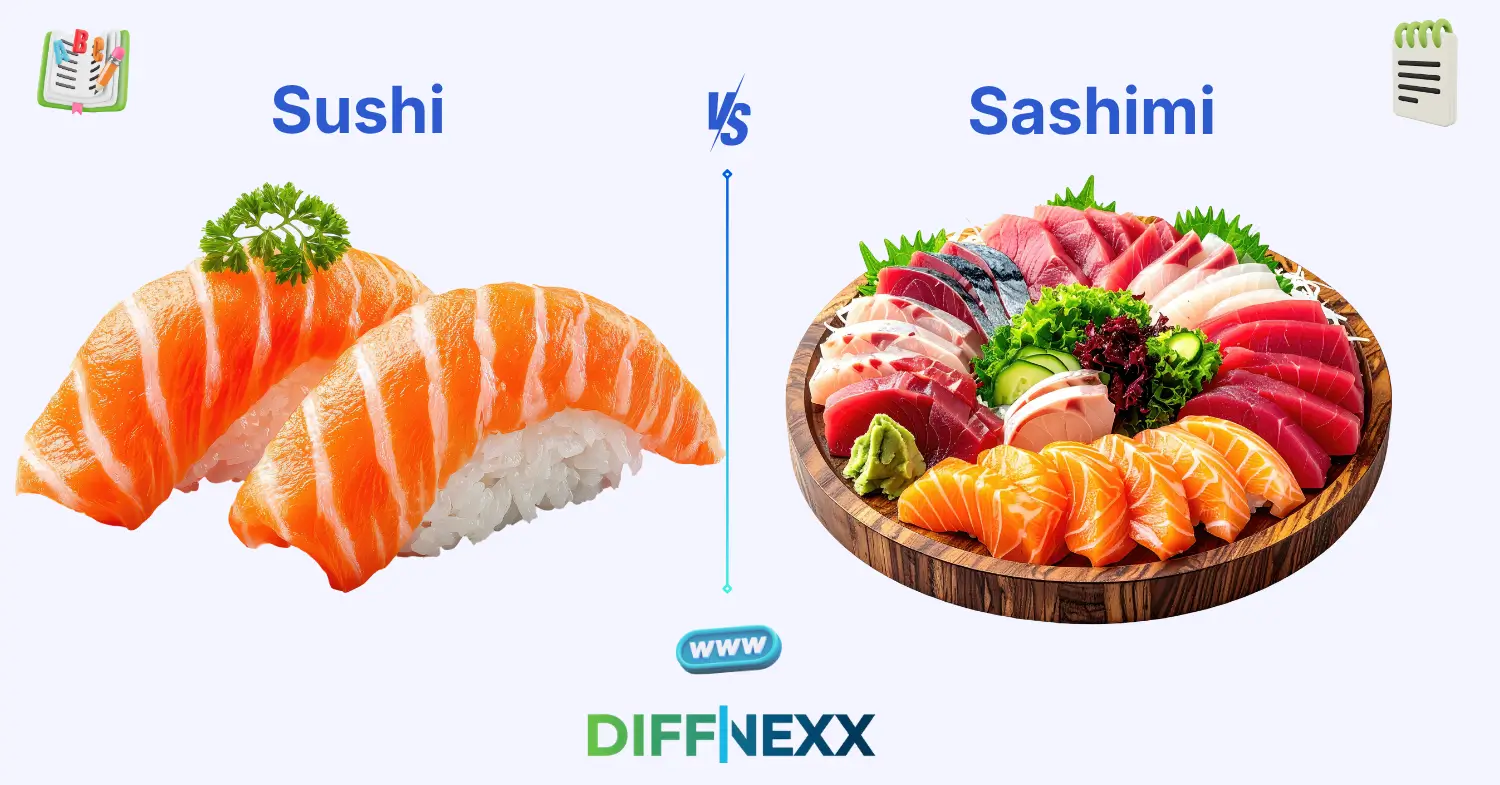
- Sushi: A dish made with vinegared rice, often combined with fish or vegetables.
- Sashimi: Thin slices of raw fish or meat served alone, without rice.
In short, sushi includes rice. Sashimi does not.
Importance – Why Their Difference Matters
Understanding the difference between sushi and sashimi is important for both learners and food lovers.
For students, it builds cultural awareness. It helps them understand Japanese cuisine more accurately.
For chefs and professionals, it ensures proper preparation and presentation. Using the wrong term can affect credibility.
In society, correct usage improves communication. It also shows respect for culinary traditions and cultural knowledge.
🔊 Pronunciation Section
Sushi
US: /ˈsuː.ʃi/
UK: /ˈsuː.ʃi/
Sashimi
US: /sɑːˈʃiː.mi/
UK: /sæˈʃiː.mi/
Now that you can pronounce them correctly, let’s define each clearly.
📚 Core Definitions
Sushi
Sushi is a Japanese dish made with vinegared rice, often paired with fish, vegetables, or seaweed. It feels balanced and creative.
Example: A roll of rice, seaweed, and salmon.
Sashimi
Sashimi is thinly sliced raw fish or meat served without rice. It feels pure and simple.
Example: Slices of raw tuna served with soy sauce.
📚 10 Clear Differences Between Sushi and Sashimi
1. Main Ingredient
Sushi focuses on rice. Sashimi focuses on raw fish or meat.
- Example for Sushi: Rice with fish and seaweed.
- Example for Sashimi: Only sliced fish.
2. Presence of Rice
Sushi always includes rice. Sashimi never includes rice.
- Example for Sushi: Nigiri with rice base.
- Example for Sashimi: Tuna slices without rice.
3. Preparation Style
Sushi involves combining ingredients. Sashimi focuses on slicing technique.
- Example for Sushi: Rolled or shaped dish.
- Example for Sashimi: Carefully cut fish slices.
4. Taste Profile
Sushi has mixed flavors. Sashimi has pure, natural taste.
- Example for Sushi: Sweet, salty, and tangy.
- Example for Sashimi: Clean, fresh fish flavor.
5. Complexity
Sushi is more complex to prepare. Sashimi is simple but requires skill.
- Example for Sushi: Multiple ingredients and steps.
- Example for Sashimi: Perfect slicing technique.
6. Presentation
Sushi is often colorful and creative. Sashimi is minimal and elegant.
- Example for Sushi: Decorative rolls.
- Example for Sashimi: Neatly arranged slices.
7. Cultural Role
Sushi is widely popular worldwide. Sashimi is more traditional and refined.
- Example for Sushi: Found in global restaurants.
- Example for Sashimi: Served in traditional settings.
8. Eating Experience
Sushi offers variety in each bite. Sashimi offers a focused experience.
- Example for Sushi: Different textures and flavors.
- Example for Sashimi: Pure fish taste.
9. Nutritional Focus
Sushi includes carbs from rice. Sashimi is high in protein.
- Example for Sushi: Balanced meal with rice.
- Example for Sashimi: Lean protein dish.
10. Formality
Sushi suits casual and formal dining. Sashimi is often more formal.
- Example for Sushi: Casual sushi rolls.
- Example for Sashimi: Fine dining presentation.
🎯 Why Knowing the Difference Matters
Students benefit by learning correct food terms. It improves cultural knowledge and confidence.
Professionals in hospitality or culinary fields must use these terms correctly. It ensures accurate service and communication.
In everyday life, understanding the difference avoids confusion. It also enhances your dining experience.
Real-world consequences of confusion
If you order sushi expecting plain fish, you may feel surprised. Similarly, ordering sashimi without knowing it’s raw fish may lead to discomfort.
🧠 Why People Get Confused
Similar Names
Both words sound similar and come from Japanese.
Semantic Overlap
Both involve raw fish, which creates confusion.
Context-Based Usage
Menus sometimes group them together.
Influence of Informal Speech
People often call all Japanese dishes “sushi.”
🎭 Connotation & Emotional Tone
Connotation = the emotional meaning attached to a word.
Sushi
- Positive: Fun, popular, and creative.
- Example: “Let’s grab sushi tonight!”
Sashimi
- Neutral to refined: Pure and elegant.
- Example: “I prefer sashimi for its simplicity.”
🗣 Usage in Metaphors, Similes & Idioms
While not common in idioms, they appear in comparisons:
- “Life is like sushi—full of variety.”
- “His style is like sashimi—simple and pure.”
These comparisons highlight complexity vs simplicity.
📊 Comparison Table
| Feature | Sushi | Sashimi |
|---|---|---|
| Meaning | Rice-based dish | Raw sliced fish/meat |
| Tone | Fun and diverse | Pure and refined |
| Usage | Casual and formal | Mostly formal |
| Context | Global cuisine | Traditional Japanese |
| Formality | Flexible | More formal |
⚖️ Which Is Better in What Situation?
When to use Sushi
Choose sushi when you want variety and flavor. It is great for beginners and casual meals.
When to use Sashimi
Choose sashimi when you want pure taste. It suits experienced diners and formal settings.
Situational clarity
Sushi fits social gatherings. Sashimi fits refined dining.
Contextual correctness
Use sushi for mixed dishes. Use sashimi for raw fish only.
📖 Literary or Cultural References
- Book: Japanese Cooking: A Simple Art (Cooking, Shizuo Tsuji, 1980)
Explains traditional dishes like sushi and sashimi. - Movie: Jiro Dreams of Sushi (Japan, 2011)
Highlights sushi craftsmanship and culture.
❓ FAQs
1. Is sushi always raw fish?
No, sushi can include cooked ingredients or vegetables. Raw fish is not required.
2. Is sashimi safe to eat?
Yes, if prepared properly with fresh ingredients. It must meet high safety standards.
3. Can vegetarians eat sushi?
Yes, many sushi options use vegetables like cucumber or avocado.
4. Why is sashimi more expensive?
Sashimi uses high-quality fish and requires expert cutting skills.
5. Which is healthier, sushi or sashimi?
Sashimi is lower in calories and carbs. Sushi offers a more balanced meal.
🏁 Conclusion
The difference between sushi and sashimi is clear once you understand their basics. Sushi includes rice and offers variety, while sashimi focuses on pure slices of fish or meat.
Both dishes are important in Japanese cuisine, but they serve different purposes. Sushi is creative and diverse. Sashimi is simple and refined.
Knowing the difference helps you order confidently and enjoy your meal more. It also shows respect for cultural traditions.
Keep exploring food knowledge and enjoy every bite with confidence! 🍽️

Mira Anand is a writer at Distinly.com who focuses on storytelling, communication, and social perspective. Her work highlights subtle differences in language and meaning across cultures and communities. With a clear and empathetic voice, Mira helps readers understand how narratives shape understanding, relationships, and modern dialogue in an increasingly connected world.