Difference between suit and tux often becomes clear when you’re getting ready for a special event. Imagine you receive an invitation to a wedding or a formal dinner. The dress code says “black tie,” and suddenly you wonder should you wear a suit or a tux?
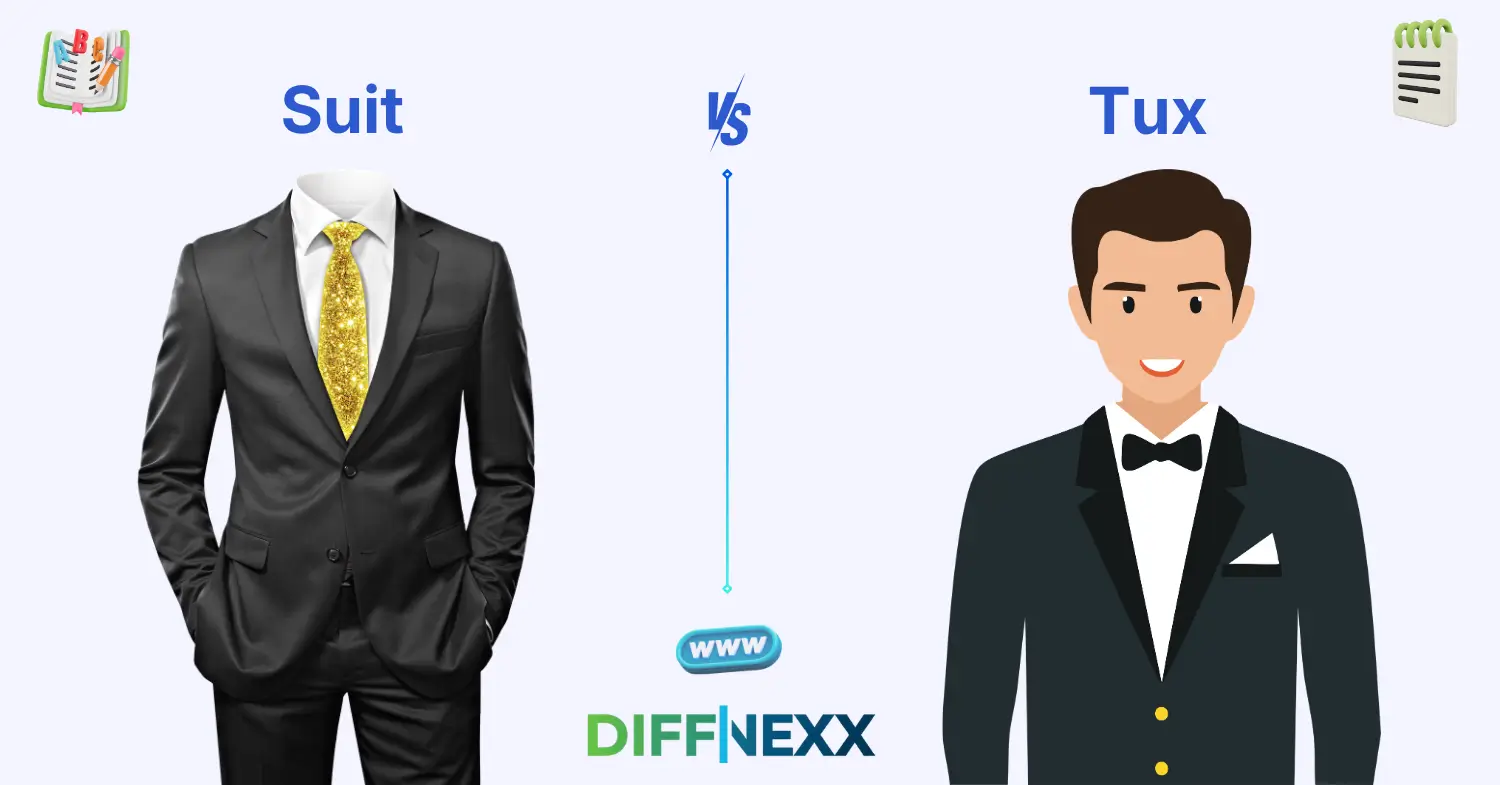
The difference between suit and tux is not just about looks. It involves fabric, accessories, and the level of formality. A suit is versatile and used for many occasions, while a tuxedo (tux) is more formal and reserved for special events.
Understanding the difference between suit and tux helps you dress correctly and feel confident. It also shows respect for the event and its dress code.
Let’s break down these differences in a simple and clear way.
🔑 Key Difference Between the Both
The main difference is formality and design details.
- A suit is semi-formal and suitable for many occasions.
- A tux is highly formal and designed for special events.
Tuxedos often include satin details, while suits do not.
🌍 Importance – Why This Difference Matters
Knowing the difference between suit and tux is important in social and professional settings.
For students and learners, it improves understanding of dress codes and fashion vocabulary.
For professionals, dressing correctly builds confidence and creates a strong impression.
In society, proper attire shows respect for traditions, especially at weddings, galas, and formal events.
🔊 Pronunciation Section
Suit
US: /suːt/
UK: /suːt/
Tux (Tuxedo)
US: /ˈtʌk.siː.doʊ/
UK: /ˈtʌk.siː.dəʊ/
Now that you know how to pronounce them, let’s define each clearly.
📚 Core Definitions
Suit
A suit is a set of matching jacket and trousers, often worn with a dress shirt and tie. It is versatile and used in both formal and semi-formal settings. The tone is practical and professional.
Example: He wore a navy suit to the business meeting.
Tux (Tuxedo)
A tuxedo is a formal evening outfit with satin details, usually worn with a bow tie. It is reserved for special occasions. The tone is elegant and sophisticated.
Example: He wore a black tux to the wedding.
📊 10 Clear Differences Between Suit and Tux
1. Formality Level
Suits are less formal. Tuxedos are highly formal.
- Example for suit: He wore a suit to the office party.
- Example for tux: He wore a tux to the gala dinner.
2. Fabric Details
Suits use the same fabric throughout. Tuxedos include satin on lapels and buttons.
- Example for suit: The suit has a plain wool finish.
- Example for tux: The tux has shiny satin lapels.
3. Accessories
Suits are worn with neckties. Tuxedos are worn with bow ties.
- Example for suit: He paired his suit with a tie.
- Example for tux: He added a bow tie to his tux.
4. Shirt Style
Suit shirts are standard dress shirts. Tux shirts often have pleats or special designs.
- Example for suit: He wore a simple white shirt.
- Example for tux: He wore a pleated tux shirt.
5. Shoes
Suits are paired with formal leather shoes. Tuxedos are paired with patent leather shoes.
- Example for suit: He wore black leather shoes.
- Example for tux: He wore shiny patent shoes.
6. Occasion
Suits are worn daily or at semi-formal events. Tuxedos are for formal evening events.
- Example for suit: He wore a suit to a job interview.
- Example for tux: He wore a tux to a formal wedding.
7. Time of Day
Suits can be worn any time. Tuxedos are usually worn at night.
- Example for suit: He wore a suit during the day.
- Example for tux: The tux is worn in the evening.
8. Belt vs Suspenders
Suits are worn with belts. Tuxedos often use suspenders.
- Example for suit: He added a belt to his suit.
- Example for tux: He wore suspenders with his tux.
9. Button Style
Suit buttons are simple. Tuxedo buttons are often covered or decorative.
- Example for suit: The suit has plastic buttons.
- Example for tux: The tux has silk-covered buttons.
10. Overall Style Tone
Suits give a professional look. Tuxedos give a luxurious look.
- Example for suit: He looked business-ready in his suit.
- Example for tux: He looked elegant in his tux.
🎯 Why Knowing the Difference Matters
For students, understanding this difference improves social awareness. It helps them follow dress codes correctly.
For professionals, proper attire builds confidence. It also creates a strong impression in formal settings.
In daily life, dressing correctly avoids embarrassment. It shows respect for events and people.
Real-world consequences of confusion
Wearing a suit to a black-tie event may look underdressed. Wearing a tux to a casual event may seem excessive.
🧠 Why People Get Confused
Similar Appearance
Both outfits look formal and include jackets and trousers.
Overlapping Use
People sometimes wear suits to formal events, which creates confusion.
Informal Language
Many people use “suit” as a general term for all formal wear.
🎭 Connotation & Emotional Tone
Connotation = the emotional meaning associated with a word.
Suit
- Positive: Professional, reliable
Example: He looked confident in his suit.* - Neutral: Formal clothing
- Negative: Sometimes seen as ordinary
Tux
- Positive: Elegant, luxurious
Example: He looked stunning in his tux.* - Neutral: Formal attire
- Negative: Can feel overly formal
🗣 Usage in Metaphors, Similes & Idioms
- Suit up → Prepare seriously
Example: It’s time to suit up for the challenge.* - Dressed to the nines (tux context) → Extremely well dressed
Example: He arrived dressed to the nines in a tux.*
📊 Comparison Table
| Feature | Suit | Tux |
|---|---|---|
| Meaning | Semi-formal outfit | Formal evening wear |
| Tone | Professional | Elegant |
| Usage | Daily & events | Special occasions |
| Context | Work, meetings | Weddings, galas |
| Formality | Medium | High |
⚖️ Which Is Better in What Situation?
When to use Suit
Choose a suit for business meetings, interviews, or semi-formal events. It is flexible and works in many settings.
When to use Tux
Choose a tux for weddings, galas, or black-tie events. It shows elegance and respect for formal occasions.
Situational Clarity
If the dress code says “formal,” check details. A tux is usually expected for black-tie events.
Contextual Correctness
Your choice depends on the event type, time, and level of formality.
📖 Literary or Cultural References
- Book: The Great Gatsby (Classic, F. Scott Fitzgerald, 1925)
Shows elegant fashion and formal wear. - Movie: James Bond Series (UK/USA, various years)
Famous for tuxedo style and sophistication.
❓ FAQs
1. Can I wear a suit instead of a tux?
Yes, but only if the event is not strictly black-tie. For formal events, a tux is preferred.
2. Is a tux more expensive than a suit?
Usually, yes. Tuxedos are more formal and include special materials.
3. Can a tux be worn during the day?
Traditionally, tuxedos are worn in the evening.
4. Do suits have satin details?
No, suits usually do not include satin elements.
5. Is a tux only black?
Most tuxedos are black, but modern styles may include other colors.
🏁 Conclusion
The difference between suit and tux mainly comes down to formality, design, and occasion. A suit is versatile and practical, while a tuxedo is elegant and reserved for special events.
Understanding this difference helps you dress appropriately and feel confident in any setting. It also shows respect for traditions and social expectations.
Next time you get dressed for an event, you’ll know exactly what to choose. Keep learning, stay stylish, and make confident choices every time.

Aamer Shahzad is the founder of Distinly.com, a fast-growing educational platform focused on high-intent “difference between” topics. With over 8 years of experience in English language education and analytical writing, I specialize in breaking down complex “difference between” topics into clear, structured, and easy-to-understand explanations. Distinly.com is your go-to resource for enhancing English skills and writing with confidence.
I specializes in building search-optimized, research-driven comparison content designed for clarity, authority, and long-term digital asset value.