The difference between RN and BSN often confuses students who want to become nurses. Imagine you are choosing a nursing career path, and you see two terms, RN and BSN. They sound similar, but they are not the same.
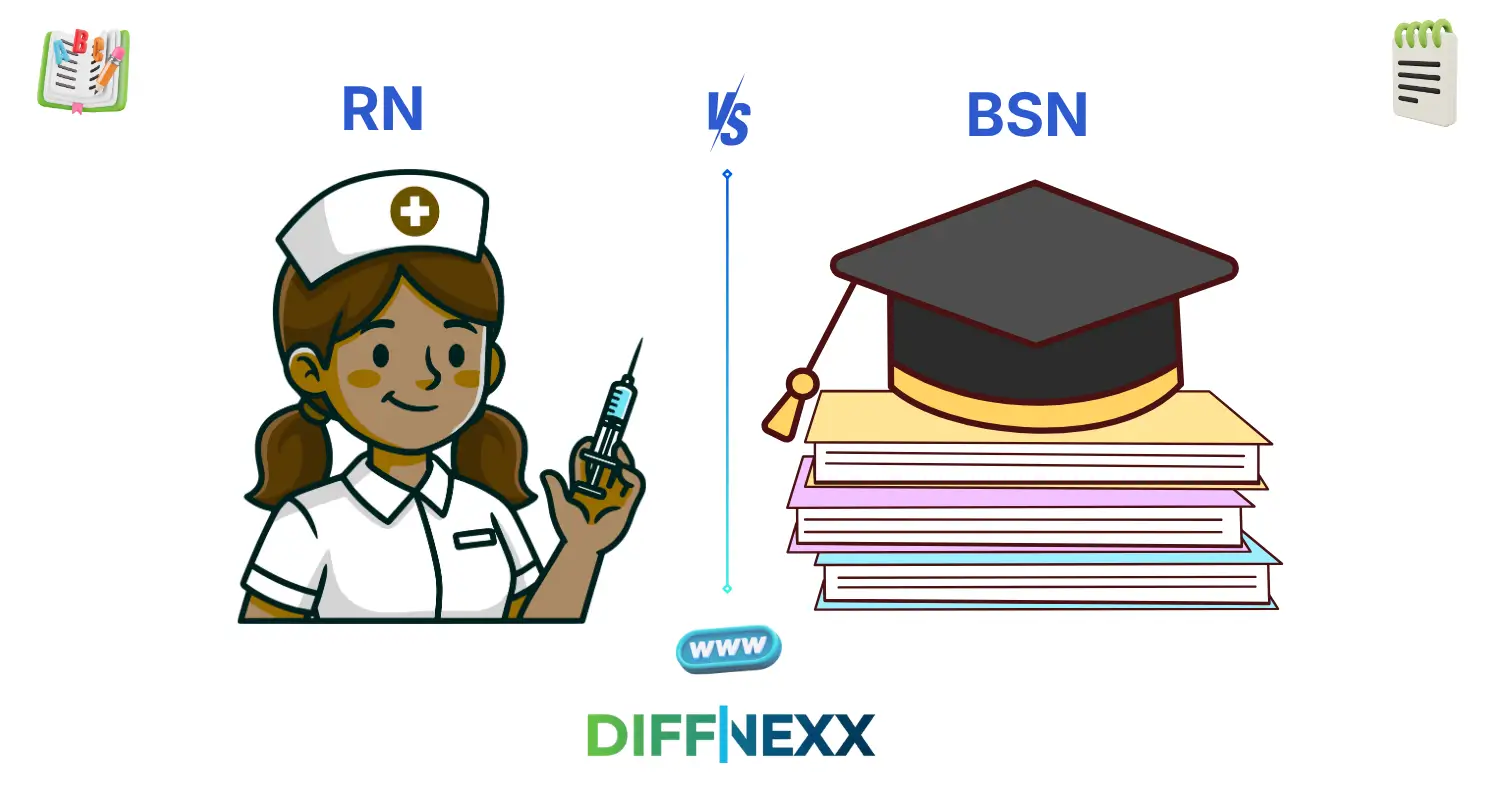
The difference between RN and BSN is about role vs education. RN (Registered Nurse) is a job title. BSN (Bachelor of Science in Nursing) is a degree. Both are important in healthcare, but they serve different purposes.
Many people mix them up because both relate to nursing. However, understanding the difference between RN and BSN helps you choose the right career path and education plan.
Let’s explore this clearly and simply.
Key Difference Between the Both
The main difference is license vs degree.
- RN is a licensed professional who can work as a nurse.
- BSN is a 4-year academic degree in nursing.
You can become an RN with or without a BSN, but a BSN gives more opportunities.
Importance – Why Knowing the Difference Matters 🌍
Knowing this difference helps learners make better career decisions. Students can plan whether to start working early or study longer.
For professionals, it affects job roles, promotions, and salary. Many hospitals prefer BSN-qualified nurses.
In society, better-educated nurses improve patient care. Clear understanding supports stronger healthcare systems.
🔊 Pronunciation Section
RN (Registered Nurse)
US: /ˌɑːr ˈɛn/
UK: /ˌɑː ˈɛn/
BSN (Bachelor of Science in Nursing)
US: /ˌbiː ˌɛs ˈɛn/
UK: /ˌbiː ˌɛs ˈɛn/
Now that you can say both terms correctly, let’s define them clearly.
📚 Core Definitions
RN (Registered Nurse)
An RN is a licensed healthcare professional who provides patient care. They must pass a licensing exam after completing nursing education.
Example: She works as an RN in a hospital.
BSN (Bachelor of Science in Nursing)
A BSN is a university degree in nursing that takes about four years. It includes advanced education in leadership and patient care.
Example: He earned his BSN before applying for jobs.
📚 10 Clear Differences Between RN and BSN
1. Nature (Role vs Degree)
RN is a job role. BSN is an academic qualification.
- Example for RN: She is working as an RN.
- Example for BSN: He is studying for a BSN degree.
2. Education Level
RN can be achieved through different programs. BSN is a higher-level degree.
- Example for RN: He became an RN through a diploma.
- Example for BSN: She completed a 4-year BSN program.
3. Duration
RN programs can be shorter. BSN takes around four years.
- Example for RN: RN training finished in two years.
- Example for BSN: BSN required four years of study.
4. Career Opportunities
RN has basic job options. BSN opens more advanced roles.
- Example for RN: RN works in clinics.
- Example for BSN: BSN graduates become managers.
5. Salary Potential
RN earns a good salary. BSN often earns higher pay.
- Example for RN: RN earns a stable income.
- Example for BSN: BSN earns higher salary over time.
6. Leadership Roles
RN focuses on patient care. BSN includes leadership training.
- Example for RN: RN gives direct care.
- Example for BSN: BSN leads nursing teams.
7. Skill Depth
RN has practical skills. BSN adds research and theory.
- Example for RN: RN handles daily patient tasks.
- Example for BSN: BSN studies healthcare systems.
8. Job Requirements
RN license is required to work. BSN is preferred by many employers.
- Example for RN: Hospital requires RN license.
- Example for BSN: Hospital prefers BSN degree.
9. Advancement Opportunities
RN has limited growth without further study. BSN allows promotions.
- Example for RN: RN may stay in same role.
- Example for BSN: BSN can move into administration.
10. Global Recognition
RN license is country-specific. BSN is globally recognized education.
- Example for RN: RN must re-license abroad.
- Example for BSN: BSN degree is accepted worldwide.
🎯 Why Knowing the Difference Matters
Students must understand this difference to plan their education path. It helps them decide between quick entry or long-term growth.
Professionals need this knowledge to improve careers. It helps in promotions, specialization, and leadership roles.
Clear understanding also improves communication in healthcare settings.
Real-world Consequences of Confusion
If someone thinks BSN is a job, they may misunderstand requirements. This can lead to wrong career choices and missed opportunities.
🧠 Why People Get Confused
Similar Abbreviations
RN and BSN both use short forms, which makes them look alike.
Semantic Overlap
Both relate to nursing, so people assume they mean the same.
Context-Based Usage
In hospitals, both terms are used together, which causes confusion.
Informal Speech
People often use these terms casually without clear meaning.
🎭 Connotation & Emotional Tone
Connotation = the emotional meaning associated with a word.
RN
- Positive: Caring, skilled (RN helping patients)
- Neutral: Job title
- Negative: Rarely negative
BSN
- Positive: Educated, advanced (BSN graduate)
- Neutral: Academic degree
- Negative: Sometimes seen as time-consuming
🗣 Usage in Metaphors, Similes & Idioms
These terms are technical, so they rarely appear in idioms.
However, in casual speech:
- “She is more than just an RN; she has a BSN too.”
- “Getting a BSN is like opening more doors.”
These show practical usage.
📊 Comparison Table
| Feature | RN | BSN |
|---|---|---|
| Meaning | Job role | Degree |
| Tone | Practical | Academic |
| Usage | Work | Education |
| Context | Hospitals | Universities |
| Formality | Professional | Academic |
⚖️ Which Is Better in What Situation?
When to Use RN
Use RN when talking about a licensed nurse working in healthcare. It fits job roles and clinical settings.
When to Use BSN
Use BSN when referring to education and academic qualifications. It fits university and career planning contexts.
Situational Clarity
Use RN for job identity. Use BSN for educational background.
Contextual Correctness
Say “She is an RN” for work. Say “She has a BSN” for education.
📖 Literary or Cultural References
- Book: Notes on Nursing (Healthcare, Florence Nightingale, 1859)
- Movie: The English Patient (USA/UK, 1996) – shows nursing roles in care
These examples highlight the importance of nursing in society.
❓ FAQs
1. Can you be an RN without a BSN?
Yes, you can become an RN through diploma or associate degree programs. A BSN is not required but is beneficial.
2. Is BSN higher than RN?
BSN is not higher than RN in role, but it is a higher level of education. It provides more opportunities.
3. Which is better, RN or BSN?
It depends on your goal. RN is faster to start working. BSN offers long-term career growth.
4. Does BSN increase salary?
Yes, BSN often leads to higher pay and better positions over time.
5. Can an RN upgrade to BSN?
Yes, many programs allow RNs to complete a BSN later while working.
🏁 Conclusion
The difference between RN and BSN is simple but very important. RN is a professional license to work as a nurse, while BSN is a degree that provides deeper education and more career options.
Understanding this difference helps you make smart decisions about your future. Whether you want to start working quickly or aim for higher roles, both paths have value.
Clear knowledge builds confidence and avoids confusion. Keep learning, stay focused, and choose the path that fits your goals in nursing.

Aamer Shahzad is the founder of Distinly.com, a fast-growing educational platform focused on high-intent “difference between” topics. With over 8 years of experience in English language education and analytical writing, I specialize in breaking down complex “difference between” topics into clear, structured, and easy-to-understand explanations. Distinly.com is your go-to resource for enhancing English skills and writing with confidence.
I specializes in building search-optimized, research-driven comparison content designed for clarity, authority, and long-term digital asset value.