The difference between nigiri and sashimi often comes up when you visit a Japanese restaurant for the first time. Imagine sitting at a sushi bar, looking at the menu, and wondering which one to order. Both look delicious, but are they the same?
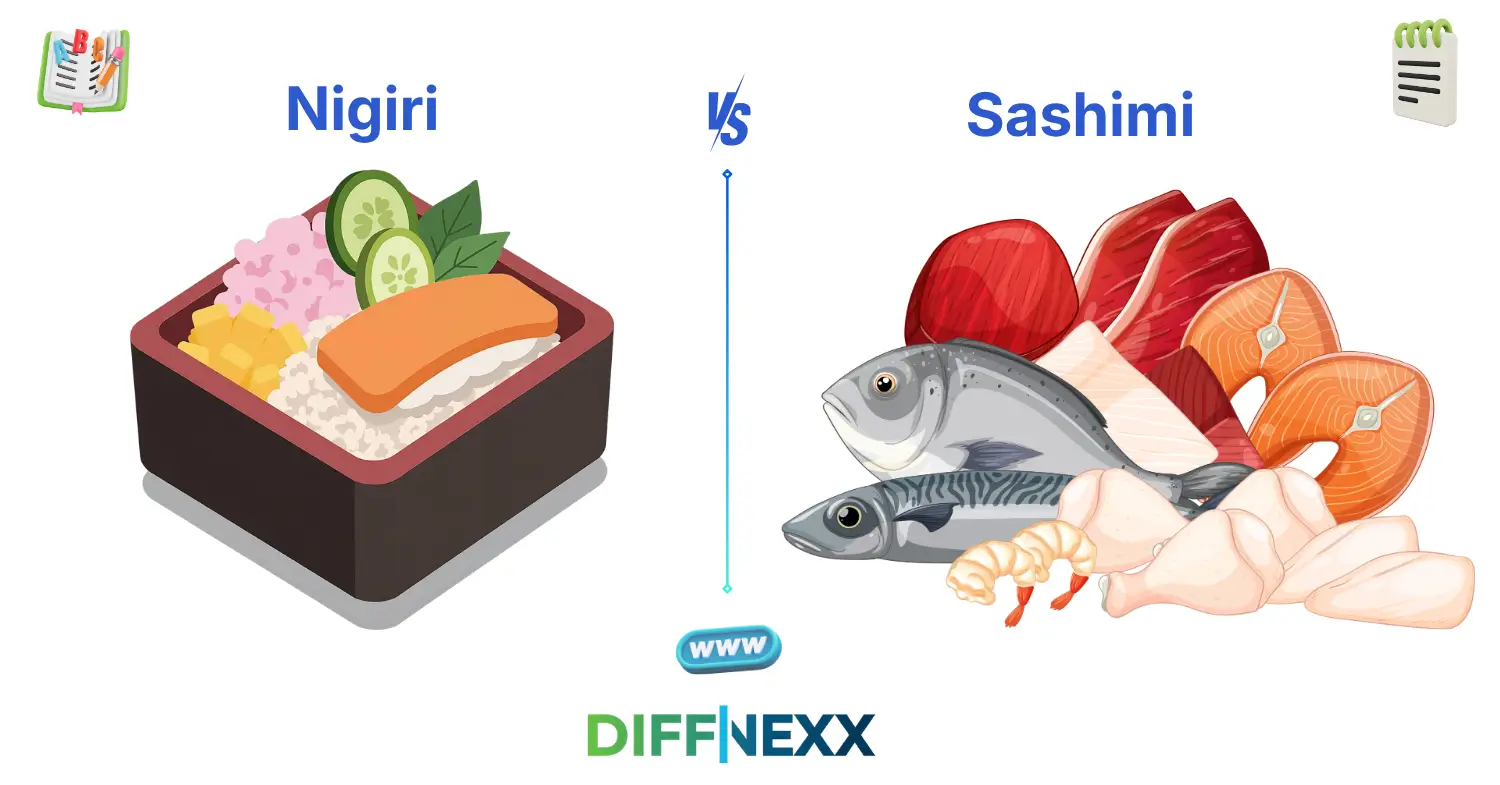
The difference between nigiri and sashimi is simple but important. Nigiri includes rice with a slice of fish on top. Sashimi is just thin slices of raw fish, without rice. Both are popular in Japanese cuisine, but they offer different experiences.
Many people mix them up because they are served in similar settings. However, understanding the difference between nigiri and sashimi helps you order confidently and enjoy your meal more.
Let’s explore their differences step by step.
Key Difference Between the Both
The main difference is rice vs no rice.
- Nigiri includes rice topped with fish or seafood.
- Sashimi is only raw fish or meat, served without rice.
Nigiri is a type of sushi. Sashimi is not sushi.
Importance – Why Knowing the Difference Matters 🌍
Knowing this difference helps learners understand food vocabulary and cultural terms. It improves communication in restaurants.
For chefs and food professionals, correct usage shows expertise. It also ensures proper menu descriptions.
In society, food culture matters. Using correct terms shows respect for traditions and improves dining experiences.
🔊 Pronunciation Section
Nigiri
US: /nɪˈɡɪri/
UK: /nɪˈɡɪri/
Sashimi
US: /sɑːˈʃiːmi/
UK: /sæˈʃiːmi/
Now that you can pronounce both words, let’s define them clearly.
📚 Core Definitions
Nigiri
Nigiri is a type of sushi made with a small ball of vinegared rice topped with a slice of fish or seafood. It is simple yet elegant. The tone is refined and traditional.
Example: I ordered salmon nigiri at the restaurant.
Sashimi
Sashimi is thinly sliced raw fish or meat served without rice. It focuses on freshness and quality. The tone is pure and minimal.
Example: He enjoyed tuna sashimi as an appetizer.
📚 10 Clear Differences Between Nigiri and Sashimi
1. Rice Content
Nigiri includes rice. Sashimi does not.
- Example for nigiri: Nigiri has rice under the fish.
- Example for sashimi: Sashimi is just slices of fish.
2. Type of Dish
Nigiri is a form of sushi. Sashimi is a separate dish.
- Example for nigiri: Nigiri is sushi.
- Example for sashimi: Sashimi is not sushi.
3. Preparation Style
Nigiri is shaped by hand. Sashimi is carefully sliced.
- Example for nigiri: Chef presses rice into shape.
- Example for sashimi: Chef slices fish thinly.
4. Texture
Nigiri has a mix of soft rice and fish. Sashimi has only smooth fish texture.
- Example for nigiri: Soft rice adds texture.
- Example for sashimi: Only fish texture is felt.
5. Flavor Profile
Nigiri combines rice and fish flavors. Sashimi highlights pure fish taste.
- Example for nigiri: Rice adds slight sweetness.
- Example for sashimi: Fish flavor is stronger.
6. Serving Style
Nigiri is served in pieces with rice base. Sashimi is served as slices.
- Example for nigiri: Nigiri comes in pairs.
- Example for sashimi: Sashimi comes in slices.
7. Eating Method
Nigiri is eaten in one bite. Sashimi is eaten piece by piece.
- Example for nigiri: Eat nigiri whole.
- Example for sashimi: Pick slices individually.
8. Cultural Role
Nigiri represents sushi tradition. Sashimi represents purity of ingredients.
- Example for nigiri: Nigiri shows sushi art.
- Example for sashimi: Sashimi shows ingredient quality.
9. Fullness Level
Nigiri is more filling due to rice. Sashimi is lighter.
- Example for nigiri: Nigiri fills you faster.
- Example for sashimi: Sashimi feels light.
10. Expression Style
Nigiri is often casual and popular. Sashimi feels more refined and premium.
- Example for nigiri: Nigiri is common in meals.
- Example for sashimi: Sashimi is often served as a delicacy.
🎯 Why Knowing the Difference Matters
Students benefit from understanding cultural and food vocabulary. It helps them speak clearly and avoid mistakes.
Professionals in food and hospitality must use correct terms. This builds trust and improves customer experience.
Clear communication enhances dining and cultural respect.
Real-world Consequences of Confusion
If you order sashimi but expect rice, you may feel confused or disappointed. Correct knowledge avoids such situations.
🧠 Why People Get Confused
Similar Appearance
Both dishes use raw fish, which looks similar.
Context-Based Usage
They are served together in Japanese restaurants.
Cultural Differences
People unfamiliar with Japanese cuisine mix the terms.
Informal Speech
Many people use “sushi” for all dishes, which causes confusion.
🎭 Connotation & Emotional Tone
Connotation = the emotional meaning associated with a word.
Nigiri
- Positive: Balanced, satisfying (A tasty nigiri plate)
- Neutral: Common sushi type
- Negative: Rarely negative
Sashimi
- Positive: Fresh, premium (High-quality sashimi)
- Neutral: Simple dish
- Negative: Sometimes seen as risky (raw fish)
🗣 Usage in Metaphors, Similes & Idioms
These words are mostly used literally, not in idioms.
However:
- “Simple like sashimi” → pure and minimal
- “Balanced like nigiri” → well combined
These show creative usage.
📊 Comparison Table
| Feature | Nigiri | Sashimi |
|---|---|---|
| Meaning | Sushi with rice | Raw fish only |
| Tone | Balanced | Pure |
| Usage | Meals | Appetizers |
| Context | Sushi dishes | Fine dining |
| Formality | Casual to formal | More formal |
⚖️ Which Is Better in What Situation?
When to Use Nigiri
Choose nigiri when you want a filling and balanced meal. It is great for beginners and casual dining.
When to Use Sashimi
Choose sashimi when you want pure taste and a light dish. It suits experienced diners.
Situational Clarity
Nigiri is better for meals. Sashimi is better for tasting quality fish.
Contextual Correctness
Use the correct term when ordering. It improves your dining experience.
📖 Literary or Cultural References
- Book: Japanese Cooking: A Simple Art (Cooking, Shizuo Tsuji, 1980)
- Movie: Jiro Dreams of Sushi (Japan, 2011)
These highlight Japanese food culture and sushi traditions.
❓ FAQs
1. Is nigiri the same as sushi?
Nigiri is a type of sushi, but not all sushi is nigiri. Sushi includes many styles.
2. Is sashimi raw fish only?
Yes, sashimi is raw fish or meat without rice. It focuses on freshness.
3. Which is healthier, nigiri or sashimi?
Sashimi is lower in calories because it has no rice. Nigiri is more filling.
4. Can beginners eat sashimi?
Yes, but they should start with fresh and safe options. Nigiri is often easier for beginners.
5. Why is sashimi more expensive?
Sashimi uses high-quality fish. It requires expert preparation and freshness.
🏁 Conclusion
The difference between nigiri and sashimi is clear once you understand the basics. Nigiri includes rice and offers a balanced taste, while sashimi focuses on pure, fresh fish without rice.
Knowing this difference improves your dining experience and helps you order with confidence. It also shows respect for Japanese food culture.
Next time you visit a sushi restaurant, you will know exactly what to choose. Keep learning, enjoy new foods, and explore the world with curiosity.

Aamer Shahzad is the founder of Distinly.com, a fast-growing educational platform focused on high-intent “difference between” topics. With over 8 years of experience in English language education and analytical writing, I specialize in breaking down complex “difference between” topics into clear, structured, and easy-to-understand explanations. Distinly.com is your go-to resource for enhancing English skills and writing with confidence.
I specializes in building search-optimized, research-driven comparison content designed for clarity, authority, and long-term digital asset value.