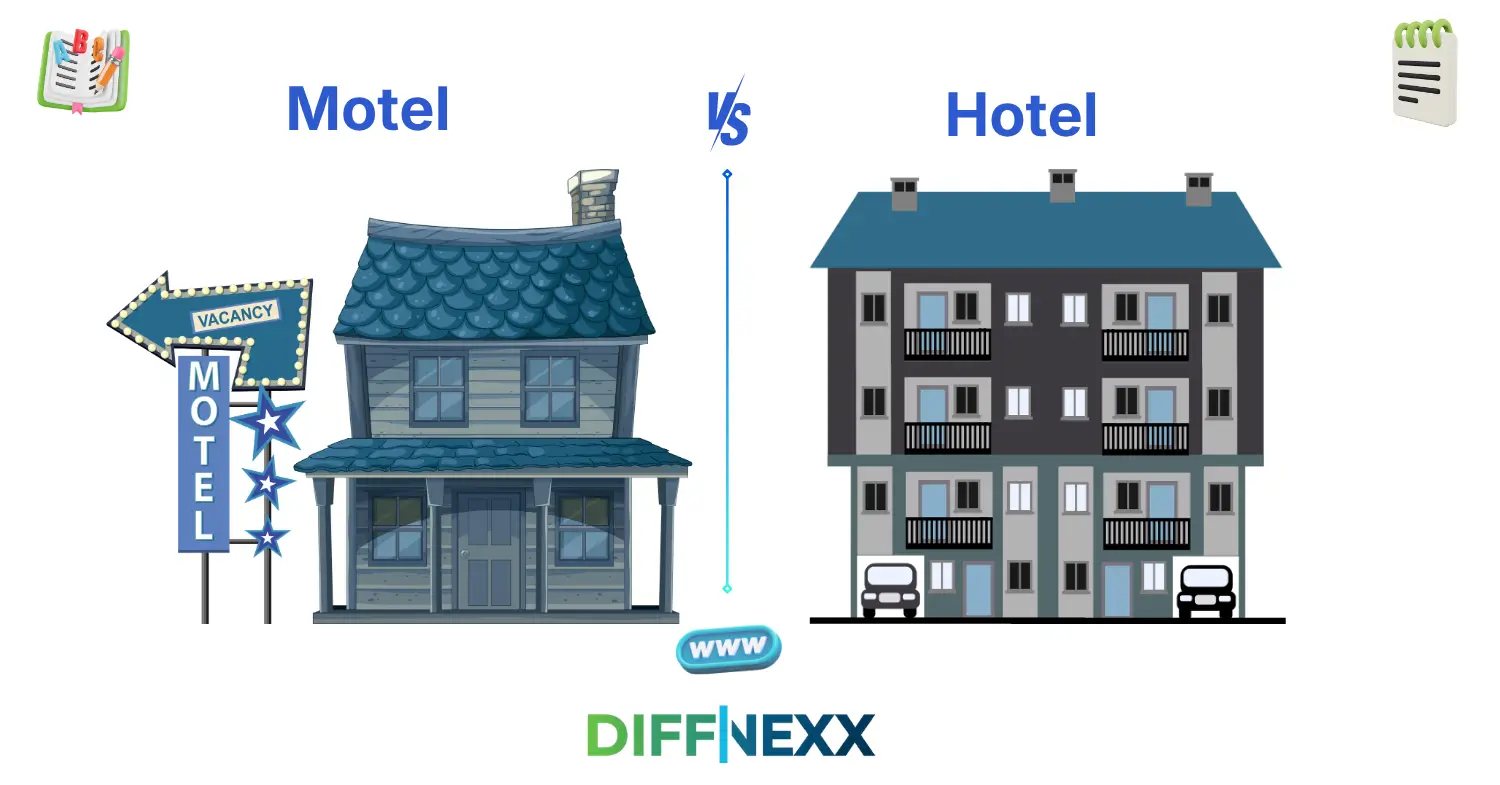
Difference between motel and hotel often becomes clear when you plan a trip. Imagine you are on a road journey and need a quick place to sleep, or you are visiting a city and want comfort and services. The choice can feel confusing.
The difference between motel and hotel mainly depends on location, services, and purpose. Motels are simple and built for short stays, while hotels offer more comfort and facilities.
Understanding the difference between motel and hotel helps travelers make better choices. It also saves time, money, and effort when booking a place.
Let’s break down the differences in a simple and clear way.
Key Difference Between the Both
The main difference is:
- Motels are designed for short stays and easy road access.
- Hotels offer more services, comfort, and longer stays.
In short, motels are basic and convenient, while hotels are more complete and comfortable.
Importance – Why Their Difference Matters
Knowing this difference is important for travelers and learners.
For students, it improves vocabulary and real-world knowledge. It also helps in exams and daily communication.
For travelers and professionals, choosing the right option saves money and improves comfort.
In society, understanding these terms helps people communicate clearly when booking or discussing travel plans.
🔊 Pronunciation Section
Motel
US: /moʊˈtɛl/
UK: /məʊˈtel/
Hotel
US: /hoʊˈtɛl/
UK: /həʊˈtel/
Now that you know how to say them, let’s understand their meanings.
📚 Core Definitions
Motel
A Motel is a simple place to stay, usually located near highways. It is designed for short stays and easy parking.
Example: A traveler stops at a motel during a long road trip.
Hotel
A Hotel is a place that offers rooms along with services like food, cleaning, and security. It is often found in cities or tourist areas.
Example: A family books a hotel for a vacation.
📚 10 Clear Differences Between Motel and Hotel
1. Location
Motels are usually near highways.
Hotels are located in cities or tourist areas.
- Example for Motel: Near a roadside.
- Example for Hotel: In a city center.
2. Purpose
Motels are for short stays.
Hotels are for short or long stays.
- Example for Motel: Overnight stop.
- Example for Hotel: Vacation stay.
3. Services
Motels offer limited services.
Hotels offer many services.
- Example for Motel: Basic room only.
- Example for Hotel: Room service, meals.
4. Price
Motels are cheaper.
Hotels are usually more expensive.
- Example for Motel: Budget-friendly.
- Example for Hotel: Higher cost.
5. Room Access
Motels have doors opening outside.
Hotels have indoor hallways.
- Example for Motel: Direct parking access.
- Example for Hotel: Inside corridors.
6. Size
Motels are smaller.
Hotels are larger buildings.
- Example for Motel: Few rooms.
- Example for Hotel: Many floors.
7. Facilities
Motels have basic facilities.
Hotels have advanced facilities.
- Example for Motel: Bed and bathroom.
- Example for Hotel: Gym, pool, restaurant.
8. Security
Motels have less security.
Hotels have better security systems.
- Example for Motel: Open access.
- Example for Hotel: Controlled entry.
9. Comfort Level
Motels offer simple comfort.
Hotels offer luxury and comfort.
- Example for Motel: Basic stay.
- Example for Hotel: Comfortable experience.
10. Target Audience
Motels serve travelers on the road.
Hotels serve tourists and business travelers.
- Example for Motel: Drivers.
- Example for Hotel: Families, professionals.
🎯 Why Knowing the Difference Matters
Students need this knowledge to improve vocabulary and real-life understanding. It helps them use the right word in the right context.
Travelers must know the difference to choose the best option. It helps them match their needs with their budget.
Clear understanding avoids confusion and improves communication when booking rooms.
Real-world Consequences of Confusion
Choosing the wrong option can lead to discomfort or extra cost. It may also affect travel experience.
🧠 Why People Get Confused
Similar Sound
“Motel” and “hotel” sound very similar.
Overlapping Use
Both provide accommodation.
Context-Based Usage
People sometimes use the terms loosely.
Informal Speech
Casual conversations often mix them up.
🎭 Connotation & Emotional Tone
Connotation = the emotional meaning associated with a word.
Motel
- Neutral: Simple, practical
- Negative: Basic or low comfort
- Example: “We stayed at a small motel.”
Hotel
- Positive: Comfort, service, luxury
- Neutral: Standard accommodation
- Example: “The hotel was very comfortable.”
🗣 Usage in Metaphors, Similes & Idioms
These words are rarely used in idioms but appear in comparisons.
- “Like a cheap motel” (means basic or simple)
- “Hotel-level service” (means high quality)
Examples:
- “The room felt like a motel very basic.”
- “They offered hotel-level service.”
📊 Comparison Table
| Feature | Motel | Hotel |
|---|---|---|
| Meaning | Simple roadside lodging | Full-service accommodation |
| Tone | Neutral/basic | Positive/comfortable |
| Usage | Short stays | Short or long stays |
| Context | Highways | Cities, tourist areas |
| Formality | Informal/neutral | Neutral/formal |
⚖️ Which Is Better in What Situation?
When to Use Motel
Choose a motel when you need a quick, low-cost stay. It is perfect for road trips or short breaks.
When to Use Hotel
Choose a hotel when you want comfort, services, and a better experience. It suits vacations and business trips.
Situational Clarity
Pick based on your needs budget or comfort.
Contextual Correctness
Use the right word to describe your stay clearly and accurately.
📖 Literary or Cultural References
- Book: “Hotel” (Fiction, Arthur Hailey, 1965)
Focuses on hotel operations and life.
❓ FAQs
1. What is the main difference between motel and hotel?
Motels are simple and designed for short stays, while hotels offer more services and comfort.
2. Are motels cheaper than hotels?
Yes, motels are usually more affordable because they offer fewer services.
3. Do motels provide food services?
Most motels do not offer full food services, while hotels often do.
4. Can families stay in motels?
Yes, but hotels are usually more comfortable for families.
5. Which is safer, motel or hotel?
Hotels generally offer better security than motels.
🏁 Conclusion
The difference between motel and hotel is simple but important. Motels are basic, affordable, and designed for quick stays, while hotels provide comfort, services, and a better overall experience.
Understanding this difference helps you make smarter travel decisions. It also improves your communication when booking or discussing accommodation.
By choosing the right option, you can enjoy your trip more and avoid unnecessary problems. Keep learning these everyday differences to become a more confident and informed traveler.

Aamer Shahzad is the founder of Distinly.com, a fast-growing educational platform focused on high-intent “difference between” topics. With over 8 years of experience in English language education and analytical writing, I specialize in breaking down complex “difference between” topics into clear, structured, and easy-to-understand explanations. Distinly.com is your go-to resource for enhancing English skills and writing with confidence.
I specializes in building search-optimized, research-driven comparison content designed for clarity, authority, and long-term digital asset value.