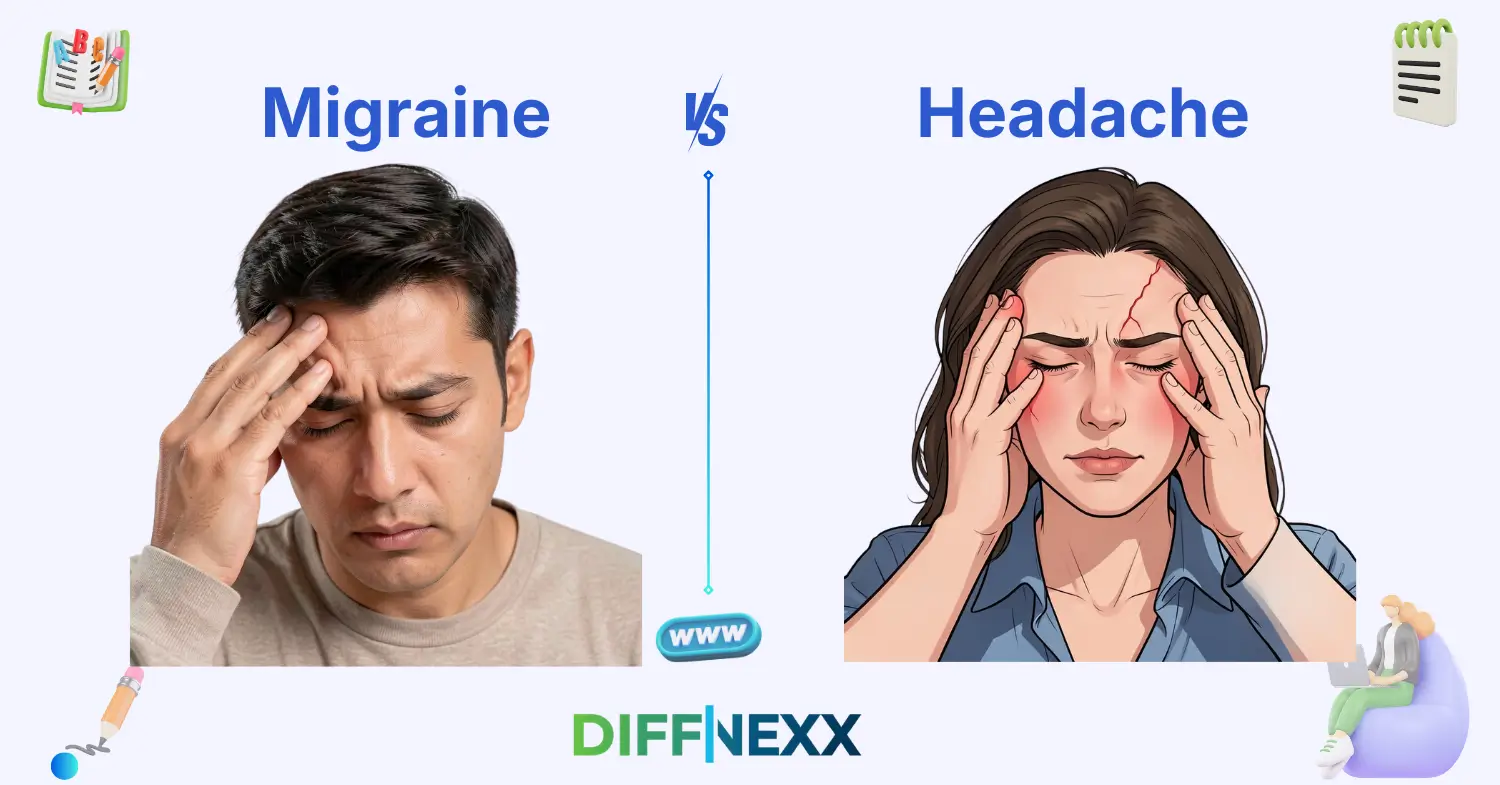
Imagine you are sitting at your desk, finishing a long report. Suddenly, a dull pressure starts to squeeze your temples. You rub your forehead, take a sip of water, and keep working. Now, imagine a different scenario: the light from your monitor feels like a physical punch to the eyes. You feel nauseous, and a throbbing pulse takes over half of your head. You have to lie down in a pitch-black room immediately.
The difference between migraine and headache is often misunderstood by those who haven’t experienced both. While many people use these terms interchangeably, they describe very different biological events. A headache is a symptom of pain in the head, but a migraine is a complex neurological condition that involves much more than just a “bad headache.”
Knowing the difference between migraine and headache can change how you treat your pain. Using a standard painkiller for a migraine might not work, while over-treating a simple headache can lead to other health issues.
Understanding the difference between migraine and headache helps you communicate better with your doctor and find the right path to feeling better. 🤒
In this guide, we will explore these two terms from a linguistic and medical perspective to help you use them correctly in daily life.
Key difference between the both
The most significant difference between migraine and headache lies in the scope of symptoms. A headache is limited to physical pain or pressure in the head or upper neck. A migraine, however, is a systemic event that often includes sensitivity to light, sound, and smell, along with nausea and visual disturbances called “auras.”
Importance of the difference for learners and experts
For language learners, understanding this distinction is crucial for social accuracy. If you tell your boss you have a “headache,” they expect you to work through it. If you say you have a “migraine,” it implies a need for medical leave and a dark environment. Using the wrong word can lead to social friction or a lack of empathy from others.
For experts and healthcare professionals, the importance is even higher. Misidentifying a migraine as a simple headache can lead to chronic disability. In society, recognizing these differences reduces the “stigma” associated with migraines. It helps people realize that a migraine patient isn’t just “being dramatic”—they are battling a neurological episode. 🧠
Pronunciation Section
Migraine
US: /ˈmaɪˌɡreɪn/
UK: /ˈmiːɡreɪn/
Headache
US: /ˈhedˌeɪk/
UK: /ˈhedˌeɪk/
Now that we can say these words properly, let’s define exactly what they represent in our vocabulary.
Core Definitions
Headache
A headache is a general term for any pain occurring in the region of the head or upper neck. It usually results from tension, stress, or sinus issues. The emotional tone is typically one of annoyance or mild discomfort.
- Example: “I have a slight headache from staring at my phone for too long.”
Migraine
A migraine is a recurring neurological disorder characterized by intense, throbbing pain, usually on one side of the head. It often carries an emotional tone of exhaustion, fear, or total incapacitation.
- Example: “My migraine is so bad that even the sound of the clock ticking is painful.”
10 Clear Differences Between Migraine and Headache
1. Emotional Intensity
Headaches usually feel like a nagging distraction or a minor irritation. Migraines often cause a sense of “impending doom” or deep emotional distress because the pain is so overwhelming.
- Example for Headache: Feeling a bit grumpy because your forehead feels tight.
- Example for Migraine: Feeling tearful and desperate for the pain to end.
2. Duration
A standard headache might last from 30 minutes to a few hours. A migraine is much longer, typically lasting between 4 and 72 hours if left untreated.
- Example for Headache: The pain disappears after a short afternoon nap.
- Example for Migraine: The pain lingers for three days, leaving you drained.
3. Focus and Location
Headache pain often feels like a tight band around the entire head or pressure behind both eyes. Migraines usually focus on just one side of the head (unilateral pain).
- Example for Headache: Feeling pressure across your entire brow.
- Example for Migraine: Feeling a stabbing sensation strictly behind your left eye.
4. Severity of Pain
Headaches are generally mild to moderate and allow you to continue your day. Migraines are moderate to severe and frequently make daily tasks impossible.
- Example for Headache: You can still go to the grocery store despite the pain.
- Example for Migraine: You cannot get out of bed or even look at your phone.
5. Rationality and Triggers
Headaches often have clear, logical causes like dehydration or loud noises. Migraines can be triggered by “irrational” things like weather changes, hormonal shifts, or specific aged cheeses.
- Example for Headache: Getting a pain in your head because you skipped lunch.
- Example for Migraine: A sudden storm front triggering a massive attack.
6. Formality in Language
In English, “headache” is often used formally and informally to mean “a problem.” “Migraine” is almost always used in a literal, medical context.
- Example for Headache: “Organizing this wedding is such a headache!”
- Example for Migraine: “I need to see a neurologist for my chronic migraines.”
7. Context of Use
We use “headache” for general discomfort. We use “migraine” when the pain involves sensory issues like “seeing stars” or feeling dizzy.
- Example for Headache: Complaining about the noise in a busy restaurant.
- Example for Migraine: Describing the flickering lights that preceded the pain.
8. Psychological Impact
Headaches are seen as a temporary “glitch” in your day. Migraines create a “fear of the next one,” leading to anxiety and lifestyle changes to avoid triggers.
- Example for Headache: Forgetting about the pain as soon as it stops.
- Example for Migraine: Avoiding parties because you are afraid the lights will start an attack.
9. Tone of Expression
When people speak of a headache, the tone is usually casual. When discussing a migraine, the tone is serious, heavy, and focused on recovery.
- Example for Headache: “Oh, I’ve got a bit of a head today.”
- Example for Migraine: “I’ve been in a dark room for the last 24 hours.”
10. Expression Style
Headaches are described as “dull,” “tight,” or “achy.” Migraines are described with active, aggressive verbs like “throbbing,” “pounding,” or “pulsing.”
- Example for Headache: “My head feels heavy and tight.”
- Example for Migraine: “It feels like a hammer is pulsing inside my skull.”
Why Knowing the Difference Matters
Students must know the difference between migraine and headache to describe their health accurately. If a student tells a teacher they have a headache, they might be told to drink water. If they have a migraine, they need to be in a quiet, dark nurse’s office. Clear language ensures they get the specific help they need.
Professionals must distinguish these terms to manage workplace expectations. A manager who treats a migraine like a simple headache may be seen as insensitive. Conversely, an employee who uses “migraine” to describe a tiny ache may lose credibility. Accurate terms help maintain professional trust and office productivity.
Socially, the consequences of confusion can hurt relationships. If you minimize a friend’s migraine by saying, “I have headaches too, I just take an aspirin,” you are dismissing their neurological condition. Understanding the difference fosters empathy and better support systems for those with chronic pain.
Real-world consequences of confusion
Using the wrong word can lead to dangerous medical self-treatment. Someone with a “thunderclap headache” might think it’s just a migraine and stay home, when it could actually be a medical emergency. Always use precise language when talking to emergency responders. 🚑
Why People Get Confused
Semantic Overlap
Because both involve pain in the head, the brain groups them together. We often use “headache” as a “bucket term” for any pain above the neck, which makes the specific “migraine” label feel redundant to some.
Influence of Informal Speech
People often exaggerate. Someone might say, “This traffic is giving me a migraine,” even if they just feel slightly stressed. This casual use devalues the medical term and confuses learners about the actual severity.
Context-based Usage
In many cultures, any severe pain is called a “bad headache.” Without the specific vocabulary for “nausea” or “aura,” people lack the tools to differentiate between the two.
Connotation & Emotional Tone
(Connotation = the emotional meaning attached to a word.)
For Headache:
- Neutral/Negative: Generally seen as a common, manageable part of life.
- Example: “I’ll be fine; it’s just a tension headache.”
For Migraine:
- Strongly Negative: Carries a weight of disability, intensity, and suffering.
- Example: “The word ‘migraine’ makes me think of ice packs and silence.”
Usage in Metaphors, Similes & Idioms
- “To be a headache”: To be a person or situation that causes worry or trouble.
- Sentence: “That broken printer is a real headache for the office.”
- “Like a migraine in my soul”: A rare poetic simile used to describe deep, throbbing emotional pain.
- Sentence: “The grief felt like a migraine in my soul, throbbing and inescapable.”
Comparison Table
| Feature | Headache | Migraine |
| Meaning | Pain in the head/neck | Neurological disorder |
| Tone | Annoyed / Casual | Serious / Exhausted |
| Usage | General or Metaphorical | Specific Medical Context |
| Context | Stress, Tension, Cold | Triggers, Hormones, Light |
| Formality | Low to Medium | High (Medical) |
Which Is Better in What Situation?
When to use Headache
Use “headache” for common pains caused by your environment. If you are describing a difficult task or a person who is hard to deal with, “headache” is the correct metaphorical choice. It is safe for most casual conversations.
When to use Migraine
Use “migraine” only when the pain is throbbing, localized to one side, or accompanied by sensory issues. Use it when you need to signal that you are physically unable to function.
Situational Clarity
In a medical setting, always be specific. Do not say “headache” if you are feeling nauseous. The difference between migraine and headache determines which medication a doctor prescribes.
Contextual Correctness
If you are writing a formal report on public health, use “migraine” to refer to the specific condition and “cephalgia” (the medical term for headache) for general head pain.
Literary or Cultural References
- “A Migraine” (Poem, Oliver Sacks, 1992): A famous neurologist describes the visual “auras” of a migraine.
- The Year of Magical Thinking (Book, Joan Didion, 2005): Mentions the debilitating nature of chronic migraines.
- House M.D. (TV Show, USA, 2004–2012): Often features the difference between migraine and headache as a plot point for diagnosis.
FAQs
1. Can a headache turn into a migraine?
No, a headache and a migraine are different processes. However, a tension headache can act as a “trigger” for someone who is already prone to migraines, causing a full attack to start.
2. What is a “migraine aura”?
An aura is a sensory disturbance that happens before the pain starts. This might include seeing flashing lights, zigzag patterns, or feeling a tingling sensation in your hands.
3. Is “migraine” just a fancy word for a bad headache?
No. A “bad headache” is just more intense pain. A migraine includes other systems of the body, like the digestive system (nausea) and the nervous system (light sensitivity).
4. Why is light so painful during a migraine?
This is called “photophobia.” During a migraine, the brain’s processing of sensory input becomes hyper-sensitive, making normal light feel like it is burning or piercing.
5. Are migraines hereditary?
Yes, migraines often run in families. If one or both of your parents suffer from migraines, you have a much higher chance of developing them than someone with no family history.
Conclusion
The difference between migraine and headache is much more than just the level of pain. While a headache is a common nuisance that most people can manage with a glass of water or a quick rest, a migraine is a serious neurological event.
It demands respect, specific treatment, and often a total withdrawal from the world.
By using these terms correctly, you show respect for those living with chronic conditions. You also ensure that you receive the right care when you are the one in pain.
Language is a tool for clarity; using “headache” and “migraine” accurately helps everyone understand the severity of the situation. Stay hydrated, watch your triggers, and always choose the right word for the right pain! ✨

Aamer Shahzad is the founder of Distinly.com, a fast-growing educational platform focused on high-intent “difference between” topics. With over 8 years of experience in English language education and analytical writing, I specialize in breaking down complex “difference between” topics into clear, structured, and easy-to-understand explanations. Distinly.com is your go-to resource for enhancing English skills and writing with confidence.
I specializes in building search-optimized, research-driven comparison content designed for clarity, authority, and long-term digital asset value.