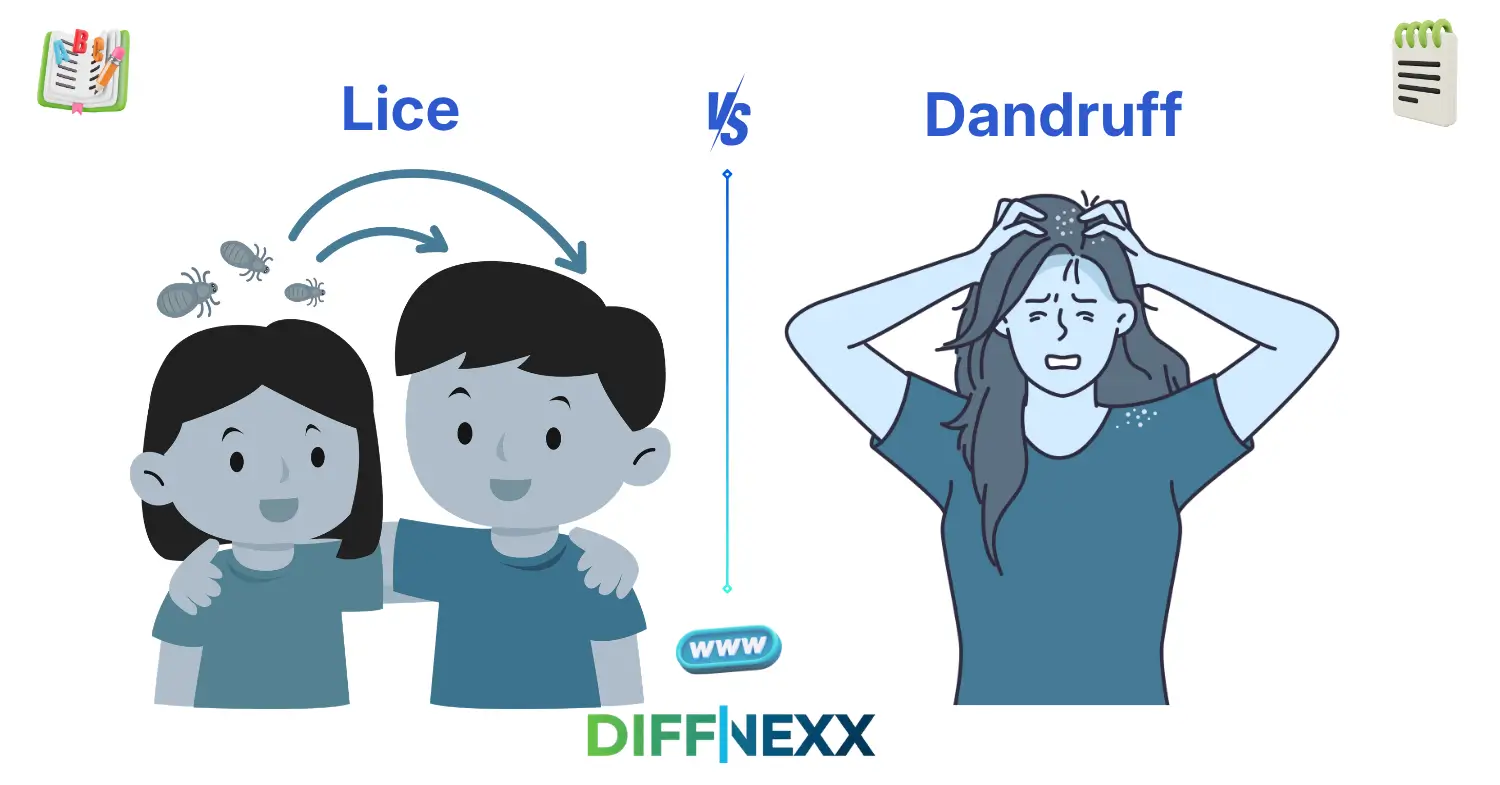
The difference between lice and dandruff is something many people wonder about, especially when they notice itching on the scalp. Imagine scratching your head and seeing small white flakes. Are they just dandruff, or could it be lice?
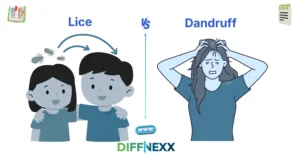
The difference between lice and dandruff is important because both affect the scalp but have very different causes. Lice are tiny insects that live in the hair, while dandruff is a common skin condition that causes flakes.
Many people confuse them because they look similar at first glance. However, understanding the difference between lice and dandruff helps you treat the problem correctly and avoid stress.
Let’s break it down in a simple and clear way.
Key Difference Between the Both
The main difference is parasite vs skin condition.
- Lice are tiny insects that live on the scalp.
- Dandruff is dead skin flakes caused by dryness or irritation.
Lice are contagious. Dandruff is not.
Importance – Why Knowing the Difference Matters 🌍
Knowing this difference helps learners understand basic health and hygiene. It also reduces fear and confusion.
For healthcare professionals, correct identification ensures proper treatment. Treating dandruff like lice (or vice versa) can waste time and effort.
In society, this knowledge reduces stigma. People often panic about lice, so clear understanding helps handle the situation calmly.
🔊 Pronunciation Section
Lice
US: /laɪs/
UK: /laɪs/
Dandruff
US: /ˈdændrʌf/
UK: /ˈdændrʌf/
Now that you can pronounce both words, let’s define them clearly.
📚 Core Definitions
Lice
Lice are tiny parasitic insects that live on the scalp and feed on human blood. They cause itching and spread easily through close contact. The tone is often negative and alarming.
Example: The child had lice after sharing a comb.
Dandruff
Dandruff is a common scalp condition that causes white flakes of dead skin. It may result from dryness or irritation. The tone is mild and non-serious.
Example: He noticed dandruff on his shoulders.
📚 10 Clear Differences Between Lice and Dandruff
1. Nature
Lice are living insects. Dandruff is dead skin.
- Example for lice: Lice move in the hair.
- Example for dandruff: Dandruff flakes fall easily.
2. Cause
Lice come from contact with infected people. Dandruff comes from scalp conditions.
- Example for lice: Spread by sharing hats.
- Example for dandruff: Caused by dry skin.
3. Movement
Lice can crawl. Dandruff cannot move.
- Example for lice: You may see lice moving.
- Example for dandruff: Flakes stay still.
4. Contagiousness
Lice are contagious. Dandruff is not.
- Example for lice: Lice spread between children.
- Example for dandruff: Dandruff does not spread.
5. Appearance
Lice eggs stick to hair. Dandruff flakes fall off easily.
- Example for lice: Eggs stay attached to hair.
- Example for dandruff: Flakes fall on clothes.
6. Itching Level
Lice cause intense itching. Dandruff causes mild itching.
- Example for lice: Severe scalp itching.
- Example for dandruff: Light irritation.
7. Treatment
Lice need special medicated treatment. Dandruff needs anti-dandruff shampoo.
- Example for lice: Use lice treatment products.
- Example for dandruff: Use dandruff shampoo.
8. Duration
Lice stay until treated. Dandruff may come and go.
- Example for lice: Lice remain without treatment.
- Example for dandruff: Dandruff may improve over time.
9. Psychological Impact
Lice cause stress and embarrassment. Dandruff causes mild concern.
- Example for lice: People feel anxious.
- Example for dandruff: People feel slightly uncomfortable.
10. Social Perception
Lice are seen as a hygiene issue. Dandruff is seen as common.
- Example for lice: People worry about spreading.
- Example for dandruff: People treat it casually.
🎯 Why Knowing the Difference Matters
Students need this knowledge to understand basic health issues. It helps them respond correctly and avoid panic.
Professionals, especially in healthcare and schools, must identify the problem accurately. This ensures proper care and prevention.
Clear understanding improves hygiene awareness and reduces unnecessary fear.
Real-world Consequences of Confusion
If someone mistakes lice for dandruff, they may not treat it properly. This can lead to spreading and discomfort.
🧠 Why People Get Confused
Similar Appearance
Both look like small white particles on the scalp.
Context-Based Usage
People talk about scalp problems in general, without clear terms.
Lack of Awareness
Many people do not know the scientific difference.
Informal Speech
People often use simple words like “flakes” without clarity.
🎭 Connotation & Emotional Tone
Connotation = the emotional meaning associated with a word.
Lice
- Positive: None
- Neutral: Scientific term
- Negative: Dirty, uncomfortable (Lice infestation)
Dandruff
- Positive: None
- Neutral: Common condition
- Negative: Slight embarrassment (Visible flakes)
🗣 Usage in Metaphors, Similes & Idioms
These words are rarely used in idioms, but sometimes appear in speech:
- “Spreading like lice” → spreading quickly
- “Flaky like dandruff” → unreliable or inconsistent
These are informal and not very common.
📊 Comparison Table
| Feature | Lice | Dandruff |
|---|---|---|
| Meaning | Insects | Dead skin flakes |
| Tone | Serious | Mild |
| Usage | Medical | Everyday |
| Context | Infection | Skin condition |
| Formality | Clinical | General |
⚖️ Which Is Better in What Situation?
When to Use Lice
Use “lice” when referring to scalp insects or infections. It is used in medical or hygiene contexts.
When to Use Dandruff
Use “dandruff” when talking about dry or flaky scalp conditions. It fits everyday conversation.
Situational Clarity
Use lice for contagious problems. Use dandruff for non-contagious issues.
Contextual Correctness
Correct usage helps in treatment and communication.
📖 Literary or Cultural References
- Book: The Jungle Book (Adventure, Rudyard Kipling, 1894) – mentions parasites in nature
- Movie: Contagion (USA, 2011) – shows spread of infections
These highlight health awareness and hygiene themes.
❓ FAQs
1. How can I tell if I have lice or dandruff?
Check if the particles move or stick to hair. Lice move and eggs stick tightly. Dandruff flakes fall easily.
2. Can dandruff turn into lice?
No, dandruff cannot turn into lice. They are completely different conditions.
3. Are lice dangerous?
Lice are not dangerous but cause itching and discomfort. They need treatment.
4. Is dandruff a serious problem?
No, dandruff is usually mild and manageable with proper care.
5. Can both happen at the same time?
Yes, a person can have both lice and dandruff. They need separate treatments.
🏁 Conclusion
The difference between lice and dandruff is clear once you understand their nature. Lice are tiny insects that spread easily and require treatment, while dandruff is a harmless skin condition that causes flakes.
Knowing this difference helps you take the right action and avoid unnecessary stress. It also improves your understanding of personal hygiene and health.
Next time you notice scalp changes, you will know what to look for. Stay informed, stay calm, and take proper care of your health.

Ezra Hale is a thoughtful contributor to Distinly.com, where he explores philosophical ideas and the subtle differences behind everyday concepts. His writing blends logic, language, and human insight to clarify complex distinctions. Ezra encourages readers to think deeper, question assumptions, and appreciate the meaning behind words and ideas in modern discourse.