Difference between frog and toad often confuses people when they see small jumping animals near water or in gardens. You might notice one looks smooth and shiny, while the other looks rough and dry. But are they really different?
The difference between frog and toad is not just about looks. It also includes their skin, habitat, movement, and behavior. Both belong to the same group of animals, but they have clear differences.
Many learners mix them up because they are similar in size and shape. That’s why understanding the difference between frog and toad helps you identify them correctly and speak with confidence.
Let’s explore their differences in a simple and clear way.
Key Difference Between the Both
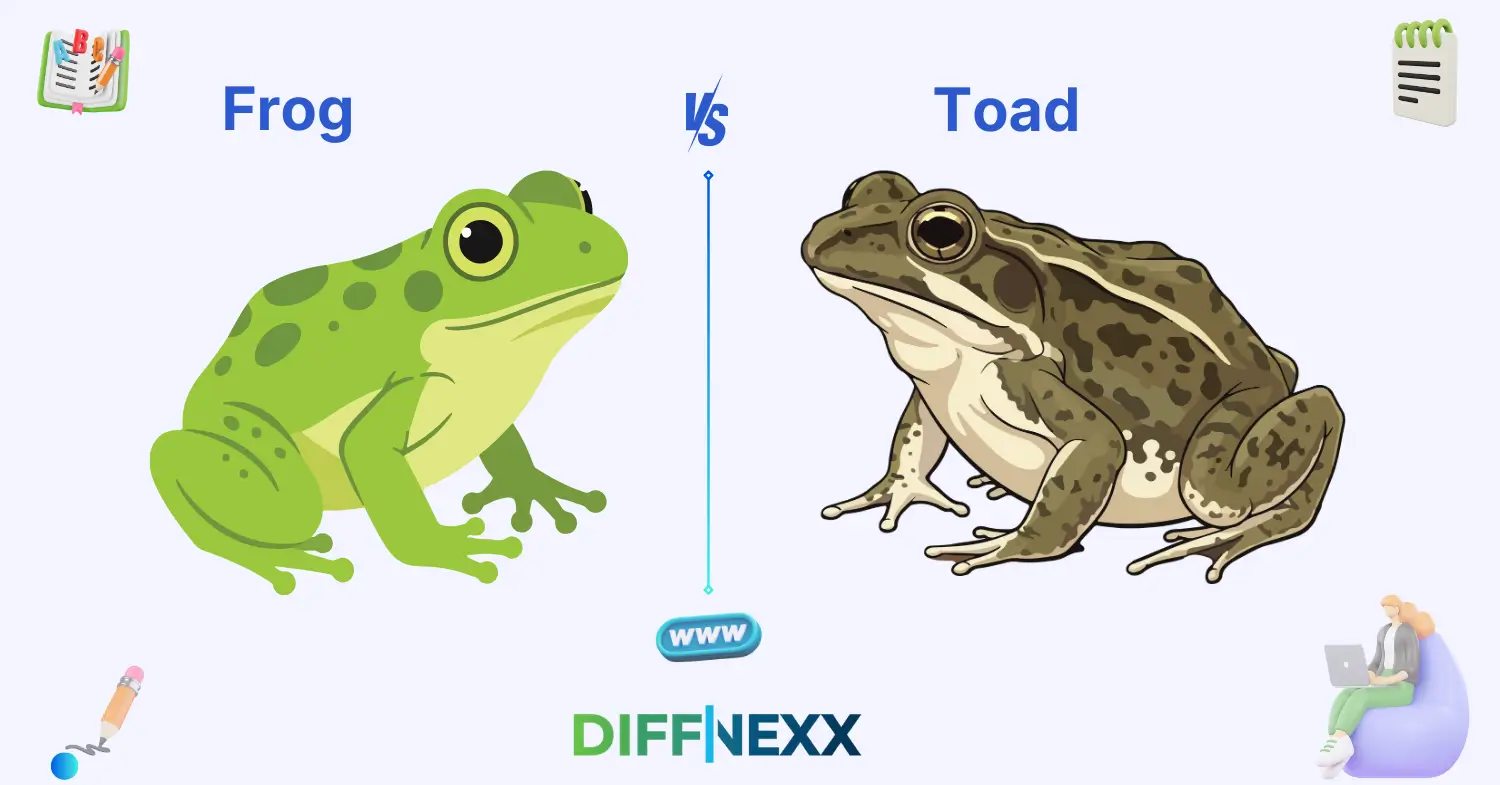
The main difference between frog and toad lies in their skin and habitat.
- Frog = Smooth, moist skin; lives near water
- Toad = Dry, rough skin; lives more on land
Frogs stay close to water. Toads can survive farther from it.
Importance – Why Is Their Difference Necessary to Know
Knowing the difference between frog and toad helps students understand basic biology and animal classification.
For experts like environmentalists and researchers, correct identification is important for studying ecosystems and protecting species.
In society, people often encounter these animals in daily life. Understanding them improves awareness and respect for nature.
🔊 Pronunciation Section
Frog
US: /frɔːɡ/
UK: /frɒɡ/
Toad
US: /toʊd/
UK: /təʊd/
Now that you know how to say them, let’s define each one clearly.
📚 Core Definitions
Frog
A Frog is a small amphibian with smooth, moist skin and long legs for jumping. It usually lives near water. The tone feels lively and active.
Example:
The frog jumped into the pond quickly.
Toad
A Toad is a type of amphibian with dry, rough skin and shorter legs. It often lives on land and moves slowly. The tone feels calm and steady.
Example:
The toad sat quietly in the garden.
📚 10 Clear Differences Between Frog and Toad
1. Emotional Intensity
Frogs feel energetic and active. Toads feel calm and slow.
- Example for Frog: The frog jumps quickly and often.
- Example for Toad: The toad moves slowly and rests.
2. Duration (Movement Style)
Frogs move in quick bursts. Toads move slowly over time.
- Example for Frog: It leaps fast into water.
- Example for Toad: It walks or makes short hops.
3. Focus
Frogs focus on water-based life. Toads focus on land-based living.
- Example for Frog: Found near ponds and lakes.
- Example for Toad: Found in gardens or dry areas.
4. Severity (Body Structure)
Frogs have slim bodies. Toads have thicker bodies.
- Example for Frog: Long and lean body shape.
- Example for Toad: Short and wide body shape.
5. Rationality (Adaptation)
Frogs need moisture to survive. Toads adapt better to dry conditions.
- Example for Frog: Needs water to keep skin moist.
- Example for Toad: Can live away from water.
6. Formality (Appearance Style)
Frogs look smooth and shiny. Toads look rough and bumpy.
- Example for Frog: Glossy green skin.
- Example for Toad: Dry, warty skin.
7. Context of Use
Frogs are often seen in wetlands. Toads appear in backyards and forests.
- Example for Frog: Lives in ponds.
- Example for Toad: Lives in soil or under leaves.
8. Psychological Impact
Frogs often appear friendly. Toads may look less appealing to some people.
- Example for Frog: Seen as cute in cartoons.
- Example for Toad: Sometimes viewed as unattractive.
9. Tone
Frogs have a bright and lively tone. Toads have a dull and earthy tone.
- Example for Frog: Bright green color.
- Example for Toad: Brown or gray color.
10. Expression Style (Egg Laying)
Frogs lay eggs in clusters. Toads lay eggs in long chains.
- Example for Frog: Eggs float in groups.
- Example for Toad: Eggs form long strings.
🎯 Why Knowing the Difference Matters
Students must understand the difference between frog and toad to learn science concepts clearly and avoid confusion.
Professionals like wildlife experts need this knowledge for accurate research and environmental protection.
In daily life, recognizing these animals helps people interact safely and respectfully with nature.
Real-world consequences of confusion
If people confuse them, they may misidentify species or misunderstand their habitats. This can affect learning and environmental awareness.
🧠 Why People Get Confused
Similar Spelling or Pronunciation
The words are short and often used together, causing confusion.
Semantic Overlap
Both are amphibians and look similar in shape.
Context-Based Usage
They appear in the same environments like gardens or ponds.
Influence of Informal Speech
People often use “frog” for both animals casually.
🎭 Connotation & Emotional Tone
Connotation = the emotional meaning associated with a word.
Frog
- Positive: Fresh, lively, playful
- Neutral: Common amphibian
- Example: The frog symbolizes life near water.
Toad
- Negative: Rough, dull appearance
- Neutral: Land-dwelling amphibian
- Example: The toad blends into the soil.
🗣 Usage in Metaphors, Similes & Idioms
- “Like a frog in a well” (limited view of the world)
- “Toad in the hole” (a British dish name)
Example sentences:
- He felt like a frog in a well, unaware of the world.
- The dish is called toad in the hole.
📊 Comparison Table
| Feature | Frog | Toad |
|---|---|---|
| Meaning | Smooth amphibian | Rough amphibian |
| Tone | Lively | Calm |
| Usage | Water-based | Land-based |
| Context | Ponds | Gardens |
| Formality | Bright look | Dull look |
⚖️ Which Is Better in What Situation?
When to Use Frog
Use “frog” when talking about animals near water or describing something lively and active.
When to Use Toad
Use “toad” when referring to land-dwelling amphibians or something calm and steady.
Situational Clarity
Choose based on habitat and appearance. Smooth and wet = frog. Dry and rough = toad.
Contextual Correctness
In science or conversation, use the correct term to avoid confusion and improve accuracy.
📖 Literary or Cultural References
- Book: The Frog Prince (Fairy Tale, Brothers Grimm, 1812)
- Movie: The Princess and the Frog (USA, 2009)
❓ FAQs
1. Are frogs and toads the same?
No, they are different types of amphibians. They belong to the same group but have distinct features.
2. Can frogs live on land?
Frogs can live on land, but they need to stay close to water to keep their skin moist.
3. Are toads dangerous?
Most toads are not dangerous, but some can release toxins as a defense.
4. How can I quickly identify a frog?
Look for smooth, wet skin and long legs for jumping.
5. Why do toads have rough skin?
Their rough skin helps them survive in drier environments.
🏁 Conclusion
The difference between frog and toad becomes clear when you look at their skin, habitat, and behavior. Frogs are smooth, moist, and active near water. Toads are dry, rough, and more comfortable on land.
Understanding this difference helps you identify them easily and improves your knowledge of nature. It also makes your communication more accurate and confident.
Next time you see one of these creatures, take a closer look. With this knowledge, you will know exactly whether it is a frog or a toad 🐸.

Aamer Shahzad is the founder of Distinly.com, a fast-growing educational platform focused on high-intent “difference between” topics. With over 8 years of experience in English language education and analytical writing, I specialize in breaking down complex “difference between” topics into clear, structured, and easy-to-understand explanations. Distinly.com is your go-to resource for enhancing English skills and writing with confidence.
I specializes in building search-optimized, research-driven comparison content designed for clarity, authority, and long-term digital asset value.