Difference between ethnicity and race often appears when filling out forms, reading news, or talking about identity. You may see questions like “What is your race?” and “What is your ethnicity?” Many people feel confused because the words seem similar.
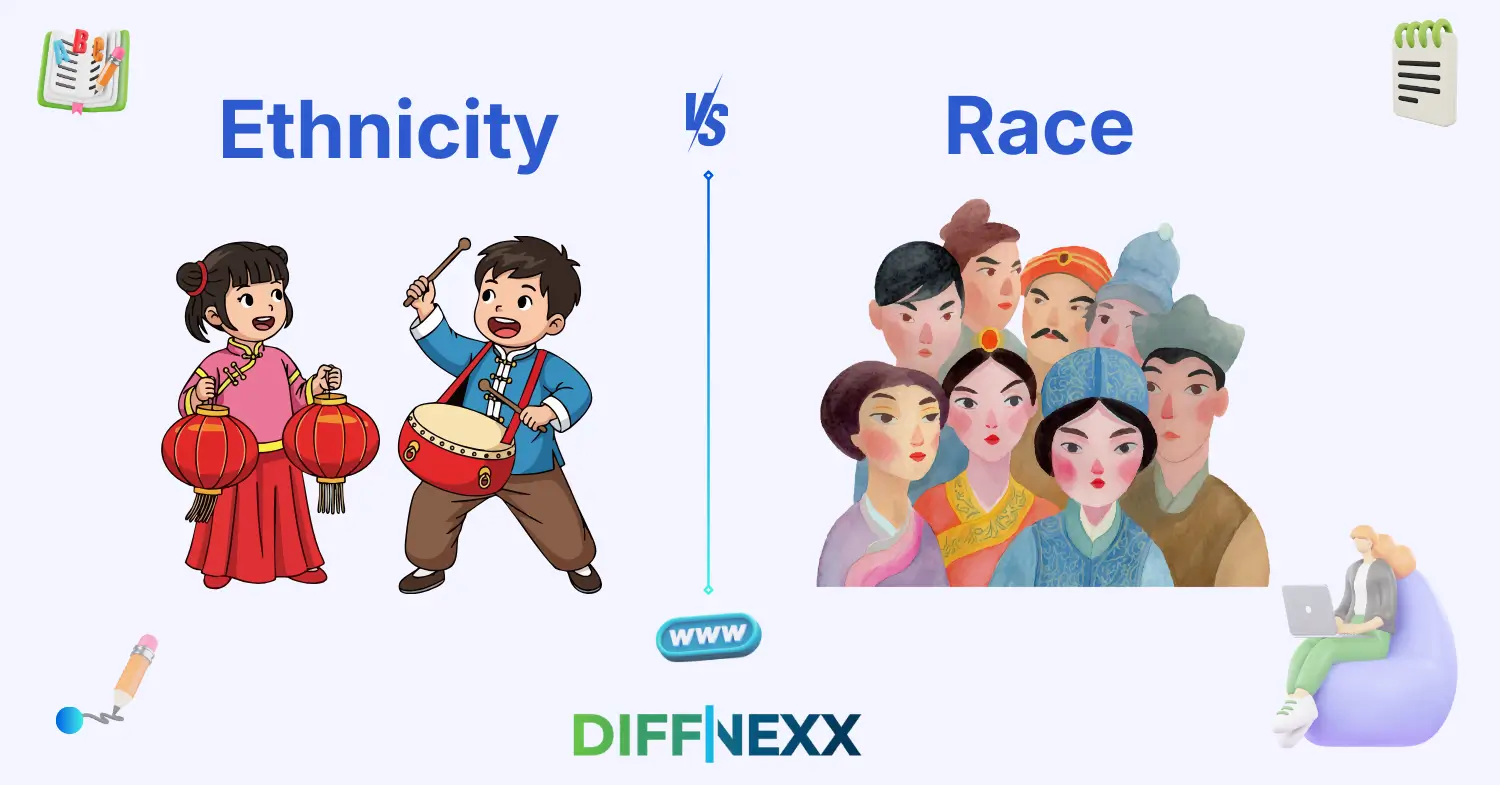
The difference between ethnicity and race is about how people are grouped and how identity is described. Race usually relates to physical traits, while ethnicity connects to culture, language, and traditions. Even though they are different, people sometimes use them as if they mean the same thing.
Understanding the difference between ethnicity and race helps students, teachers, and professionals speak clearly and respectfully. These words are important in history, sociology, and daily communication.
Before we study them deeply, let’s first look at the key difference.
🔑 Key Difference Between the Both
Race refers to physical features such as skin color, hair type, and facial traits.
Ethnicity refers to cultural background, language, nationality, and traditions.
Race is often based on appearance.
Ethnicity is based on culture and shared history.
Both describe human identity, but they focus on different aspects.
🌍 Why Is Their Difference Necessary to Know for the Learns and Experts in the Society
Students must know the difference because these words appear in history, social studies, and everyday English. Using the wrong word may change the meaning of a sentence.
Researchers, teachers, and writers need clear definitions. In fields like Sociology and Anthropology, race and ethnicity have different meanings, so accuracy is important.
In society, these terms relate to identity and respect. Knowing the correct word helps people speak politely and avoid misunderstanding in multicultural communities.
🔊 Pronunciation Section
Ethnicity
US (Ethnicity): /eθˈnɪsəti/
UK (Ethnicity): /eθˈnɪsəti/
Race
US (Race): /reɪs/
UK (Race): /reɪs/
Both words are common in academic and social discussions. Now let’s define them clearly before comparing.
📚 Core Definitions
🧬 Ethnicity
Ethnicity is a group identity based on culture, language, religion, or nationality.
It often connects to traditions and shared history. The tone of the word feels cultural and social.
Example: Someone may have Pakistani ethnicity but live in another country.
🧑 Race
Race is a category based on physical features such as skin color or facial shape.
It is often used in social classification. The tone can feel formal or sensitive in discussion.
Example: Forms may ask people to choose a race category.
📚 10 Clear Differences Between Ethnicity and Race
1️⃣ Basis of Classification
Ethnicity is based on culture and traditions.
Race is based on physical features.
- Example 1 for Ethnicity: He belongs to a Kurdish ethnicity.
- Example 2 for Race: She is identified as Asian race.
2️⃣ Cultural vs Physical Focus
Ethnicity focuses on language, religion, and customs.
Race focuses on appearance.
- Example 1 for Ethnicity: Spanish language shows ethnicity.
- Example 2 for Race: Skin color shows race.
3️⃣ Change Over Time
Ethnicity can change if culture changes.
Race usually stays the same.
- Example 1 for Ethnicity: A person may adopt a new culture.
- Example 2 for Race: Physical traits remain the same.
4️⃣ Emotional Sensitivity
Ethnicity often feels neutral or cultural.
Race can feel sensitive in conversation.
- Example 1 for Ethnicity: Talking about ethnicity feels safe.
- Example 2 for Race: Talking about race needs care.
5️⃣ Use in Academic Fields
Ethnicity appears in cultural studies.
Race appears in social classification studies.
- Example 1 for Ethnicity: Anthropology studies ethnicity.
- Example 2 for Race: Sociology studies race.
6️⃣ Formality in Language
Ethnicity sounds more formal in writing.
Race is common in forms and surveys.
- Example 1 for Ethnicity: The report mentions ethnicity.
- Example 2 for Race: The form asks for race.
7️⃣ Context of Use
Ethnicity is used when talking about heritage.
Race is used when talking about groups by appearance.
- Example 1 for Ethnicity: My ethnicity is Arab.
- Example 2 for Race: He belongs to a racial group.
8️⃣ Psychological Impact
Ethnicity may create pride in culture.
Race discussions may cause tension.
- Example 1 for Ethnicity: She feels proud of her ethnicity.
- Example 2 for Race: Race debates can be serious.
9️⃣ Tone in Conversation
Ethnicity sounds cultural and descriptive.
Race sounds official or political.
- Example 1 for Ethnicity: We share the same ethnicity.
- Example 2 for Race: Race statistics were published.
🔟 Expression Style
Ethnicity is used in detailed explanations.
Race is used in short classifications.
- Example 1 for Ethnicity: His ethnicity includes many traditions.
- Example 2 for Race: Race category was selected.
🎯 Why Knowing the Difference Matters
Students need this difference to understand history, culture, and social studies correctly. Many books use these words with specific meanings.
Professionals such as teachers, journalists, and researchers must use accurate language. Wrong usage may create confusion or offense.
In daily life, people talk about identity and diversity. Using the right word shows respect and understanding.
Real-world consequences of confusion
If someone mixes race and ethnicity, the meaning may become incorrect. In official forms or research, this mistake can give wrong information.
🧠 Why People Get Confused
Similar spelling or pronunciation
Both words appear together in the same topics, so learners think they are equal.
Semantic overlap
Both describe groups of people, which makes the meaning seem similar.
Context-based usage
Some countries use the terms differently.
Influence of informal speech
In daily talk, people often use race when they mean ethnicity.
🎭 Connotation & Emotional Tone
Connotation = the emotional meaning associated with a word.
Ethnicity
Positive: Cultural pride.
Example: She celebrates her ethnicity.
Negative: May feel complex.
Example: Ethnicity can be hard to define.
Neutral: Social term.
Race
Positive: Used for classification.
Example: Race data helps research.
Negative: Can feel sensitive.
Example: Race discussions need respect.
Neutral: Official term.
🗣 Usage in Metaphors, Similes & Idioms
Race in idioms:
- Human race = all people
Example: We all belong to the human race.
Ethnicity rarely appears in idioms because it is a formal word.
📊 Comparison Table
| Feature | Ethnicity | Race |
|---|---|---|
| Meaning | Cultural identity | Physical category |
| Tone | Cultural | Formal / sensitive |
| Usage | Heritage, culture | Forms, surveys |
| Context | Social discussion | Classification |
| Formality | Formal | Neutral / official |
⚖️ Which Is Better in What Situation?
When to use Ethnicity
Use ethnicity when talking about culture, language, or traditions. It fits discussions about heritage and identity.
When to use Race
Use race when talking about physical groups or official categories. Forms and research often use this word.
Situational clarity
In social conversations, ethnicity may sound more respectful.
Contextual correctness
In surveys or statistics, race may be required for classification.
📖 Literary or Cultural References
- Guns, Germs, and Steel (History, Jared Diamond, 1997) – Discusses human groups and culture.
- Crash (Film, USA, 2004) – Explores race and identity in society.
❓ FAQs
1. Are ethnicity and race the same?
No. Ethnicity relates to culture and traditions, while race relates to physical traits. They describe different parts of identity.
2. Can a person have one race but many ethnicities?
Yes. A person may belong to one racial group but have mixed cultural backgrounds.
3. Why do forms ask for both?
Forms collect different types of information. Race and ethnicity help researchers understand society better.
4. Which word is more respectful?
Ethnicity often sounds more respectful because it focuses on culture, not appearance.
5. Can ethnicity change?
Yes. People may adopt new culture or nationality, but race usually does not change.
🏁 Conclusion
The difference between ethnicity and race is important for clear communication. Race usually describes physical features, while ethnicity describes culture, language, and traditions. These words may look similar, but they focus on different parts of identity.
Students need to know this difference to understand social studies and history. Professionals need it to write and speak correctly. In daily life, using the right word shows respect for people’s backgrounds.
When you remember that race is about appearance and ethnicity is about culture, the meaning becomes clear. Keep learning these differences, and your English will become more accurate and confident.

Ezra Hale is a thoughtful contributor to Distinly.com, where he explores philosophical ideas and the subtle differences behind everyday concepts. His writing blends logic, language, and human insight to clarify complex distinctions. Ezra encourages readers to think deeper, question assumptions, and appreciate the meaning behind words and ideas in modern discourse.