Difference between espresso and coffee often comes up when you stand in a café and look at the menu. You see words like espresso, latte, and regular coffee—and it feels confusing.
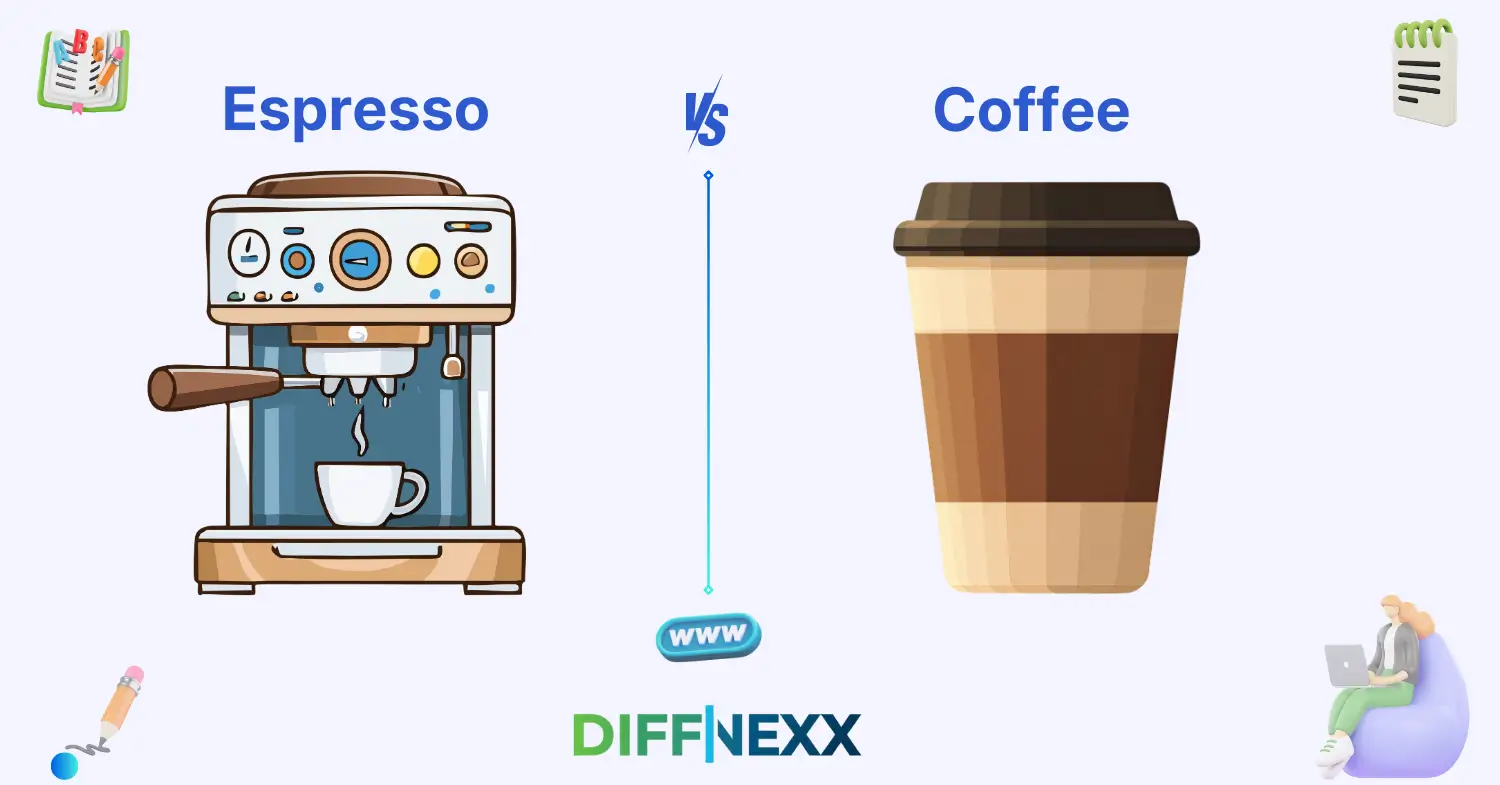
The difference between espresso and coffee is not about the beans alone. It is about how the drink is made. Espresso uses pressure and fine grounds. Coffee usually uses slower methods like drip or filter.
Many people think espresso is a different type of bean, but that’s not true. Understanding the difference between espresso and coffee helps you order the right drink and enjoy it more.
Let’s break it down in a simple and clear way.
Key Difference Between the Both
The main difference between espresso and coffee lies in the brewing method.
- Espresso = Made by forcing hot water through finely ground coffee under pressure
- Coffee = Made by slowly passing water through ground coffee
Espresso is strong and concentrated. Coffee is lighter and more diluted.
Importance – Why Is Their Difference Necessary to Know
Knowing the difference between espresso and coffee helps learners understand daily vocabulary and real-life situations.
For professionals, especially baristas or hospitality workers, it ensures correct service and customer satisfaction.
In society, coffee culture is growing fast. People connect over drinks. Knowing what you are ordering builds confidence and avoids confusion.
🔊 Pronunciation Section
Espresso
US: /eˈspresoʊ/
UK: /eˈspresəʊ/
Coffee
US: /ˈkɔːfi/
UK: /ˈkɒfi/
Now that you know how to say them, let’s clearly define each one.
📚 Core Definitions
Espresso
Espresso is a strong coffee drink made by pushing hot water through finely ground coffee using high pressure. It has a rich flavor and a creamy top layer called crema. The tone feels intense and bold.
Example:
He ordered a quick espresso before work.
Coffee
Coffee is a general drink made by brewing ground coffee beans with hot water. It is lighter and comes in many forms like drip or filter coffee. The tone feels relaxed and everyday.
Example:
She enjoys a cup of coffee every morning.
📚 10 Clear Differences Between Espresso and Coffee
1. Emotional Intensity
Espresso feels bold and intense. Coffee feels calm and easygoing.
- Example for Espresso: He drinks espresso for a quick energy boost.
- Example for Coffee: She sips coffee slowly while relaxing.
2. Duration
Espresso is consumed quickly. Coffee is enjoyed over a longer time.
- Example for Espresso: He finishes his espresso in minutes.
- Example for Coffee: She drinks coffee over an hour.
3. Focus
Espresso focuses on strong flavor. Coffee focuses on volume and smooth taste.
- Example for Espresso: The shot has a deep, rich taste.
- Example for Coffee: The cup feels light and smooth.
4. Strength (Severity)
Espresso is stronger in taste and concentration. Coffee is milder.
- Example for Espresso: One shot feels powerful.
- Example for Coffee: A full cup feels gentle.
5. Rationality (Preparation Logic)
Espresso requires precise pressure and timing. Coffee uses simpler methods.
- Example for Espresso: A machine controls the brewing.
- Example for Coffee: A filter or kettle is enough.
6. Formality
Espresso is often linked to café culture. Coffee is more casual.
- Example for Espresso: Ordered in a coffee shop setting.
- Example for Coffee: Made at home daily.
7. Context of Use
Espresso is used in specialty drinks. Coffee is used in everyday drinks.
- Example for Espresso: Used in lattes and cappuccinos.
- Example for Coffee: Drunk as a simple morning beverage.
8. Psychological Impact
Espresso gives a quick mental boost. Coffee provides steady energy.
- Example for Espresso: He feels alert instantly.
- Example for Coffee: She feels gradually awake.
9. Tone
Espresso has a sharp and bold tone. Coffee has a soft and smooth tone.
- Example for Espresso: The flavor is strong and direct.
- Example for Coffee: The flavor is mild and comforting.
10. Expression Style
Espresso is served in small shots. Coffee is served in larger cups.
- Example for Espresso: Served in a tiny cup.
- Example for Coffee: Served in a big mug.
🎯 Why Knowing the Difference Matters
Students must know the difference between espresso and coffee to understand modern food culture and vocabulary.
Professionals in cafés or restaurants need this knowledge to serve correctly and avoid mistakes.
Socially, knowing the difference helps in conversations and ordering drinks confidently.
Real-world consequences of confusion
If you confuse them, you might order something too strong or too weak. This can affect your experience and even waste money.
🧠 Why People Get Confused
Similar Spelling or Pronunciation
Both terms are linked to coffee, so people assume they are the same.
Semantic Overlap
Espresso is a type of coffee, which causes confusion.
Context-Based Usage
Menus often mix terms like espresso, latte, and coffee.
Influence of Informal Speech
People casually say “coffee” for all types of drinks.
🎭 Connotation & Emotional Tone
Connotation = the emotional meaning associated with a word.
Espresso
- Positive: Strong, energetic, stylish
- Neutral: Concentrated coffee drink
- Example: He enjoys a bold espresso shot.
Coffee
- Positive: Comfort, warmth, routine
- Neutral: Everyday beverage
- Example: She loves her morning coffee.
🗣 Usage in Metaphors, Similes & Idioms
- “He is as strong as an espresso.”
- “Her morning started smoothly like a cup of coffee.”
These comparisons show strength vs calmness.
📊 Comparison Table
| Feature | Espresso | Coffee |
|---|---|---|
| Meaning | Concentrated coffee | General brewed drink |
| Tone | Bold | Smooth |
| Usage | Specialty drinks | Daily use |
| Context | Cafés | Home or office |
| Formality | More formal | Casual |
⚖️ Which Is Better in What Situation?
When to Use Espresso
Choose espresso when you need a quick energy boost or want a strong flavor. It works well before work or during a short break.
When to Use Coffee
Choose coffee when you want to relax and enjoy a drink over time. It suits mornings or casual meetings.
Situational Clarity
Use espresso for speed and intensity. Use coffee for comfort and longer enjoyment.
Contextual Correctness
In cafés, order espresso for a strong shot. At home, coffee is often the easier choice.
📖 Literary or Cultural References
- Book: The Coffee Book (Food & Drink, Anette Moldvaer, 2014) – Explains coffee types including espresso.
- Movie: Coffee and Cigarettes (USA, 2003) – Shows social moments around coffee culture.
❓ FAQs
1. Is espresso stronger than coffee?
Yes, espresso is stronger in flavor and concentration. However, a full cup of coffee may contain more total caffeine.
2. Is espresso just finely ground coffee?
No, it is not just about grind size. Espresso also uses pressure and a special machine.
3. Can I make espresso at home?
Yes, but you need an espresso machine. Regular coffee makers cannot create true espresso.
4. Why is espresso served in small cups?
Because it is very concentrated. A small amount is enough for a strong taste.
5. Is espresso healthier than coffee?
Both can be healthy in moderation. The difference depends more on quantity and added sugar or milk.
🏁 Conclusion
The difference between espresso and coffee mainly comes down to brewing method, strength, and experience. Espresso is bold, quick, and concentrated. Coffee is smooth, relaxed, and enjoyed over time.
Understanding this difference helps you choose the right drink for your mood and situation. It also improves your confidence when ordering or discussing beverages.
Next time you visit a café, you will know exactly what to pick. Keep learning and enjoy your perfect cup ☕.

Aamer Shahzad is the founder of Distinly.com, a fast-growing educational platform focused on high-intent “difference between” topics. With over 8 years of experience in English language education and analytical writing, I specialize in breaking down complex “difference between” topics into clear, structured, and easy-to-understand explanations. Distinly.com is your go-to resource for enhancing English skills and writing with confidence.
I specializes in building search-optimized, research-driven comparison content designed for clarity, authority, and long-term digital asset value.