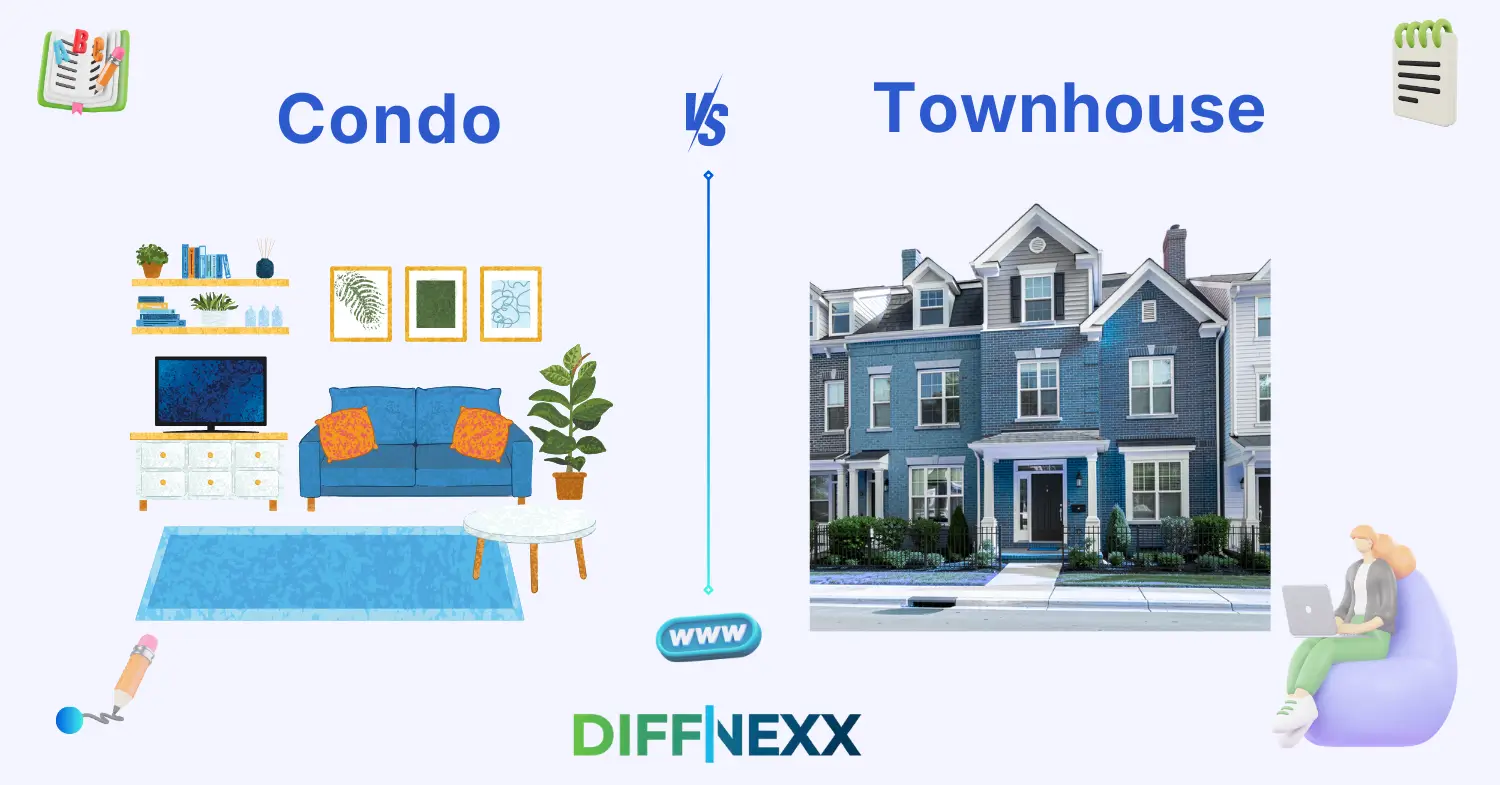
Difference between condo and townhouse comes up often when people start thinking about buying a home. Imagine you’re scrolling through houses for sale, and you see both “condo” and “townhouse” listed. You might wonder if they are the same kind of home or something totally different.
In simple terms, a condo and a townhouse are both types of homes people can own. But the difference between condo and townhouse is mostly about ownership, what you own, and how much responsibility you have. Both can be part of communities with shared rules and fees, but the details vary.
Many people use these terms interchangeably, but knowing the difference between condo and townhouse helps you make smart decisions when choosing a place to live. Let’s explore exactly how they differ.
🔑 Key Difference Between the Both
The main difference between a condo and a townhouse is what you own and maintain.
- In a condo, you own the interior of your unit, but the building exterior and land are shared.
- In a townhouse, you typically own the unit and the land it sits on, including the exterior.
This affects maintenance, privacy, and how much control you have over your property.
🌍 Why Is Their Difference Necessary to Know
Students learning real estate or English housing vocabulary must know these terms to understand property listings and contracts. Without clarity, terms like “HOA fees” or “ownership rights” can be confusing.
Professionals such as real estate agents, lawyers, and financial advisors use precise definitions to guide clients correctly. Misunderstanding could lead to legal issues or financial loss.
In society, owning property is a major life milestone. Knowing whether a home is a condo or townhouse helps buyers choose the right lifestyle, budget, and responsibilities.
🔊 Pronunciation Section
Condo
US (Condo): /ˈkɒn.doʊ/
UK (Condo): /ˈkɒn.dəʊ/
Townhouse
US (Townhouse): /ˈtaʊn.haʊs/
UK (Townhouse): /ˈtaʊn.haʊs/
These terms describe common property types in real estate and are useful when discussing homes with friends, agents, or online.
📚 Core Definitions
🏢 Condo
A condo, short for condominium, is a privately owned housing unit within a larger building or community.
You own the interior of your unit but typically share ownership of the building structure and land with other condo owners.
Example: I bought a condo with a balcony facing the park.
🏘️ Townhouse
A townhouse is a multi-level home that shares one or more walls with adjacent units but usually has its own entrance.
You typically own the interior and exterior of the home, including the land it sits on.
Example: We moved into a townhouse with a small backyard.
📚 10 Clear Differences Between Condo and Townhouse
1️⃣ Ownership
Condos: You own your unit’s interior space.
Townhouses: You own your entire home and the land.
- Example 1 for Condo: I own my condo inside the walls only.
- Example 2 for Townhouse: I own the townhouse and the yard.
2️⃣ Structure
Condos: Often in buildings with neighbors above and below.
Townhouses: Typically multi-floor units with separate entrances.
- Example 1 for Condo: My condo has neighbors above me.
- Example 2 for Townhouse: My townhouse has a front door on the street.
3️⃣ Maintenance
Condos: HOA usually handles exterior maintenance.
Townhouses: Owners often maintain exterior and yard.
- Example 1 for Condo: HOA cleans the roof and walls.
- Example 2 for Townhouse: I mow the lawn myself.
4️⃣ Privacy
Condos: Less privacy due to shared walls and floors.
Townhouses: More privacy with separate entrances.
- Example 1 for Condo: I hear neighbors above me.
- Example 2 for Townhouse: My only neighbor is next door.
5️⃣ Space
Condos: Usually smaller living space.
Townhouses: Generally larger with more levels.
- Example 1 for Condo: My condo is one floor.
- Example 2 for Townhouse: My townhouse has two floors.
6️⃣ Amenities
Condos: Often have shared amenities like pools or gyms.
Townhouses: Fewer shared amenities.
- Example 1 for Condo: We use the condo pool.
- Example 2 for Townhouse: We don’t have a shared gym.
7️⃣ HOA Fees
Condos: Usually higher HOA fees.
Townhouses: Generally lower HOA fees.
- Example 1 for Condo: My monthly fee includes exterior repairs.
- Example 2 for Townhouse: My HOA fee is lower.
8️⃣ Regulations
Condos: Strict rules on renovations and exterior decorations.
Townhouses: More freedom to modify exteriors (depending on HOA).
- Example 1 for Condo: I can’t paint my balcony any color.
- Example 2 for Townhouse: I can plant flowers in my yard.
9️⃣ Location
Condos: Common in cities and high-density areas.
Townhouses: More common in suburbs.
- Example 1 for Condo: My condo is downtown.
- Example 2 for Townhouse: My townhouse is in a suburb.
🔟 Resale Value
Condos: Value can be influenced by building condition.
Townhouses: Value influenced by land ownership and exterior upkeep.
- Example 1 for Condo: Condo resale depends on HOA repairs.
- Example 2 for Townhouse: Townhouse resale value rose with yard improvements.
🎯 Why Knowing the Difference Matters
Students need this difference to understand real estate terms and housing discussions in school, news, or online reviews. Real estate listings often use both terms, and knowing them helps avoid confusion.
Professionals like agents, lawyers, and lenders need precise definitions to advise clients on costs, responsibilities, and legal issues.
For anyone buying a home, the difference affects monthly costs, maintenance duties, privacy, and long‑term investment decisions — making it essential for practical choices.
Real‑world consequences of confusion
Confusing a condo with a townhouse can lead to budget surprises or misunderstandings about maintenance and HOA responsibilities after purchase.
🧠 Why People Get Confused
Similar terminology
Both terms describe attached homes and often appear together in listings.
Semantic overlap
They share features like shared walls and HOA governance.
Context‑based usage
Some townhouses can be legally condos depending on ownership structure.
Influence of informal speech
People sometimes use “condo” for any attached home, even when it’s technically a townhouse.
🎭 Connotation & Emotional Tone
Connotation = emotional meaning attached to a word.
Condo
Positive: Low‑maintenance and convenient.
Example: The condo’s amenities made life easy.
Negative: Can feel crowded.
Example: I missed privacy in my condo.
Neutral: Housing term.
Townhouse
Positive: More space and privacy.
Example: The townhouse yard feels peaceful.
Negative: Exterior upkeep responsibility.
Example: I spend weekends gardening.
Neutral: Housing term.
🗣 Usage in Metaphors, Similes & Idioms
- Condo comparison: “living like an elevator neighbor.”
Example: In my condo, I hear neighbors like clockwork. - Townhouse comparison: “home with roots.”
Example: Living in a townhouse feels rooted like a small tree in a garden.
These simpler comparisons help remember that condos are more shared and townhouses feel more independent.
📊 Comparison Table
| Feature | Condo | Townhouse |
|---|---|---|
| Meaning | Own interior only | Own interior + land |
| Tone | Convenient | Independent |
| Usage | Urban, shared facilities | Suburban, private yards |
| Context | Apartment‑style living | House‑style living |
| Formality | HOA‑heavy | Owner‑responsibility |
⚖️ Which Is Better in What Situation?
When to use Condo
Choose a condo for easier maintenance, lower upkeep, and shared amenities like pools and gyms. Condos often appeal to first‑time buyers or retirees who want convenience.
When to use Townhouse
Choose a townhouse when you want more space, privacy, and control over your home and land. This is often better for families or people who enjoy outdoor space.
Situational clarity
If you value community features and less work, condos fit well. If you want autonomy, townhouses may be the better choice.
Contextual correctness
Understanding these differences helps you talk confidently with real estate agents and compare housing options realistically.
📖 Literary or Cultural References
- The Nesting Place: It Doesn’t Have to Be Perfect to Be Beautiful (Home‑Decor, Myquillyn Smith, 2018) – Shows how living space feels like home.
- Up (Film, USA, 2009) – Highlights different home styles and personal attachments to living spaces.
❓ FAQs
1. Is a condo smaller than a townhouse?
Often yes — condos usually have smaller space, while townhouses often have more levels and land.
2. Why are condo fees higher?
Condo fees cover exterior, shared amenities, and building maintenance, which are more extensive.
3. Can a townhouse be a condo?
Yes — sometimes a townhouse can be legally treated as a condo depending on ownership structure.
4. Do townhouses have private yards?
Often yes — many townhouses include private outdoor space.
5. Which is easier to maintain?
Condos are usually lower to maintain because exterior work is handled by the HOA.
🏁 Conclusion
The difference between condo and townhouse comes down to ownership, maintenance, space, privacy, and responsibilities.
Condos provide shared living with exterior care handled by associations, while townhouses offer more independence and control over your home and land.
Understanding these differences helps you choose the right housing for your lifestyle, budget, and future goals.
Learning these terms gives you confidence in conversations about real estate and ensures you make informed decisions when exploring homeownership options.

Mira Anand is a writer at Distinly.com who focuses on storytelling, communication, and social perspective. Her work highlights subtle differences in language and meaning across cultures and communities. With a clear and empathetic voice, Mira helps readers understand how narratives shape understanding, relationships, and modern dialogue in an increasingly connected world.