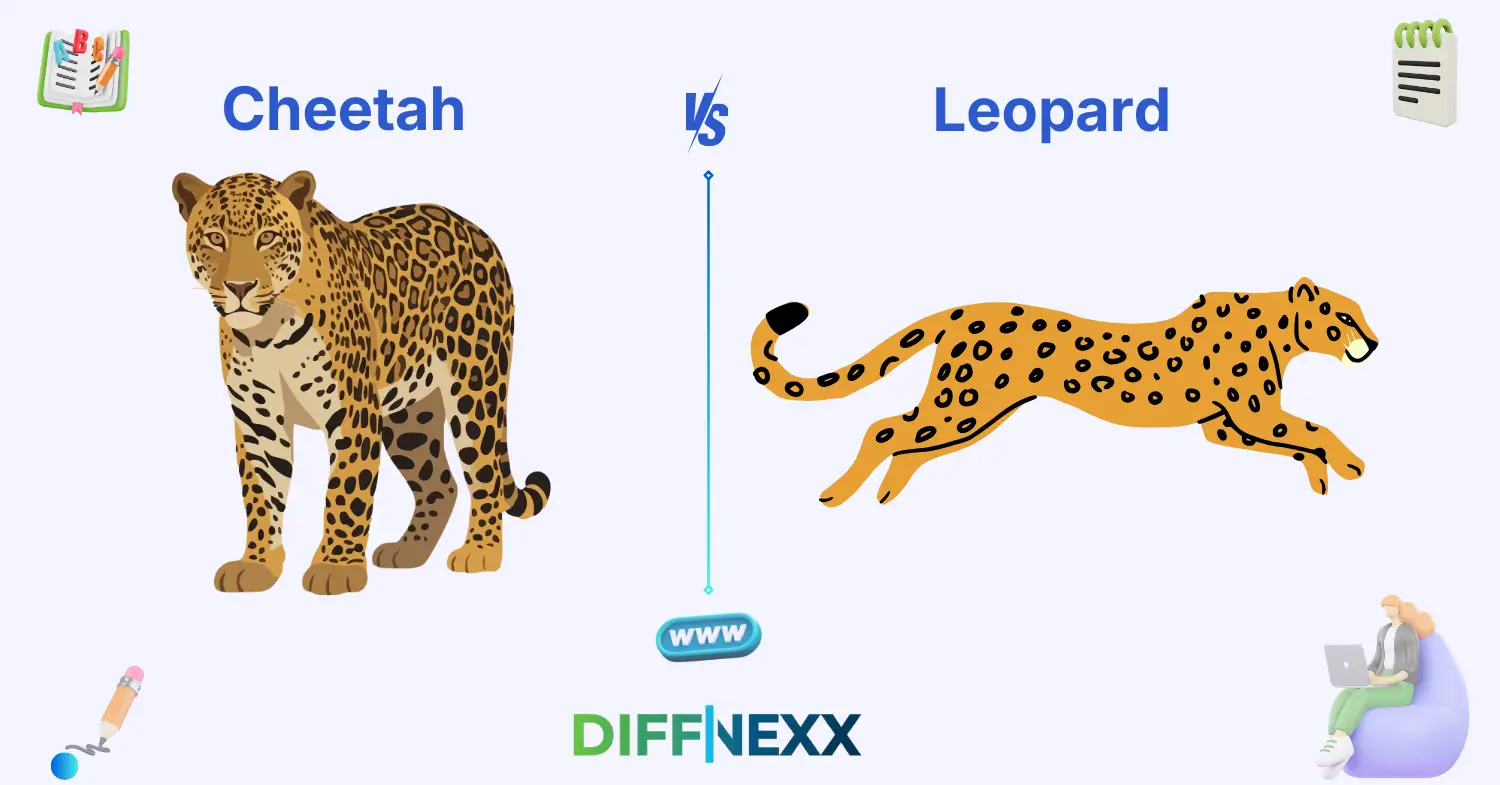
Difference between cheetah and leopard is a question many people ask after watching wildlife videos. You see two spotted big cats, both fast and powerful, and it becomes hard to tell them apart.
The difference between cheetah and leopard is not just about spots. It includes their body shape, speed, behavior, and hunting style. While both are wild cats, they live and act very differently.
Many learners mix them up because they look similar at first glance. That’s why understanding the difference between cheetah and leopard helps you recognize them easily and speak correctly.
Let’s explore their differences step by step.
Key Difference Between the Both
The main difference between cheetah and leopard lies in speed and body structure.
- Cheetah = Built for speed, slim body, fastest land animal
- Leopard = Built for strength, muscular body, powerful climber
Cheetahs run fast. Leopards climb and hunt with power.
Importance – Why Is Their Difference Necessary to Know
Knowing the difference between cheetah and leopard helps students understand wildlife correctly and avoid confusion in learning.
For experts like wildlife researchers or photographers, this knowledge is essential for accurate identification and study.
In society, people often discuss animals in media and education. Clear understanding improves communication and awareness about wildlife conservation.
🔊 Pronunciation Section
Cheetah
US: /ˈtʃiːtə/
UK: /ˈtʃiːtə/
Leopard
US: /ˈlɛpərd/
UK: /ˈlepəd/
Now that you know how to say them, let’s define each clearly.
📚 Core Definitions
Cheetah
The Cheetah is a large wild cat known for its incredible speed. It has a slim body, long legs, and black tear marks on its face. The tone feels swift and agile.
Example:
The cheetah chased its prey across the open grassland.
Leopard
The Leopard is a strong and adaptable wild cat. It has a muscular body and rosette-shaped spots. The tone feels powerful and stealthy.
Example:
The leopard climbed a tree with its prey.
📚 10 Clear Differences Between Cheetah and Leopard
1. Emotional Intensity
Cheetahs feel fast and energetic. Leopards feel calm and powerful.
- Example for Cheetah: The cheetah runs quickly with energy.
- Example for Leopard: The leopard waits silently before attacking.
2. Duration (Speed vs Time)
Cheetahs run in short bursts. Leopards can hunt over longer periods.
- Example for Cheetah: It sprints for a few seconds.
- Example for Leopard: It stalks prey for a long time.
3. Focus
Cheetahs focus on speed hunting. Leopards focus on strength and stealth.
- Example for Cheetah: It chases prey in open land.
- Example for Leopard: It ambushes prey from hiding.
4. Strength (Severity)
Cheetahs are lighter and less strong. Leopards are stronger and more muscular.
- Example for Cheetah: It avoids big animals.
- Example for Leopard: It can carry prey up trees.
5. Rationality (Hunting Method)
Cheetahs rely on speed and sight. Leopards rely on patience and strategy.
- Example for Cheetah: It runs directly after prey.
- Example for Leopard: It hides and attacks suddenly.
6. Formality (Behavior Style)
Cheetahs are more visible and active in the day. Leopards are secretive and mostly active at night.
- Example for Cheetah: Seen running in daylight.
- Example for Leopard: Moves quietly in darkness.
7. Context of Use
Cheetahs are found in open grasslands. Leopards live in forests, mountains, and savannas.
- Example for Cheetah: Lives in wide open areas.
- Example for Leopard: Lives in many types of habitats.
8. Psychological Impact
Cheetahs inspire speed and excitement. Leopards inspire fear and respect.
- Example for Cheetah: Known for record-breaking speed.
- Example for Leopard: Known for silent hunting.
9. Tone
Cheetahs have a light, sleek appearance. Leopards look heavy and strong.
- Example for Cheetah: Thin body with long legs.
- Example for Leopard: Thick body with strong limbs.
10. Expression Style (Spots Pattern)
Cheetahs have solid black spots. Leopards have rosette-shaped spots.
- Example for Cheetah: Small, round black dots.
- Example for Leopard: Flower-like spot patterns.
🎯 Why Knowing the Difference Matters
Students must understand the difference between cheetah and leopard to learn biology and wildlife accurately.
Professionals like wildlife photographers or guides need this knowledge to identify animals correctly in the field.
Socially, people often share animal facts online. Knowing the correct animal avoids misinformation and confusion.
Real-world consequences of confusion
If you confuse them, you may give wrong information in studies or discussions. This can affect learning and credibility.
🧠 Why People Get Confused
Similar Spelling or Pronunciation
Both names sound somewhat similar and are often mentioned together.
Semantic Overlap
Both are big cats with spots, which makes them look alike.
Context-Based Usage
They appear in the same environments like documentaries.
Influence of Informal Speech
People casually call both animals “cheetah” or “leopard” without knowing the difference.
🎭 Connotation & Emotional Tone
Connotation = the emotional meaning associated with a word.
Cheetah
- Positive: Speed, agility, grace
- Neutral: Fast wild cat
- Example: The cheetah symbolizes speed in sports.
Leopard
- Positive: Strength, mystery, power
- Neutral: Strong wild cat
- Example: The leopard represents stealth and control.
🗣 Usage in Metaphors, Similes & Idioms
- “He runs like a cheetah.” (very fast)
- “She moves like a leopard in the night.” (quiet and smooth)
These expressions highlight speed vs stealth.
📊 Comparison Table
| Feature | Cheetah | Leopard |
|---|---|---|
| Meaning | Fast wild cat | Strong wild cat |
| Tone | Agile | Powerful |
| Usage | Speed focus | Strength focus |
| Context | Grasslands | Forests & mountains |
| Formality | Less secretive | More secretive |
⚖️ Which Is Better in What Situation?
When to Use Cheetah
Use “cheetah” when talking about speed or fast movement. For example, in sports comparisons or fast actions.
When to Use Leopard
Use “leopard” when referring to strength, stealth, or adaptability. It fits situations about power or quiet movement.
Situational Clarity
Choose based on traits. Speed = cheetah. Strength = leopard.
Contextual Correctness
In education or wildlife talk, always match the correct animal to its features.
📖 Literary or Cultural References
- Book: The Fastest Animal in the World: Cheetah (Children’s, Natalie Lunis, 2010)
- Movie: Born Free (UK, 1966) – Shows African wildlife including big cats.
❓ FAQs
1. Is a cheetah faster than a leopard?
Yes, the cheetah is the fastest land animal. Leopards are not as fast but are stronger.
2. Can leopards climb trees?
Yes, leopards are excellent climbers. They often carry prey into trees.
3. Do cheetahs climb trees?
Cheetahs can climb, but they are not as skilled as leopards.
4. How can I quickly identify a cheetah?
Look for tear marks on its face and solid black spots.
5. Which is more dangerous?
Leopards are generally more dangerous due to their strength and stealth.
🏁 Conclusion
The difference between cheetah and leopard is clear when you look closely. Cheetahs are built for speed, with slim bodies and quick bursts of energy. Leopards are built for strength, with powerful muscles and stealthy movements.
Understanding this difference helps you recognize animals correctly and improves your knowledge of wildlife. It also makes conversations and learning more accurate.
Next time you see a spotted big cat, take a closer look. With this knowledge, you will easily tell whether it is a cheetah or a leopard 🐾.

Mira Anand is a writer at Distinly.com who focuses on storytelling, communication, and social perspective. Her work highlights subtle differences in language and meaning across cultures and communities. With a clear and empathetic voice, Mira helps readers understand how narratives shape understanding, relationships, and modern dialogue in an increasingly connected world.