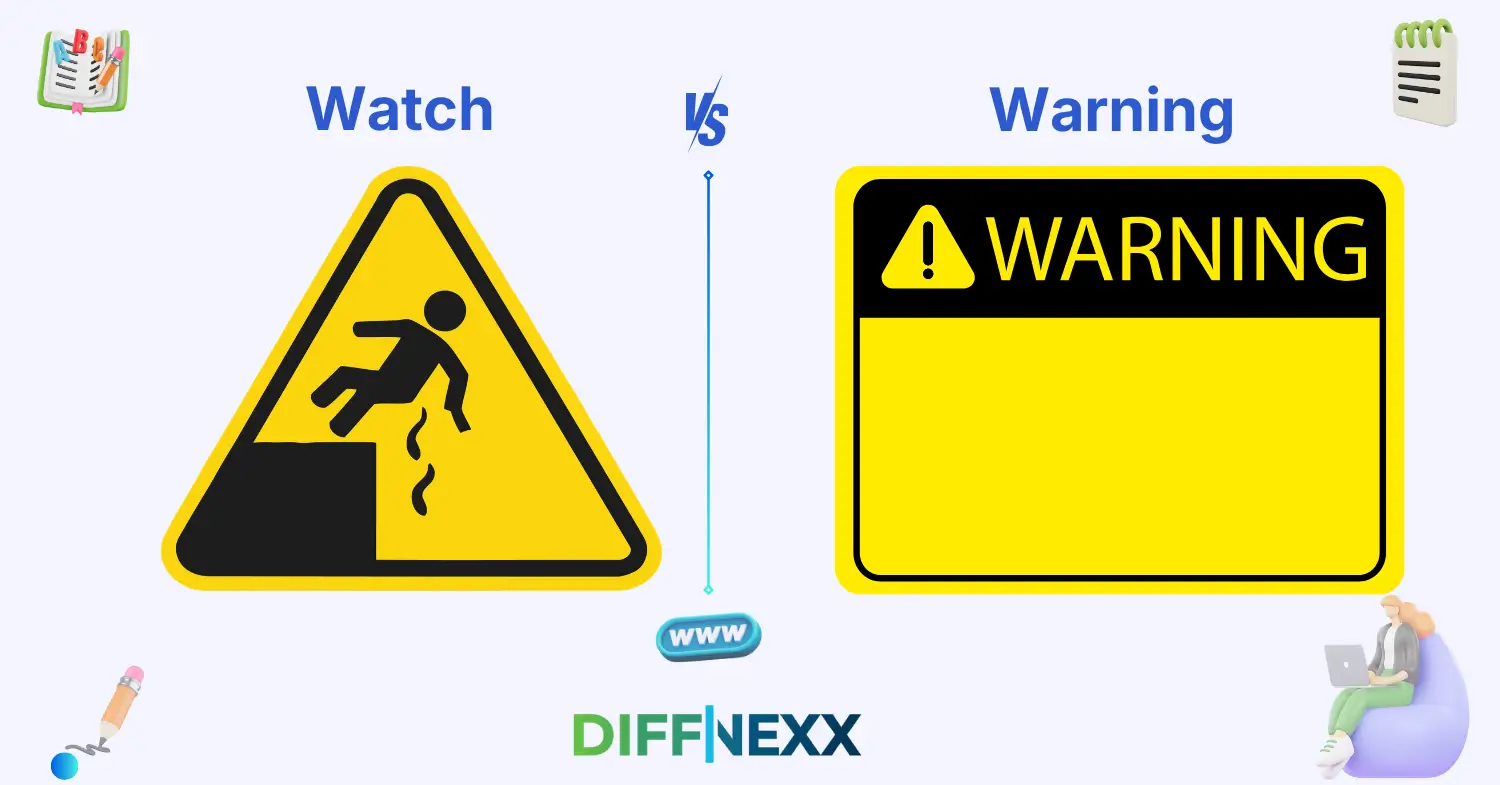
The difference between watch and warning is a distinction that can quite literally save your life. These terms are the backbone of emergency communication systems worldwide. They tell us exactly how much time we have to react to a threat. While they both signal danger, they represent very different stages of an unfolding event.
You are sitting in your living room on a muggy Tuesday afternoon. Suddenly, your phone emits a loud, jarring blare. A notification slides across the screen. You see the word “Tornado,” but as you read closer, you pause. Is it a “Tornado Watch” or a “Tornado Warning”? One means you should finish your coffee and keep an eye on the sky; the other means you should be running for the basement immediately.
Understanding the difference between watch and warning helps you filter through the noise of modern news cycles. It allows you to stay calm when there is a potential threat and act decisively when that threat becomes real. By mastering the difference between watch and warning, you become a more resilient member of your community.
In the following sections, we will break down these terms into simple, actionable concepts for everyone. ⛈️
Key difference between the both
The fundamental difference between watch and warning is the level of certainty and timing. A watch means that conditions are “favorable” for a specific hazard—the ingredients are all there, but nothing has happened yet. A warning means that the hazard is “imminent” or already occurring—it has been spotted by radar or a trained observer.
Importance for learners and experts
For language learners, distinguishing between these two words is vital for functional fluency in regions prone to natural disasters. If you live in an English-speaking country, misinterpreting an alert can lead to unnecessary panic or, more dangerously, a lack of preparation. It is a critical part of “survival English.”
For experts in meteorology, civil engineering, or emergency management, the distinction is about resource allocation. A watch requires monitoring and staff readiness, while a warning triggers sirens, evacuations, and emergency protocols. In society, clear communication of these levels prevents “alert fatigue,” ensuring people take action when it truly counts. 📢
Pronunciation Section
Watch
US: /wɑːtʃ/
UK: /wɒtʃ/
Warning
US: /ˈwɔːrnɪŋ/
UK: /ˈwɔːnɪŋ/
Transitioning from how we say these words to what they actually mean is the first step in emergency preparedness.
Core Definitions
Watch
A watch is an alert issued when the risk of a hazardous event has increased significantly, but its occurrence, location, or timing is still uncertain. It is a time for preparation and heightened awareness. The emotional tone is one of cautious readiness.
- Example: A “Flood Watch” is issued when heavy rain is expected that could cause rivers to overflow.
Warning
A warning is an alert issued when a hazardous event is occurring, is imminent, or has a very high probability of occurring. It is a signal for immediate action to protect life and property. The emotional tone is one of urgent necessity.
- Example: A “Severe Thunderstorm Warning” is issued when a storm is currently moving through your specific neighborhood.
10 Clear Differences Between Watch and Warning
1. Emotional Intensity
A watch brings a sense of alertness and “keeping an eye out.” A warning carries a heavy emotional weight of urgency and high-stakes pressure.
- Example for Watch: Feeling a bit nervous but continuing to cook dinner.
- Example for Warning: Feeling a rush of adrenaline and grabbing your emergency kit.
2. Duration and Window
Watches usually cover a longer period, often lasting several hours. Warnings are typically short-lived, covering the 30 to 60 minutes when the threat is at its peak.
- Example for Watch: An alert that stays active from 2:00 PM until 10:00 PM.
- Example for Warning: An alert that expires in 45 minutes as the storm passes.
3. Geographical Focus
Watches cover large areas, such as multiple counties or even entire states. Warnings are highly localized, often targeting specific towns, city blocks, or small sections of a coastline.
- Example for Watch: “A Hurricane Watch is in effect for the entire East Coast.”
- Example for Warning: “A Tornado Warning is in effect for downtown Springfield.”
4. Severity of the Threat
A watch indicates a potential threat—the danger is possible but not guaranteed. A warning indicates a confirmed threat—the danger is real and currently happening.
- Example for Watch: Looking at dark clouds and wondering if it will rain.
- Example for Warning: Seeing a funnel cloud on the horizon or hearing sirens.
5. Rationality and Action
The logical response to a watch is to prepare (fuel the car, check batteries). The logical response to a warning is to execute your plan (hide in a storm cellar, evacuate).
- Example for Watch: Buying extra water at the store.
- Example for Warning: Getting into the interior bathtub of your house.
6. Formality and Issuing Authority
Watches are often discussed by news anchors as a general forecast. Warnings are formal legal triggers that may activate automated emergency broadcast systems on your television or phone.
- Example for Watch: A weather reporter saying, “Conditions look ripe for a storm tonight.”
- Example for Warning: An automated voice interrupting a show with a loud buzzing signal.
7. Context of Use
We use “watch” when the ingredients for trouble are coming together. We use “warning” when the “trouble” has been “baked” and is being served.
- Example for Watch: Identifying that a river is reaching its capacity.
- Example for Warning: Alerting residents that the levee has broken.
8. Psychological Impact
Watches can lead to “waiting anxiety,” where people feel on edge for a long time. Warnings cause a “flight or fight” response, forcing a quick transition from thought to movement.
- Example for Watch: Repeatedly checking the weather app every 20 minutes.
- Example for Warning: Dropping everything and running to a safe room.
9. Tone of Voice
Official communication during a watch is informative and advisory. During a warning, the tone becomes command-based and imperative.
- Example for Watch: “Residents should monitor the latest forecasts.”
- Example for Warning: “Take cover now! Move to the lowest floor!”
10. Expression Style
Watch alerts use “may,” “could,” and “possible.” Warning alerts use “is,” “will,” and “move.”
- Example for Watch: “Severe weather is possible later today.”
- Example for Warning: “A tornado is on the ground; seek shelter immediately.”
Why Knowing the Difference Matters
Students must know the difference between watch and warning to ensure their safety during the school day. Many schools have specific drills for each. If a student confuses a “Watch” for a “Warning,” they might cause a disruption by hiding under a desk prematurely. Conversely, ignoring a “Warning” could be disastrous.
Professionals in logistics, aviation, and construction rely on these terms to manage risk. A project manager might continue a concrete pour during a “Heat Watch,” but they must halt all outdoor labor during a “Heat Warning” to prevent employee injury. It is a matter of liability and workplace safety.
Socially, the consequences of confusion can lead to a loss of trust in public systems. If a person treats every “Watch” like a “Warning,” they will eventually stop listening to alerts altogether. This “crying wolf” effect happens when individuals don’t understand the tiered system of emergency communication.
Real-world consequences of confusion
In 2011, during major tornado outbreaks in the US, surveys showed that many victims heard the alerts but didn’t act because they didn’t realize the “Warning” was the final stage of danger. Clarity in these terms literally saves lives. 🛡️
Why People Get Confused
Semantic Overlap
In everyday English, “watch” and “warning” can both mean “pay attention.” If your mom says, “Watch out!” or “I’m warning you,” she is using them as general synonyms for caution. This everyday overlap makes the technical weather definitions harder to remember.
Context-based Usage
Different countries use different terms. While the US and Canada use the “Watch/Warning” system, other regions might use “Alert/Action” or a color-coded system (Yellow/Red). For travelers, this lack of global standard causes confusion.
Influence of Informal Speech
People often use the term “Warning” as a catch-all for any bad news. You might hear someone say, “There’s a hurricane warning for the weekend,” even if it’s only Tuesday and a “Watch” hasn’t even been issued yet.
Connotation & Emotional Tone
(Connotation = the emotional meaning attached to a word.)
For Watch:
- Neutral/Cautious: It implies a state of observation and readiness without immediate panic.
- Example: “The Winter Storm Watch gave us time to buy groceries before the snow started.”
For Warning:
- Negative/Urgent: It carries the weight of immediate danger and the necessity of action.
- Example: “The Tsunami Warning sent everyone running for higher ground.”
Usage in Metaphors, Similes & Idioms
- “On the watch”: Being alert for something to happen.
- Sentence: “The security guard stayed on the watch for any intruders.”
- “A fair warning”: An advance notice given to someone so they can avoid a problem.
- Sentence: “I’m giving you fair warning: if you don’t study, you will fail the exam.”
Comparison Table
| Feature | Watch | Warning |
| Meaning | Possible / Potential | Occurring / Imminent |
| Tone | Advisory | Mandatory |
| Usage | Preparation | Action |
| Context | Large area / Long time | Localized / Short time |
| Formality | High | Extreme |
Which Is Better in What Situation?
When to use Watch
Use “Watch” when you are discussing the possibility of something happening in the future. It is the correct term for planning and staying informed. It is appropriate when the “ingredients” for a situation are present but the “event” hasn’t started.
When to use Warning
Use “Warning” when the threat is immediate. This is the term for emergency situations where there is no more time for debate. Use it to signal that someone must act right now.
Situational Clarity
If you are a manager, you might put your team on a “Watch” for a busy sales season. You would issue a “Warning” if a client is about to cancel a contract.
Contextual Correctness
In weather, a “Watch” is like a “Yellow Light”—proceed with caution. A “Warning” is like a “Red Light”—stop what you are doing and find safety. 🚥
Literary or Cultural References
- “The Watchman” (Comics/Movie, Alan Moore, 1986): Uses the concept of “watching” as a metaphor for oversight and the threat of nuclear war.
- “Twister” (Movie, USA, 1996): Features several scenes where the characters must distinguish between a developing watch and a sudden warning.
- “Fahrenheit 451” (Book, Ray Bradbury, 1953): The “Mechanical Hound” serves as a permanent warning to the citizens of the dangers of free thought.
FAQs
1. Is a “Watch” always followed by a “Warning”?
No. Sometimes the atmospheric conditions change, and the storm never develops. The watch will simply expire without a warning ever being issued.
2. Can a “Warning” be issued without a “Watch” happening first?
Yes. Sometimes a “pop-up” storm or a sudden tornado can develop so quickly that meteorologists skip the watch phase and go straight to a warning.
3. What is a “Weather Advisory”?
An advisory is the “lowest” level. It means weather is occurring that is annoying or inconvenient (like light snow or fog) but not life-threatening if you are careful.
4. Does a “Warning” mean a tornado has been seen?
Either it has been seen by a person or it has been “radar-indicated,” meaning the computer sees the rotation in the clouds even if a human hasn’t spotted it yet.
5. How should I prepare for a “Watch”?
Check your batteries, make sure your phone is charged, and know where you will go if the alert turns into a warning.
Conclusion
The difference between watch and warning is the difference between “getting ready” and “getting safe.”
A watch is the universe giving you a head start to prepare, while a warning is the universe telling you that the time for preparation has ended.
By understanding these two distinct alert levels, you can protect yourself and those you love. You won’t waste energy panicking during a watch, and you won’t waste time hesitating during a warning.
Clear communication during a crisis is the most powerful tool we have. Stay informed, stay prepared, and always listen to the sky! ✨

Aamer Shahzad is the founder of Distinly.com, a fast-growing educational platform focused on high-intent “difference between” topics. With over 8 years of experience in English language education and analytical writing, I specialize in breaking down complex “difference between” topics into clear, structured, and easy-to-understand explanations. Distinly.com is your go-to resource for enhancing English skills and writing with confidence.
I specializes in building search-optimized, research-driven comparison content designed for clarity, authority, and long-term digital asset value.