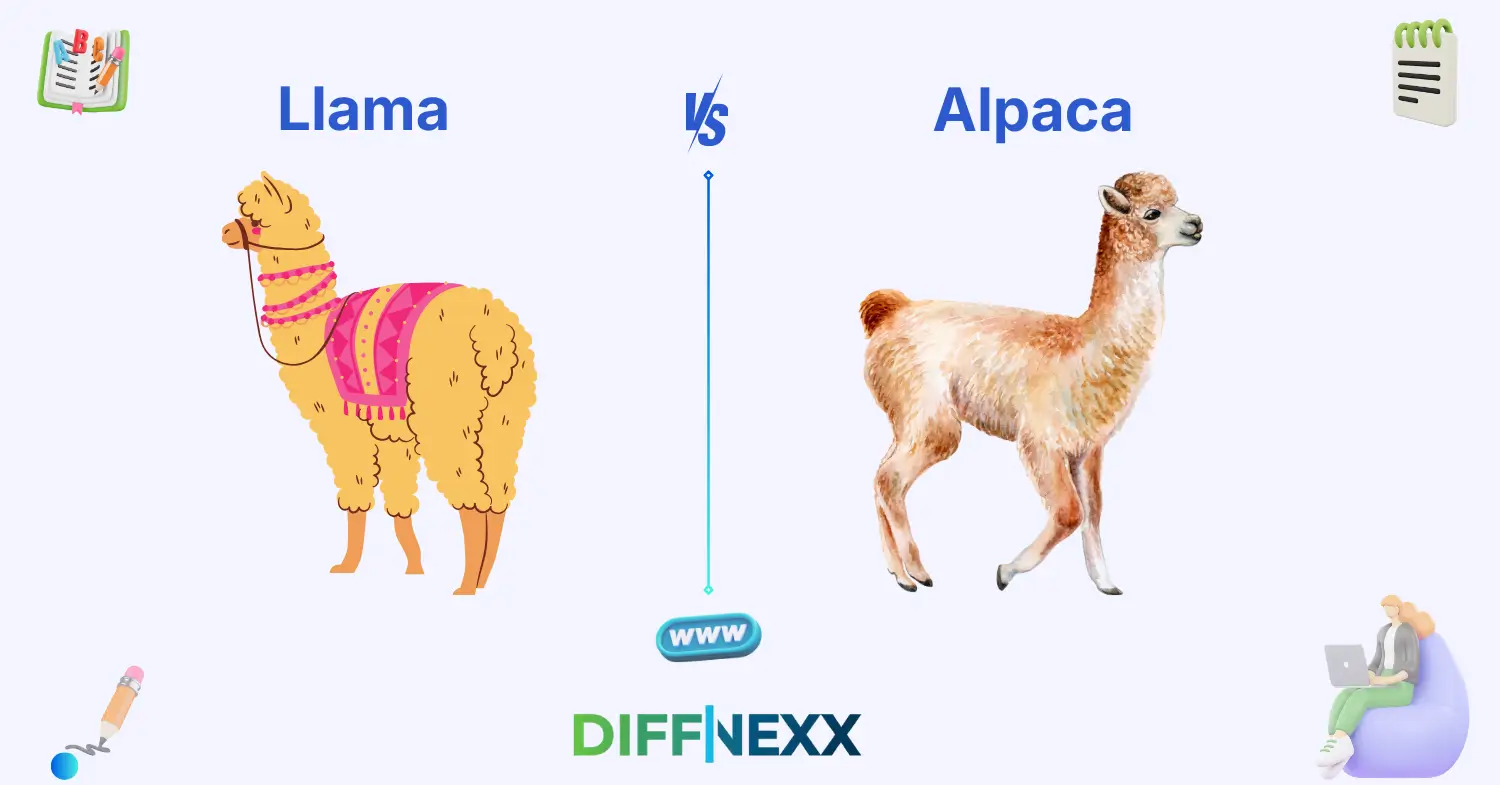
Difference between llama and alpaca often confuses people, especially when visiting farms or watching wildlife documentaries. Imagine seeing two fluffy animals grazing in the Andes and wondering which is which a llama or an alpaca?
Both llamas and alpacas are domesticated South American camelids, but the difference between llama and alpaca goes beyond appearance. They have distinct physical features, behaviors, and uses.
Understanding the difference between llama and alpaca helps farmers, tourists, and animal lovers make the right distinctions and appreciate their unique traits.
In this guide, we’ll explore everything you need to know about llamas and alpacas in simple, clear terms.
Key Difference Between the Both
The main difference between llama and alpaca is size and purpose:
- Llamas are larger, often used as pack animals for carrying loads.
- Alpacas are smaller and prized for their soft, luxurious fleece.
Llamas have longer faces and banana-shaped ears, while alpacas have rounder faces and smaller ears.
Importance – Why Knowing the Difference Matters
Knowing the difference between llama and alpaca matters for several reasons:
Farmers and breeders can select the right species for work or fiber production.
Tourists and educators can correctly identify them, avoiding common misunderstandings.
Conservationists can track populations accurately and maintain biodiversity.
🔊 Pronunciation Section
Llama
US: /ˈjɑː.mə/
UK: /ˈlɑː.mə/
Alpaca
US: /ælˈpɑː.kə/
UK: /ælˈpæk.ə/
Now that we know how to pronounce them, let’s define each animal clearly.
📚 Core Definitions
Llama
A llama is a large domesticated South American camelid. They are strong, social, and often used as pack animals.
Example:
The llama carried supplies across the mountain trail.
Alpaca
An alpaca is a smaller domesticated camelid, known for soft, fine fleece used in textiles. They are gentle and prefer close-knit herd living.
Example:
The alpaca’s wool was spun into a soft scarf.
📚 10 Clear Differences Between Llama and Alpaca
1. Size
Llamas are larger and heavier. Alpacas are smaller and more compact.
- Example for Llama: 400–450 lbs, about 5.5–6 ft tall.
- Example for Alpaca: 120–200 lbs, about 4.5–5 ft tall.
2. Fleece Quality
Alpacas produce softer, finer fleece. Llamas have coarser outer coats.
- Example for Llama: Wool used in rugs or ropes.
- Example for Alpaca: Wool used in luxury sweaters.
3. Face Shape
Llamas have elongated, rectangular faces. Alpacas have short, rounded faces.
- Example for Llama: Long snout and prominent nose.
- Example for Alpaca: Cute, blunt face.
4. Ear Shape
Llamas have long, banana-shaped ears. Alpacas have short, spear-shaped ears.
- Example for Llama: Ears curve slightly inward.
- Example for Alpaca: Pointed, upright ears.
5. Temperament
Llamas are confident and independent. Alpacas are shy and gentle.
- Example for Llama: Llama guards the herd from predators.
- Example for Alpaca: Alpaca quietly grazes in a group.
6. Social Behavior
Alpacas prefer tight-knit herds. Llamas are more versatile and can interact with humans as pack animals.
- Example for Llama: Works alongside humans.
- Example for Alpaca: Stays close to other alpacas.
7. Uses
Llamas are primarily used as pack animals. Alpacas are raised for fiber.
- Example for Llama: Carrying goods on mountain trails.
- Example for Alpaca: Harvesting wool for textile production.
8. Vocalization
Llamas hum occasionally and can be loud if threatened. Alpacas hum softly to communicate.
- Example for Llama: Llama alerting to intruders.
- Example for Alpaca: Alpaca hums to express contentment.
9. Lifespan
Llamas tend to live 15–25 years. Alpacas live slightly longer, around 15–25 years too, depending on care.
- Example for Llama: Older llamas used for breeding.
- Example for Alpaca: Alpaca herd living peacefully for two decades.
10. Body Structure
Llamas are taller with longer legs. Alpacas are compact with shorter legs.
- Example for Llama: Easily navigates rough terrain.
- Example for Alpaca: Gentle stance on pasture.
🎯 Why Knowing the Difference Matters
Students learn about animal biology accurately by knowing the difference between llama and alpaca.
Farmers and textile professionals can make informed decisions on breeding and wool production.
Socially, travelers and educators avoid confusion, respecting the uniqueness of each species.
Real-world consequences of confusion
Misidentifying llamas and alpacas can lead to improper care, breeding issues, or incorrect fiber usage.
🧠 Why People Get Confused
- Similar Spelling/Pronunciation: Both are camelids from South America.
- Physical Overlap: Both have woolly coats and long necks.
- Context-Based Usage: Often mentioned together in farms or tourist spots.
- Informal Speech: People casually call all small camelids “llamas.”
🎭 Connotation & Emotional Tone
Connotation = emotional meaning attached to a word.
Llama
- Positive: Strong, reliable
- Neutral: Working animal
- Example: A llama helping carry farm supplies.
Alpaca
- Positive: Cute, gentle
- Neutral: Fiber producer
- Example: Alpaca grazing peacefully in a field.
🗣 Usage in Metaphors, Similes & Idioms
- “Loyal as a llama” – dependable
- “Soft as alpaca fleece” – gentle and luxurious
Example sentences:
- He is loyal as a llama, always helping others.
- The scarf feels soft as alpaca fleece.
📊 Comparison Table
| Feature | Llama | Alpaca |
|---|---|---|
| Meaning | Pack animal, larger camelid | Small camelid, prized for fleece |
| Tone | Strong, independent | Gentle, soft |
| Usage | Carrying loads, guarding | Wool and fiber production |
| Context | Mountains, farms | Farms, textile industry |
| Formality | Flexible, working roles | Specific, fiber-oriented |
⚖️ Which Is Better in What Situation?
When to Use a Llama
If you need a strong, reliable animal to carry goods or guard other livestock, llamas are ideal.
When to Use an Alpaca
If you are focused on textile production and soft fleece, alpacas are the better choice.
Situational Clarity
Llamas suit physical labor; alpacas suit fiber and companionship.
Contextual Correctness
Knowing their purpose ensures proper care and productivity.
📖 Literary or Cultural References
- Book: The Llama’s Tale (Children’s Story, Author Unknown, 2015)
- Movie: Alpaca Adventure (Documentary, Peru, 2018)
❓ FAQs
1. Can llamas and alpacas interbreed?
Yes, they can produce hybrids called “huarizos,” but offspring may have mixed traits.
2. Which is better for beginners in animal farming?
Alpacas are gentler and easier to manage, but llamas are more versatile.
3. Do llamas spit more than alpacas?
Yes, llamas are more likely to spit, especially when threatened.
4. Which has softer wool?
Alpacas produce finer, softer fleece compared to llamas.
5. Are both native to the same regions?
Yes, both originate from the Andes mountains of South America.
🏁 Conclusion
The difference between llama and alpaca lies in size, purpose, temperament, and fiber quality. Llamas are larger, strong, and ideal for carrying loads, while alpacas are smaller, gentle, and valued for their soft fleece.
Understanding this difference helps farmers, textile producers, tourists, and animal enthusiasts make informed decisions. Recognizing each species’ traits ensures proper care, better farming practices, and appreciation for these unique Andean animals 🦙

Ezra Hale is a thoughtful contributor to Distinly.com, where he explores philosophical ideas and the subtle differences behind everyday concepts. His writing blends logic, language, and human insight to clarify complex distinctions. Ezra encourages readers to think deeper, question assumptions, and appreciate the meaning behind words and ideas in modern discourse.