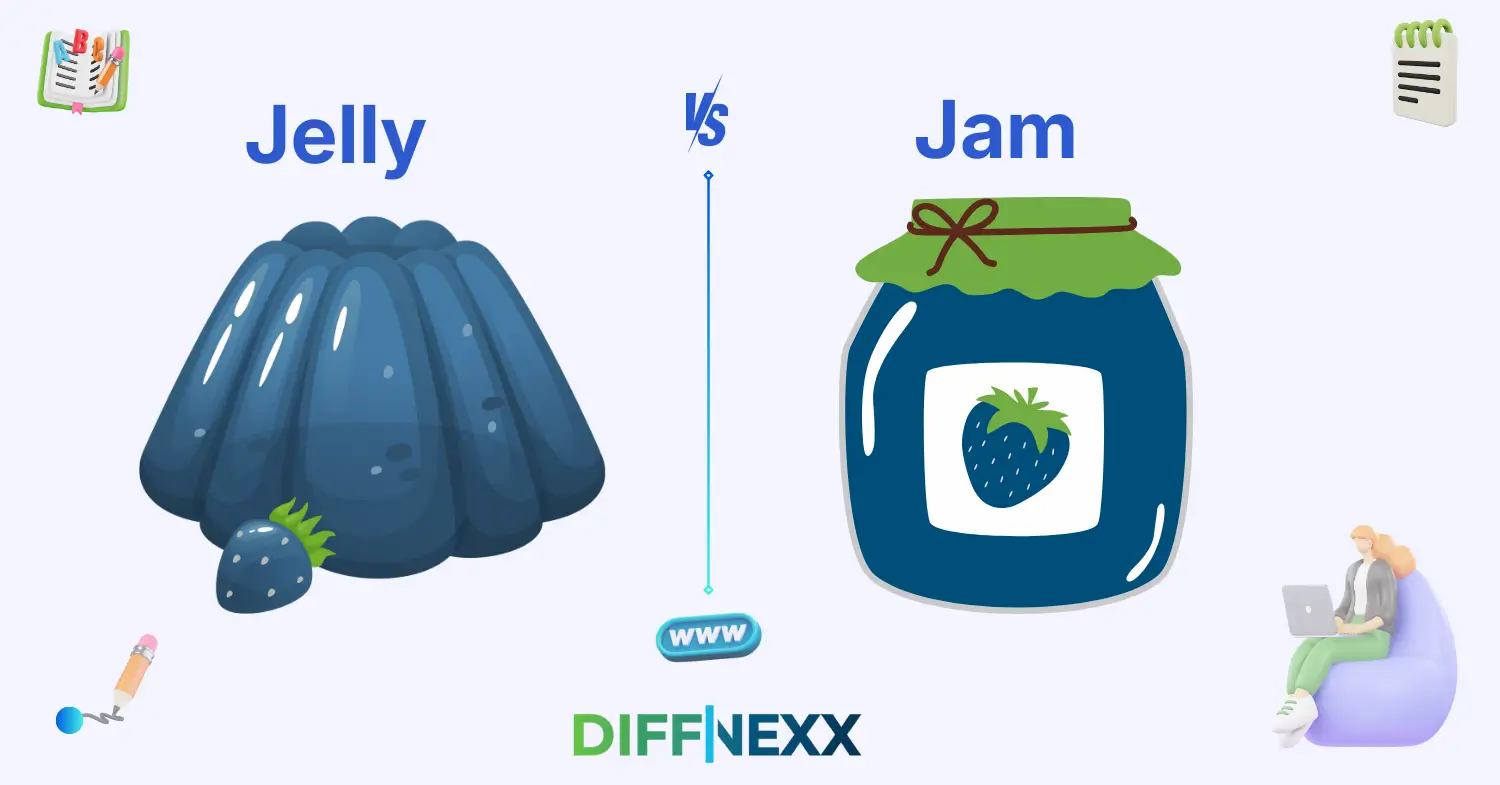
Difference between jelly and jam becomes confusing when you are making breakfast and someone asks, “Do you want jelly or jam on your bread?” Many people think they are the same, but they are not exactly identical.
The difference between jelly and jam is about how the fruit is used and how the spread is made. Both are sweet, both come from fruit, and both go on toast, yet their texture and preparation are different.
Understanding the difference between jelly and jam helps English learners, cooks, and food lovers use the right word in the right situation. It also shows how small changes in cooking create new names.
Before we compare them in detail, let us first look at the main difference.
🔑 Key Difference Between the Both
Jelly is made from fruit juice only.
Jam is made from crushed or chopped fruit.
Jelly is smooth and clear.
Jam is thick and contains fruit pieces.
Both are fruit spreads, but the texture and preparation make them different.
🌍 Why is the difference necessary to Know
Students learning English often see these words in books, recipes, and daily conversation. Knowing the difference helps them speak correctly and understand food vocabulary.
Chefs, bakers, and food writers must use the right term. Recipes change depending on whether the spread is jelly or jam.
In society, food names show culture and tradition. During meals, people expect the correct word, especially in countries like the United States where both terms are common.
🔊 Pronunciation Section
Jelly
US (Jelly): /ˈdʒeli/
UK (Jelly): /ˈdʒeli/
Jam
US (Jam): /dʒæm/
UK (Jam): /dʒæm/
Both words sound simple, but their meanings change depending on how the fruit spread is made. Now let’s define them clearly before comparing.
📚 Core Definitions
🍇 Jelly
Jelly is a sweet spread made from fruit juice, sugar, and pectin.
It has a smooth and clear texture with no fruit pieces. The tone of the word feels simple and common in everyday speech.
Example: I put grape jelly on my sandwich.
🍓 Jam
Jam is a sweet spread made from crushed fruit, sugar, and pectin.
It has a thick texture with small fruit pieces inside. The word sounds natural and homemade.
Example: She made strawberry jam at home.
📚 10 Clear Differences Between Jelly and Jam
1️⃣ Texture
Jelly is smooth and clear.
Jam is thick with fruit pieces.
- Example 1 for Jelly: The jelly spreads easily on toast.
- Example 2 for Jam: The jam has bits of strawberry.
2️⃣ Ingredients Used
Jelly uses fruit juice.
Jam uses whole or crushed fruit.
- Example 1 for Jelly: Apple jelly is made from juice.
- Example 2 for Jam: Peach jam uses real fruit pieces.
3️⃣ Appearance
Jelly looks shiny and transparent.
Jam looks cloudy and solid.
- Example 1 for Jelly: The jelly looks bright red.
- Example 2 for Jam: The jam looks thick and dark.
4️⃣ Taste Experience
Jelly tastes smooth and even.
Jam tastes richer because of fruit pieces.
- Example 1 for Jelly: Jelly tastes light and sweet.
- Example 2 for Jam: Jam tastes fruity and strong.
5️⃣ Cooking Process
Jelly needs straining to remove pulp.
Jam keeps the pulp while cooking.
- Example 1 for Jelly: The juice is filtered first.
- Example 2 for Jam: The fruit is cooked directly.
6️⃣ Formality in Language
Jelly sounds more common in daily speech.
Jam sounds more natural in homemade cooking talk.
- Example 1 for Jelly: Kids often say jelly.
- Example 2 for Jam: Recipes often say jam.
7️⃣ Context of Use
Jelly is common in sandwiches.
Jam is common in baking and desserts.
- Example 1 for Jelly: Peanut butter and jelly sandwich.
- Example 2 for Jam: Jam inside a cake.
8️⃣ Emotional Tone
Jelly feels playful and simple.
Jam feels warm and homemade.
- Example 1 for Jelly: Jelly reminds me of school lunches.
- Example 2 for Jam: Jam reminds me of family cooking.
9️⃣ Cultural Preference
Jelly is popular in the U.S.
Jam is more common in the UK and Europe.
- Example 1 for Jelly: Americans love grape jelly.
- Example 2 for Jam: British people often eat jam with bread.
🔟 Expression Style
Jelly is used in casual talk.
Jam appears more in recipes and cooking books.
- Example 1 for Jelly: Pass the jelly please.
- Example 2 for Jam: Add jam to the mixture.
🎯 Why Knowing the Difference Matters
Students need to know the difference to understand recipes, stories, and conversations. Many English learners think both words always mean the same thing.
Professionals such as chefs and writers must use correct terms. A wrong word can change the meaning of a recipe.
In daily life, food words show culture. Using the right word makes communication clear and polite.
Real-world consequences of confusion
If someone asks for jelly but gets jam, the taste and texture may be different. In cooking, this can change the final result.
🧠 Why People Get Confused
Similar spelling or pronunciation
Both words are short and easy, so learners think they are equal.
Semantic overlap
Both are sweet fruit spreads, so people use them as synonyms.
Context-based usage
Different countries prefer different words.
Influence of informal speech
People often say jelly for any fruit spread.
🎭 Connotation & Emotional Tone
Connotation = the emotional meaning associated with a word.
Jelly
Positive: Fun and simple.
Example: Kids love jelly sandwiches.
Negative: May sound artificial.
Example: Some think jelly is too sweet.
Neutral: Fruit spread name.
Jam
Positive: Homemade and natural.
Example: Grandma makes jam every year.
Negative: Can sound heavy.
Example: Too much jam feels thick.
Neutral: Cooking term.
🗣 Usage in Metaphors, Similes & Idioms
Jelly in idioms:
- Jelly legs = weak legs
Example: After running, I had jelly legs.
Jam in idioms:
- In a jam = in trouble
Example: He got into a jam at work.
📊 Comparison Table
| Feature | Jelly | Jam |
|---|---|---|
| Meaning | From fruit juice | From crushed fruit |
| Tone | Simple | Homemade |
| Usage | Sandwiches | Baking / cooking |
| Context | Casual speech | Recipes |
| Formality | Informal | Neutral |
⚖️ Which Is Better in What Situation?
When to use Jelly
Use jelly when the spread is smooth and made from juice. It fits casual speech and sandwiches.
When to use Jam
Use jam when the spread has fruit pieces. Recipes and baking often use this word.
Situational clarity
At breakfast, both may work, but cooking instructions need the correct word.
Contextual correctness
In formal recipes, jam is often more accurate if fruit pieces are present.
📖 Literary or Cultural References
- Charlie and the Chocolate Factory (Novel, Roald Dahl, 1964) – Mentions many sweet foods like jam.
- Paddington (Film, UK, 2014) – Famous for marmalade, a fruit spread similar to jam.
❓ FAQs
1. Are jelly and jam the same thing?
No. Jelly is made from fruit juice, while jam uses crushed fruit. The texture and taste are different.
2. Which one is smoother?
Jelly is smoother because it has no fruit pieces. Jam is thicker and contains pulp.
3. Why do recipes say jam instead of jelly?
Recipes often need the thicker texture of jam. Fruit pieces help give flavor and shape.
4. Is jelly more popular in America?
Yes, jelly is very common in the U.S., especially in peanut butter and jelly sandwiches.
5. Can I replace jelly with jam?
Sometimes yes, but the texture will change. Jam is thicker, so the result may be different.
🏁 Conclusion
The difference between jelly and jam is simple but important. Jelly is made from fruit juice and has a smooth texture, while jam is made from crushed fruit and feels thicker. These small changes create different tastes, looks, and uses.
Knowing the correct word helps students understand recipes and conversations. It also helps cooks prepare food the right way. Food vocabulary often reflects culture, so using the right term makes communication clearer.
When you remember that jelly is smooth and jam has fruit pieces, the confusion becomes easy to solve. Keep learning small word differences like this, and your English will sound more natural every day.

Ezra Hale is a thoughtful contributor to Distinly.com, where he explores philosophical ideas and the subtle differences behind everyday concepts. His writing blends logic, language, and human insight to clarify complex distinctions. Ezra encourages readers to think deeper, question assumptions, and appreciate the meaning behind words and ideas in modern discourse.