Imagine you are standing in a bustling Italian piazza. The air is thick with the aroma of roasted beans. You walk up to the counter, eager for a morning pick-me-up. You ask the barista for a “coffee,” but he pauses, looking at the complex machine behind him and the glass pots on the side. In that moment, you realize that “coffee” isn’t just one drink; it’s a massive world of different brewing styles, strengths, and traditions.
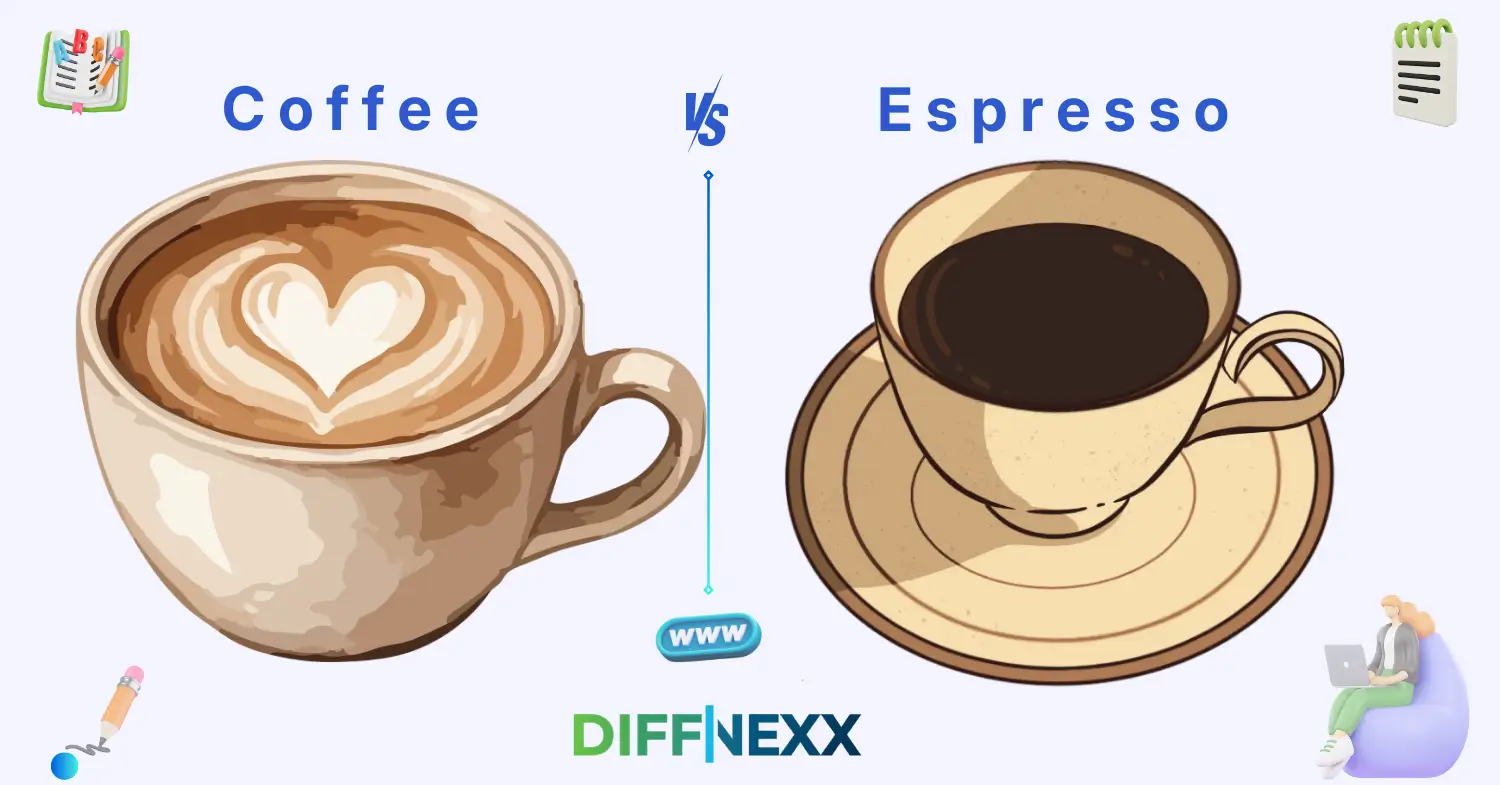
The difference between coffee and espresso is often misunderstood as a difference in the bean itself. In reality, it all comes down to the method of preparation. “Coffee” usually refers to the broad category of drip or filtered brewing, while “espresso” is a specific, high-pressure extraction.
Understanding the difference between coffee and espresso helps you navigate any cafe menu with confidence. It allows you to choose the right flavor profile for your mood and the right caffeine kick for your day. By mastering the difference between coffee and espresso, you become a more sophisticated consumer in a global culture that runs on caffeine. ☕
Let’s break down the science and the language of your favorite morning brew.
Key difference between the both
The primary difference between coffee and espresso is the brewing method. Standard coffee relies on gravity to pull hot water through coarse grounds over several minutes. Espresso uses a machine to force near-boiling water through finely-ground beans at high pressure, resulting in a concentrated shot in under 30 seconds.
Importance for learners and experts
For English learners and ESL students, the difference between coffee and espresso is a vital part of “survival English.” Knowing how to order exactly what you want—whether it’s a large mug of drip or a tiny, potent shot—prevents awkward social interactions and ensures you get the experience you’re paying for.
For culinary experts and coffee aficionados, this distinction is about chemistry and sensory balance. Espresso involves an emulsification of oils that creates a unique foam called “crema,” which isn’t found in regular coffee. In society, these two drinks represent different paces of life: the slow, contemplative morning mug versus the fast, energized European “standing at the bar” culture. 🌍
Pronunciation Section
Coffee
US: /ˈkɔːfi/
UK: /ˈkɒfi/
Espresso
US: /eˈspresəʊ/
UK: /ɛˈsprɛsəʊ/
(Note: Avoid the common mistake of saying “expresso”; there is no “x” in the word!)
Now that we can say them correctly, let’s look at the formal definitions that set these two apart.
Core Definitions
Coffee – Definition
Coffee is a brewed drink prepared from roasted coffee beans, typically using a drip, pour-over, or French press method. It is usually served in a larger volume (8–12 ounces) and has a clean, consistent body. The emotional tone is often “comforting” or “leisurely.”
- Example: Grabbing a tall mug of black coffee to sip while reading the Sunday newspaper.
Espresso – Definition
Espresso is a concentrated form of coffee produced by forcing hot water through fine grounds at 9 bars of pressure. It is served in small “shots” (1–2 ounces) and features a thick, syrupy texture. The emotional tone is “intense,” “efficient,” or “sophisticated.”
- Example: Ordering a quick double espresso at a train station to wake up before a commute.
10 Clear Differences Between Coffee and Espresso
1. Extraction Pressure
Coffee brewing relies mostly on gravity or simple immersion. Espresso requires at least 9 bars of atmospheric pressure to extract the flavors from the beans.
- Coffee Example: Water dripping slowly through a paper filter into a glass pot.
- Espresso Example: A machine pump hissing as it pushes water through a tightly packed metal basket.
2. Grind Size
Coffee beans are ground coarsely, similar to the texture of sea salt. Espresso beans must be ground into a very fine powder, resembling powdered sugar or flour.
- Coffee Example: Touching coffee grounds and feeling distinct, sandy grains.
- Espresso Example: Rubbing espresso grounds between your fingers and feeling a soft, smooth dust.
3. Presence of Crema
Espresso is famous for its “crema,” a creamy, reddish-brown layer of foam on top caused by CO2 bubbles and oils. Regular drip coffee has a flat surface with no foam.
- Coffee Example: A clear, dark brown liquid with no bubbles on the surface.
- Espresso Example: A beautiful tan-colored froth sitting on top of the dark liquid.
4. Serving Size
A standard cup of coffee is usually 8 to 12 ounces (240–350ml). A standard shot of espresso is only 1 ounce (30ml).
- Coffee Example: Holding a large, heavy ceramic mug with both hands.
- Espresso Example: Picking up a tiny, delicate “demitasse” cup with two fingers.
5. Flavor Concentration
Coffee has a balanced, diluted flavor profile where you can taste subtle notes. Espresso is incredibly bold and “punchy,” hitting the palate with intense acidity and bitterness.
- Coffee Example: Tasting hints of blueberry or chocolate in a light roast.
- Espresso Example: Feeling a strong, sharp “zing” on your tongue immediately after a sip.
6. Caffeine Density
Per ounce, espresso has much more caffeine than coffee. However, because we drink a larger volume of coffee, a full mug usually contains more total caffeine than a single shot.
- Coffee Example: Drinking 12 ounces and getting about 140mg of caffeine.
- Espresso Example: Drinking 1 ounce and getting about 63mg of caffeine.
7. Formality and Tradition
In many cultures, “coffee” is a casual, home-brewed staple. Espresso is often seen as a more formal, “cafe-only” luxury that requires a professional barista.
- Coffee Example: Making a pot in your pajamas at 7:00 AM.
- Espresso Example: Sitting at a marble counter in a tailored suit in Milan.
8. Psychological Impact
Coffee is associated with “waking up” and starting a long day. Espresso is often used as a “jolt” for high performance or a social digestive after a heavy meal.
- Coffee Example: Sitting in a quiet library for hours with a refillable cup.
- Espresso Example: A group of coworkers taking a five-minute “espresso break” to brainstorm.
9. Tone of Preparation
The tone of brewing coffee is patient and ritualistic. The tone of making espresso is technical, fast-paced, and precise.
- Coffee Example: Watching water slowly spiral through a pour-over cone.
- Espresso Example: The loud “tamp” and “click” of the portafilter into the machine.
10. Expression Style
When we talk about coffee, we use “soft” words like brew, steep, and drip. For espresso, we use “harder” words like pull, shot, and pressurized.
- Coffee Example: “I’ll brew a fresh pot for everyone.”
- Espresso Example: “The barista pulled a perfect shot with great crema.”
Why Knowing the Difference Matters
Students must know the difference between coffee and espresso to manage their energy levels during study sessions. Drinking a large coffee provides a slow, steady release of energy. Taking a double espresso right before an exam might lead to “the jitters” or a rapid heart rate if they aren’t used to the concentration.
Professionals in the hospitality industry must master this distinction to provide excellent service. If a customer asks for a “strong coffee,” a barista needs to know if they want a dark roast drip or an Americano (espresso with water). Clear communication prevents wasted ingredients and unhappy customers.
Socially, the consequences of confusion can make you feel “out of place.” In some countries, asking for a “coffee” at 10:00 PM will get you a strange look, whereas an “espresso” is the standard after-dinner choice. Knowing the etiquette makes you a more culturally sensitive traveler.
Real-world consequences of confusion
Ordering an espresso when you actually wanted a large cup of coffee can be a disappointing start to your day. You pay a high price for a tiny amount of liquid, leaving you thirsty and unsatisfied. Conversely, drinking a full mug of espresso (which is not how it’s served!) would be a dangerous amount of caffeine for most people. ⚠️
Why People Get Confused
Semantic Overlap
Many people think “espresso” is a type of bean. You will often see bags of beans labeled “Espresso Roast.” This makes people think the bean is the espresso, rather than the machine used to brew it.
Context-based Usage
In many parts of the world, “coffee” defaults to espresso. If you are in Spain or Italy and ask for “un café,” they will give you an espresso. If you are in the US or UK, they will give you a large drip coffee.
Influence of Informal Speech
People often use the terms interchangeably in movies or TV shows. A character might say “I need some coffee” and then walk away with a tiny espresso cup, blurring the lines for viewers.
Connotation & Emotional Tone
(Connotation = the emotional meaning attached to a word.)
For Coffee:
- Positive/Neutral: Associated with warmth, home, and slow mornings.
- Example: “The smell of morning coffee makes the house feel like home.”
For Espresso:
- Positive/High-Energy: Associated with city life, sophistication, and speed.
- Example: “He took a quick espresso before his big presentation to sharpen his focus.”
Usage in Metaphors, Similes & Idioms
- “Wake up and smell the coffee”: An idiom meaning to realize the truth of a situation.
- Sentence: “You need to wake up and smell the coffee; this project isn’t going to finish itself!”
- “An espresso shot of…”: A simile used to describe something small but very powerful.
- Sentence: “Her short speech was like an espresso shot of motivation for the team.”
Comparison Table
| Feature | Coffee (Drip/Filter) | Espresso |
| Meaning | Gravity-brewed beans | Pressure-extracted beans |
| Tone | Comforting / Slow | Intense / Fast |
| Usage | Large mugs / Daily fuel | Small shots / Social ritual |
| Context | Home / Office | Cafe / After-dinner |
| Formality | Low to Medium | Medium to High |
Which Is Better in What Situation?
When to use Coffee
Use “coffee” when you have time to sit and enjoy your drink. It is the better choice for breakfast or for keeping you company during a long drive. If you prefer a lighter, more nuanced flavor, drip coffee is the way to go.
When to use Espresso
Use “espresso” when you are in a rush or want a concentrated burst of flavor. It is also the necessary base for “milk drinks” like lattes, cappuccinos, and flat whites.
Situational Clarity
If you are sensitive to acid, a cold-brew coffee is often better. If you want a gourmet experience with a beautiful presentation, a well-pulled espresso shot is superior.
Contextual Correctness
In a professional business meeting, a carafe of coffee is standard. In a high-end restaurant after a 5-course meal, espresso is the traditional choice.
Literary or Cultural References
- “The Coffee House” (Play, Carlo Goldoni, 1750): Explores the social life and gossip that happened in early European cafes.
- “Coffee and Cigarettes” (Movie, USA, 2003): A series of short vignettes showing people discussing life over these two staples.
- “The Devil’s Cup” (Book, Stewart Lee Allen, 1999): A travelogue following the history of coffee across the globe.
FAQs
1. Can I make espresso with a regular coffee machine?
No. A regular machine cannot generate the 9 bars of pressure needed to create true espresso. You will just end up with very strong, very bitter coffee.
2. Is espresso more bitter than coffee?
Not necessarily. If made correctly, espresso is sweet and complex. However, because it is so concentrated, any mistakes in brewing (like using water that is too hot) will taste much more bitter.
3. What is an Americano?
An Americano is a shot of espresso diluted with hot water. It has a similar volume to a regular coffee but a different flavor profile because it started as an espresso.
4. Why is espresso more expensive than coffee?
It requires an expensive machine, more specialized training, and a higher ratio of coffee grounds to water. You are paying for the equipment and the expertise.
5. Which has more caffeine?
A 12oz cup of coffee usually has 120–150mg. A 1oz shot of espresso has about 60–80mg. So, a single cup of coffee actually “wakes you up” more than a single shot of espresso.
Conclusion
The difference between coffee and espresso is a journey from the simple pull of gravity to the complex force of high-pressure engineering. One offers a steady, comforting warmth that lasts for an hour, while the other provides a sharp, sophisticated burst of energy that lasts only a few sips. ☕
Mastering this distinction makes you more than just a customer; it makes you a participant in a rich, global tradition.
Whether you prefer the slow ritual of a French press or the technical precision of an espresso machine, knowing the language of coffee ensures you always find the perfect cup.
Clarity in your order leads to satisfaction in your cup. Keep exploring the roast, and always enjoy the brew.

Ezra Hale is a thoughtful contributor to Distinly.com, where he explores philosophical ideas and the subtle differences behind everyday concepts. His writing blends logic, language, and human insight to clarify complex distinctions. Ezra encourages readers to think deeper, question assumptions, and appreciate the meaning behind words and ideas in modern discourse.