Imagine you are at a community festival. You meet two friends, Alex and Sam. Alex tells you they are bisexual. Sam explains that they identify as pansexual. To a casual observer, their dating histories might look identical. However, the way they describe their internal worlds feels very different.
The difference between bisexual and pansexual identities is a common topic in modern language and social studies. While both terms describe attraction to more than one gender, they carry unique histories and nuances.
Understanding the difference between bisexual and pansexual is about more than just definitions; it is about respecting how people see themselves. In this guide, we will break down these terms simply. We will explore why the difference matters for clear communication. Whether you are a student, a professional, or just curious, the difference between bisexual and pansexual will provide the clarity you need.
Let’s start by looking at the core of these two identities. 🌈
Key difference between the both
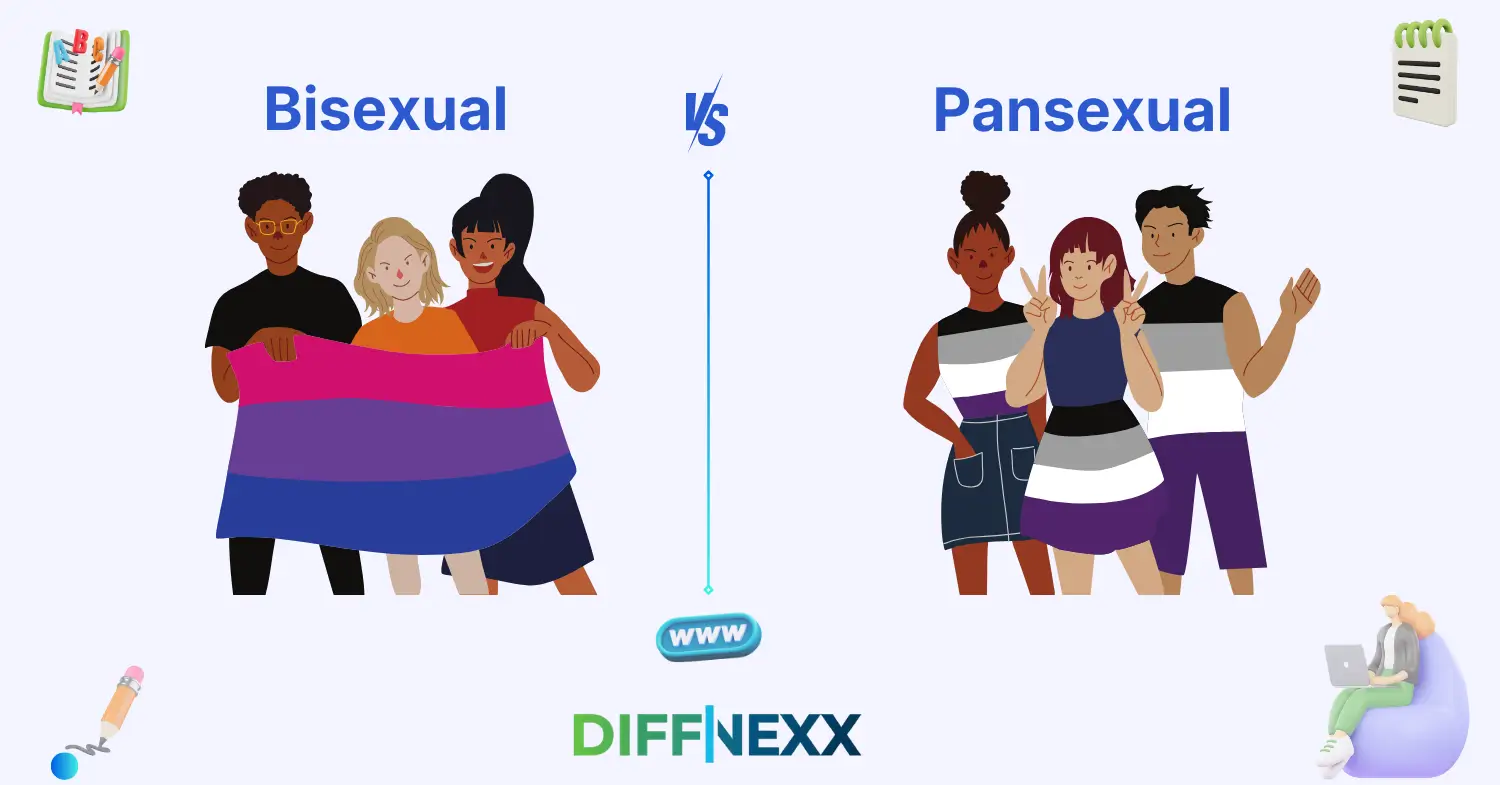
The fundamental difference between bisexual and pansexual lies in the role that gender plays in attraction. Bisexuality is often defined as being attracted to more than one gender (your own and others). Pansexuality is defined as attraction to people regardless of gender, often described as being “gender-blind” when it comes to romance.
Importance of the difference for learners and experts
For language learners, distinguishing between these terms prevents awkward social misunderstandings. Using the wrong term can accidentally erase someone’s specific identity.
Knowing the difference between bisexual and pansexual shows that you are culturally fluent and observant of modern social changes.
For experts in sociology or HR, this knowledge is essential for creating inclusive environments. In society, these labels help people find communities where they feel understood. When we recognize the nuance between these words, we promote a more empathetic and accurate way of communicating with everyone.
Pronunciation Section
Bisexual
US: /baɪˈsɛkʃuəl/
UK: /baɪˈsɛksjʊəl/
Pansexual
US: /pænˈsɛkʃuəl/
UK: /pænˈsɛksjʊəl/
With the pronunciation mastered, we can now move into the specific definitions of each term.
Core Definitions
Bisexual
Bisexual refers to a person who is emotionally, romantically, or physically attracted to more than one gender. This can mean attraction to individuals, or attraction to your own gender and other genders. It is often seen as an “umbrella” term that covers many types of multi-gender attraction.
- Example: A woman who has been in meaningful relationships with both men and non-binary people.
Pansexual
Pansexual refers to a person whose attraction is not limited by gender or sex. They are attracted to people based on their personality, energy, or spirit, rather than their gender identity. Gender is not a defining factor in who they find attractive.
- Example: A person who finds themselves falling in love with individuals across the entire gender spectrum without a specific preference for any gender.
10 Clear Differences Between Bisexual and Pansexual
1. Etymological Roots
The prefix “bi-” comes from Latin, meaning “two.” The prefix “pan-” comes from Greek, meaning “all.” While the modern definition of bisexual has expanded beyond “two,” the linguistic origins still influence how people perceive the words.
- Bisexual Example: Using the “bi-” prefix to acknowledge the duality of “same” and “different” attractions.
- Pansexual Example: Using the “pan-” prefix to signal a universal or all-encompassing approach.
2. Focus of Attraction
Bisexual people may notice and appreciate the gender of the person they are attracted to. Pansexual people typically describe their attraction as “gender-blind,” where gender does not enter the equation.
- Bisexual Example: Someone who says they like individuals in different ways.
- Pansexual Example: Someone who says they simply fall for the “person” regardless of what is on their ID.
3. Preferences and “Phases”
Many bisexual people experience a “bi-cycle,” where their preference shifts between different genders over time. Pansexual people usually feel a consistent level of attraction to all people without these specific shifts.
- Bisexual Example: Feeling more attracted to men one month and more to women the next.
- Pansexual Example: Feeling that their “type” has nothing to do with gender categories.
4. History and Longevity
The term “bisexual” has a much longer history in clinical and social settings, dating back to the 19th century. “Pansexual” gained significant mainstream popularity much later, particularly in the early 2010s.
- Bisexual Example: Reading about the “Bisexual Manifesto” from 1990.
- Pansexual Example: Seeing the term rise in popularity on social media platforms like Tumblr or TikTok.
5. Categorization Style
Bisexuality is often used as a broad category that can include other identities. Pansexuality is a specific sub-type of attraction within that broader multi-gender attraction group.
- Bisexual Example: Identifying as bi because it is a well-known, broad label.
- Pansexual Example: Identifying as pan to be more specific about the “how” of your attraction.
6. Relationship to the Binary
Some people feel “bisexual” acknowledges the existence of different genders more clearly. “Pansexual” is often chosen by those who want to explicitly reject the idea of a gender binary in their romantic life.
- Bisexual Example: Answering “Which genders do you like?” with a list.
- Pansexual Example: Answering the same question with “It doesn’t matter to me.”
7. Formality and Recognition
Bisexuality is recognized by almost all major health and census organizations globally. Pansexuality is still moving toward that level of formal, institutional recognition in some countries.
- Bisexual Example: Seeing a checkbox for “Bisexual” on a medical intake form.
- Pansexual Example: Having to write in “Pansexual” under an “Other” category.
8. Psychological Impact of the Label
Choosing “bisexual” often connects a person to a long history of political activism. Choosing “pansexual” often feels like a modern, liberating way to describe a fluid internal experience.
- Bisexual Example: Feeling a sense of pride in the historical “Bi+ community.”
- Pansexual Example: Feeling that the label “pan” perfectly captures their limit-free heart.
9. Tone of Expression
In conversation, the tone of “bisexual” can feel more established and direct. The tone of “pansexual” can feel more philosophical or focused on the individual’s “vibe.”
- Bisexual Example: “I am bisexual; I date more than one gender.”
- Pansexual Example: “I’m pan; I just love people for who they are.”
10. Community Affiliation
While there is a lot of overlap, some people feel more at home in specific “Bi” spaces. Others prefer “Pan” spaces that might emphasize different aspects of queer theory and gender-neutrality.
- Bisexual Example: Attending a “Bi-Pride” brunch.
- Pansexual Example: Joining a “Pan-Visibility” digital network.
Why Knowing the Difference Matters
Students must know the difference between bisexual and pansexual to navigate modern academic and social environments. Schools are increasingly focusing on diversity. Using these terms correctly in essays or discussions shows high-level research and respect for identity politics.
Professionals must know this difference to ensure workplace diversity and inclusion (D&I) goals are met. If an HR manager assumes everyone under the “B” in LGBTQ+ is the same, they may miss specific needs or concerns of their staff. It is a key part of modern “soft skills” in the 2026 workplace.
Socially, the consequences of confusion can lead to “erasure.” If you call a pansexual person “bisexual” after they have corrected you, it feels dismissive. It can damage friendships or make others feel invisible in a conversation.
Real-world consequences of confusion
Misusing these terms can lead to “gatekeeping” or arguments within communities. For example, some people wrongly claim that “bisexual” is trans-exclusionary. Knowing the actual definitions helps stop this misinformation and keeps community conversations healthy.
Why People Get Confused
Semantic Overlap
Because both groups date people of various genders, the outward “result” looks the same. To an outsider, a person in a “same-sex” or “opposite-sex” relationship could be either bi or pan.
Influence of Informal Speech
In movies and TV, characters often use “bisexual” as a catch-all term. Writers sometimes avoid “pansexual” because they worry the audience won’t know what it means, leading to a lack of representation.
Similar Spelling
Both words end in “-sexual,” which can lead to quick misreadings for those not familiar with the prefixes.
Connotation & Emotional Tone
(Connotation = the emotional meaning attached to a word.)
For Bisexual:
- Neutral/Positive: Seen as a strong, historical, and well-understood identity.
- Example: “The bisexual community has fought for rights for decades.”
For Pansexual:
- Positive/Idealistic: Often associated with “blind” love and a focus on the soul or personality.
- Example: “She described her pansexuality as a way of seeing the beauty in everyone.”
Usage in Metaphors, Similes & Idioms
- “Under the umbrella”: Often used to describe how bisexuality contains other identities.
- Sentence: “Pansexuality is often tucked under the bisexual umbrella.”
- “Hearts, not parts”: A common slogan used by pansexual people to describe their attraction.
- Sentence: “For Sam, being pan means it is always about hearts, not parts.”
Comparison Table
| Feature | Bisexual | Pansexual |
| Meaning | Attracted to more than one gender | Attracted regardless of gender |
| Tone | Established / Strong | Philosophical / Inclusive |
| Usage | Common / Umbrella term | Specific / Modern |
| Context | History / Multi-gender focus | Gender-blindness / Personal vibe |
| Formality | High (in all settings) | Growing (more social/academic) |
Which Is Better in What Situation?
When to use Bisexual
Use “bisexual” if you are speaking about broad community history or if a person explicitly tells you that is their label. It is also a safe default if you are discussing the general concept of being attracted to more than one gender in a formal setting.
When to use Pansexual
Use “pansexual” when a person has specified that they do not care about gender in their romantic life. It is the better term when discussing gender theory or modern, “all-inclusive” attraction styles.
Situational Clarity
If you are writing a policy, use both: “Bisexual and Pansexual individuals.” This ensures no one feels left out.
Contextual Correctness
Always defer to the individual. The “best” word is always the one the person uses for themselves.
Literary or Cultural References
- “The Bisexual” (TV Series, UK, 2018): Explores the complexities of moving from a lesbian identity to a bisexual one.
- “Schitt’s Creek” (TV Series, Canada, 2015–2020): Features David Rose, a famous pansexual character who used the “wine” metaphor to explain his attraction.
- “Bi: Any Gender, One Persuasion” (Book, Shiri Eisner, 2013): A deep dive into the politics and history of bisexuality.
FAQs
1. Is being pansexual the same as being “gender-blind”?
Often, yes. Many pansexual people say that gender is not a factor they notice when they first feel an attraction to someone.
2. Is bisexuality trans-exclusionary?
No. This is a common myth. The bisexual community has included trans and non-binary people in its definitions for decades.
3. Can I use both labels at the same time?
Yes. Some people use “bisexual” to describe their community and “pansexual” to describe their specific feelings.
4. Do pansexual people date everyone?
No. Just like everyone else, pansexual people have “types” based on personality, humor, or interests. They just don’t have a gender “type.”
5. How do I ask someone which one they are?
It is usually best to wait for them to share. If you must know, you can ask, “How do you prefer to describe your orientation?”
Conclusion
The difference between bisexual and pansexual is a beautiful example of how language evolves to meet our needs. While “bisexual” provides a strong, historical foundation for those attracted to multiple genders, “pansexual” offers a specific lens focused on a world where gender boundaries don’t exist.
Understanding these differences helps us build a more respectful and inclusive world. It allows us to see people as they wish to be seen.
Whether you prefer the broad umbrella of bisexuality or the specific “gender-blindness” of pansexuality, both labels help people find love and community.
Keep learning, stay open, and remember that the most important part of any identity is the person behind the label! 🌟

Ezra Hale is a thoughtful contributor to Distinly.com, where he explores philosophical ideas and the subtle differences behind everyday concepts. His writing blends logic, language, and human insight to clarify complex distinctions. Ezra encourages readers to think deeper, question assumptions, and appreciate the meaning behind words and ideas in modern discourse.